
Feeling tired all the time, noticing your muscles feel weaker, or watching your hair thin out more than usual? These subtle changes can sneak up on you, especially if you’re active, following a plant-based diet, cutting calories, or simply not paying close attention to your plate. Protein is the building block of nearly every cell in your body—muscles, skin, hair, nails, enzymes, and immune cells all depend on it. When intake falls short, your body starts sending clear signals. The good news? Recognizing the 8 signs you are not eating enough protein early lets you fix it quickly and naturally, often within weeks. In this guide you’ll learn exactly what those signs look like, the science behind why they happen, how much protein you actually need, and simple, realistic ways to boost your intake without complicated meal plans or expensive powders. Whether you’re 25 or 65, these practical tips will help you feel stronger, more energized, and more confident in your body.
Why Protein Matters More Than Most People Realize
Protein isn’t just for bodybuilders. Every day your body breaks down and rebuilds tissues, fights infections, balances hormones, and repairs damage. The average adult needs 0.8–1.2 grams of protein per pound of body weight (or roughly 46–56 g for women and 56–70 g for men), but active people, older adults, and those recovering from illness often need more. When you fall short, your body prioritizes vital functions (like keeping your heart beating) over “non-essential” ones (like shiny hair or strong nails). Studies in the American Journal of Clinical Nutrition show that even mild protein deficiency can slow metabolism, weaken immunity, and accelerate muscle loss after age 30. The 8 signs below are your body’s early warning system—catch them now and you can reverse the effects without extreme changes.
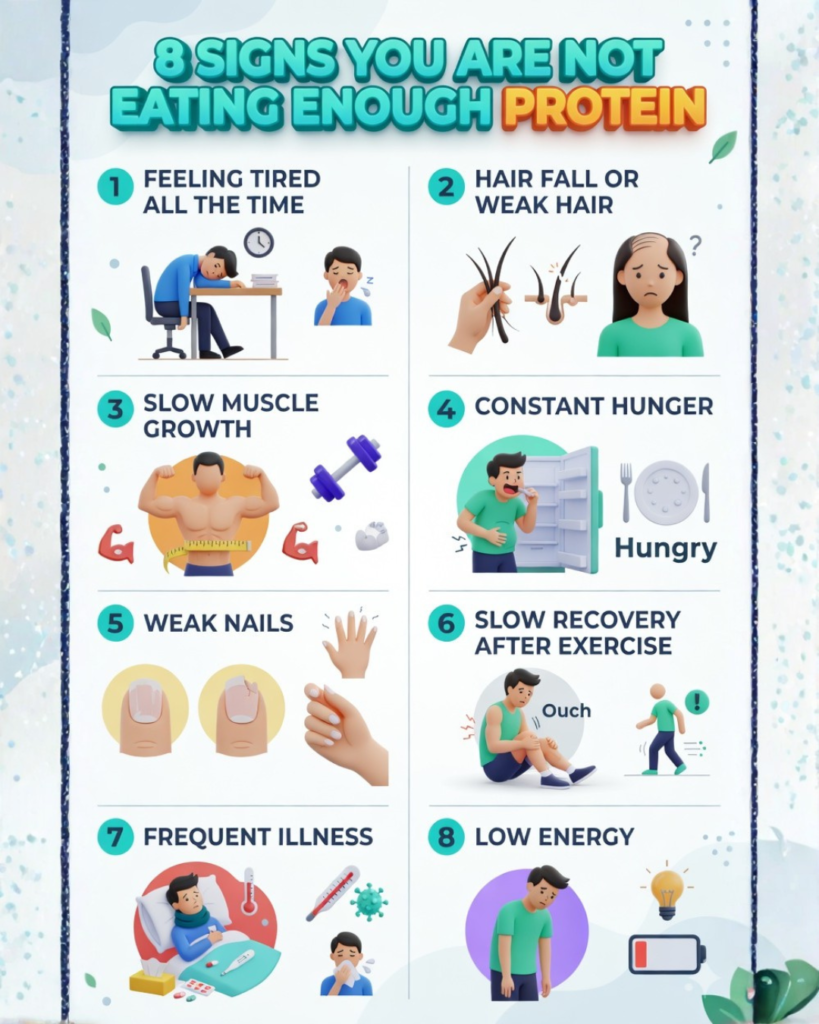
8 Signs You Are Not Eating Enough Protein
1. You’re Constantly Hungry or Craving Carbs
One of the earliest and most common signs is feeling hungry just a couple of hours after eating. Protein is the most satiating macronutrient—it triggers fullness hormones and slows digestion.
Science: Research shows meals with 25–30 g of protein reduce ghrelin (hunger hormone) far better than high-carb meals. What to do: Add a protein source to every meal or snack. Example: Greek yogurt with berries instead of just fruit, or eggs with your toast.
2. Muscle Weakness, Soreness, or Slow Recovery
If workouts feel harder than usual or your muscles feel soft and weak, low protein may be the culprit. Your body breaks down muscle tissue to get amino acids when dietary intake is low.
Science: A 2022 study in Nutrients found that adults with low protein lost more muscle mass and strength in just 8 weeks. What to do: Aim for 20–30 g of protein within 60 minutes after exercise and spread intake evenly across the day.
3. Thinning Hair, Brittle Nails, or Hair Loss
Hair and nails are made almost entirely of keratin, a protein. When protein is scarce, your body diverts it to vital organs and lets these “non-essential” tissues suffer.
Science: Dermatology research links protein deficiency to telogen effluvium (diffuse hair shedding) that improves once intake rises. What to do: Eat 1–2 protein-rich meals daily and consider a collagen or biotin-rich food like eggs or bone broth.
4. Slow Wound Healing or Frequent Minor Injuries
Cuts, bruises, or sore muscles that linger longer than usual can signal low protein because collagen production (the “glue” that heals tissue) slows down.
Science: Clinical trials show protein supplementation speeds wound closure by 20–30% in deficient individuals. What to do: Include a high-protein food at every meal and consider a short course of collagen peptides if healing is very slow.
5. You Get Sick More Often or Take Longer to Recover
Your immune system relies on antibodies and immune cells built from protein. Low intake weakens your defenses.
Science: Studies in older adults show even mild protein shortfalls increase cold and flu duration. What to do: Add immune-supporting protein sources like Greek yogurt, fatty fish, or lentils daily.
6. Persistent Fatigue or Low Energy
Feeling drained even after a good night’s sleep is common when protein is low because your body struggles to maintain stable blood sugar and repair tissues overnight.
Science: Protein helps regulate blood glucose; deficiency leads to energy crashes. What to do: Start your day with 20–30 g of protein (eggs, Greek yogurt, or a protein smoothie) instead of carb-heavy breakfasts.
7. Brain Fog, Mood Swings, or Trouble Focusing
Amino acids from protein are the raw material for neurotransmitters like serotonin and dopamine. Low levels can affect mood and mental clarity.
Science: Research in Nutritional Neuroscience links low protein to poorer cognitive performance and increased anxiety. What to do: Include a protein-rich snack in the afternoon when focus often dips.
8. Swelling in Hands, Feet, or Ankles (Edema)
Severe or long-term low protein can cause fluid retention because albumin (a blood protein) drops and fluid leaks into tissues.
Science: This is well-documented in medical literature as a classic sign of protein malnutrition. What to do: Increase high-quality protein and stay well-hydrated; see a doctor if swelling is sudden or severe.
How Much Protein Do You Actually Need?
Use this simple formula:
- Sedentary adult: 0.8 g per pound of body weight
- Active or over 50: 1.0–1.2 g per pound
- Strength training or recovering: up to 1.6 g per pound
Example: A 150-pound moderately active woman needs 120–150 g daily. Spread it across 3–4 meals for best absorption.
Easy Ways to Boost Protein Without Overhauling Your Diet
- Add Greek yogurt or cottage cheese to breakfast.
- Swap rice for quinoa or add lentils to soups.
- Snack on hard-boiled eggs, jerky, or a handful of nuts.
- Blend a scoop of protein powder into smoothies or oatmeal.
- Choose higher-protein versions of favorites (e.g., chickpea pasta).
Common Mistakes That Keep You Low in Protein
- Relying only on plant proteins without combining sources (pair beans with rice or nuts with veggies).
- Eating too many “healthy” carb-heavy meals (avocado toast without eggs).
- Skipping breakfast or lunch.
- Assuming you’re fine because you eat meat occasionally.
- Over-focusing on calories instead of protein grams.
Conclusion: Listen to Your Body and Fuel It Right
The 8 signs you are not eating enough protein are your body’s way of asking for better fuel. By spotting them early and making small, consistent changes—adding 20–30 g of protein to key meals—you can reverse fatigue, strengthen hair and muscles, boost immunity, and feel more vibrant in just a few weeks. Protein isn’t a trend; it’s essential for feeling and looking your best at any age. Start today with one high-protein breakfast or snack and notice how much better you feel. Your body is already giving you the signals—now you know how to answer. Save this guide, share it with anyone who complains about constant tiredness or slow recovery, and enjoy the simple power of eating enough protein every day.