
Feeling tired by mid-afternoon, dealing with nagging lower-back tightness, or struggling to stay consistent with exercise even though you know it matters? You’re not alone. Most people think fitness requires long gym sessions or complicated programs, but the truth is simpler: a short, sustainable daily fitness routine can completely transform your energy, posture, strength, and overall health.
This practical daily fitness routine is designed for real life. It takes just 30 minutes most days, requires no equipment, and builds on the habits we’ve already created together — your one-hour walk (or split version), core workouts, the 5 stretching exercises, running-form tips, magnesium lotion recovery, meal timing, and stress-relief practices. The result? Steady all-day energy, fewer aches, better sleep, a calmer mind, and a stronger body that supports everything from digestion to glowing skin.
In this complete guide you’ll discover why daily movement beats sporadic workouts, the science in plain language, the exact step-by-step routine you can start tonight, how to customize it for your level, common mistakes to avoid, and how this plan fits your broader healthy lifestyle. By the end you’ll have a realistic, motivating daily fitness routine you’ll actually look forward to.
Why a Daily Fitness Routine Beats Sporadic Workouts
Your body thrives on consistency. Sporadic intense sessions create stress and inflammation, while short daily movement keeps your nervous system balanced and builds sustainable strength. Research in the Journal of Physiology shows that daily low-to-moderate activity improves mitochondrial function (your cells’ energy factories) more effectively than occasional hard workouts. It also lowers cortisol, stabilizes blood sugar, and supports the deep restorative sleep we’ve been working toward with magnesium lotion and early meal timing.
A consistent daily fitness routine also prevents the “all-or-nothing” trap that derails so many people. Ten to thirty minutes every day compounds into real results: better posture for running form, stronger core for flatter belly support, and improved circulation that enhances the benefits of your detox water and vitamin C-rich foods.
The Science Behind Daily Movement
Daily fitness activates multiple systems at once:
- Cardiovascular health — Gentle daily movement lowers blood pressure and improves cholesterol profiles.
- Metabolic boost — It enhances insulin sensitivity, helping the energy foods we discussed keep your blood sugar steady.
- Nervous system balance — It shifts you out of chronic stress mode (the physical and mental effects we covered) into rest-and-digest.
- Muscle and joint health — Regular mobility and core work prevent the tightness that leads to injury and poor running form.
- Brain and mood — Movement increases BDNF (brain-derived neurotrophic factor), sharpening focus and reducing anxiety.
Even 30 minutes a day creates measurable changes in energy, sleep quality, and inflammation within two weeks.
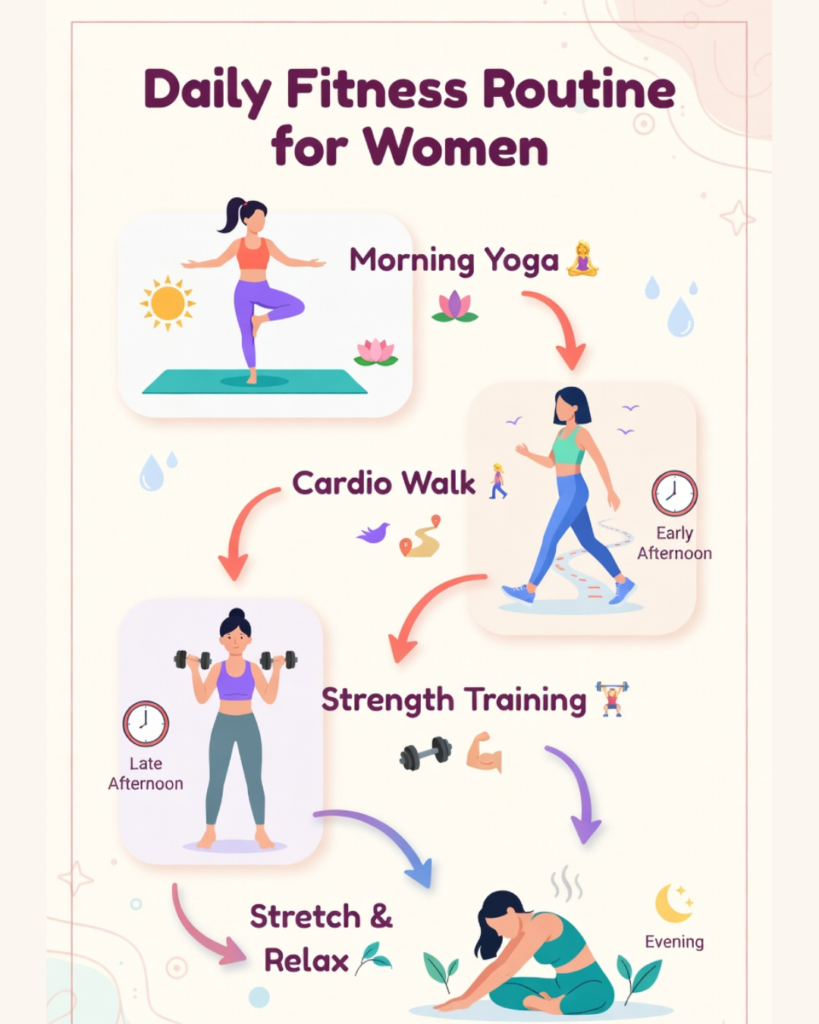
Your Complete Daily Fitness Routine (30–45 Minutes)
This routine is flexible — do it first thing in the morning for an energy boost or in the evening for recovery. Split it across the day if needed (e.g., morning stretch + evening walk). Total active time is short so it fits busy schedules.
Phase 1: 5-Minute Mobility Warm-Up (Every Morning or Before Movement) Use the exact 5 stretching exercises we covered earlier:
- Standing Hamstring Stretch (30 seconds per side)
- Quad Stretch (30 seconds per side)
- Hip Flexor Lunge Stretch (30 seconds per side)
- Calf Stretch at the Wall (30 seconds per side)
- Chest and Shoulder Opener in a Doorway (45 seconds)
Breathe deeply and move slowly. This prepares your body, improves posture, and releases overnight tightness.
Phase 2: 20–30 Minute Cardio Base (Daily Walk or Light Run) Your one-hour daily walk is still the foundation, but you can split it: 20–30 minutes brisk walking (or running with perfect form) at a conversational pace. Focus on tall posture, quick cadence (170–180 steps per minute), mid-foot strike under your hips, and relaxed arms. This builds cardiovascular fitness, burns fat efficiently, and supports the flatter-belly and kidney-health benefits we’ve discussed.
If you’re short on time, two 15-minute walks (one after breakfast, one after lunch) work just as well for steady energy and digestion.
Phase 3: 10-Minute Core & Strength Finisher (3–4 Times Per Week) Add this quick core circuit after your walk or on its own:
- Dead Bug — 45 seconds
- Bird Dog — 45 seconds per side
- Plank — 30–60 seconds
- Russian Twists — 45 seconds per side
- Glute Bridge — 45 seconds
These moves strengthen the deep core we talked about, improve running form, reduce back pain, and support better posture throughout the day.
Phase 4: 5-Minute Cool-Down & Recovery Finish with 2–3 of your favorite stretches from the 5-exercise list, then massage magnesium lotion into your calves, lower back, and shoulders. This step reduces soreness, calms the nervous system, and prepares you for deep sleep.
Total time: 30–45 minutes. Rest or do lighter movement on any day you feel fatigued.
How to Customize and Progress
Beginners: Start with the mobility + 20-minute walk only. Intermediate: Add the core circuit 4 days a week. Advanced: Extend the walk to 45–60 minutes or add light jogging intervals while keeping perfect form.
Track how you feel in a simple journal: energy level (1–10), any aches, and sleep quality. Adjust based on what your body tells you.
Common Mistakes That Sabotage Daily Fitness
- Doing too much too soon (start small and build).
- Skipping the warm-up or cool-down (increases injury risk).
- Ignoring form — poor posture during walks or core work wastes energy.
- Working out on a full stomach (wait 1–2 hours after meals).
- Forgetting recovery — magnesium lotion and the stretching routine are non-negotiable.
How This Routine Supports Your Entire Healthy Lifestyle
This daily fitness routine isn’t isolated — it amplifies everything else:
- Better energy pairs with the foods that keep your energy high.
- Improved posture and core strength enhance running form and reduce stress on your back and knees.
- Daily movement supports digestion, kidney health, and the flatter-belly benefits from ginger, kefir, and meal timing.
- Evening recovery with magnesium lotion and stretching helps you sleep deeply and lowers chronic stress.
Conclusion
A daily fitness routine doesn’t have to be complicated or time-consuming. This simple 30–45 minute plan — mobility warm-up, brisk walk or run with good form, quick core circuit, and recovery with magnesium lotion — gives you steady energy, stronger posture, fewer aches, and a body that feels good every day. It’s realistic, sustainable, and designed to work with the healthy habits you’re already practicing.
Start tonight or tomorrow morning with just the 5-minute mobility sequence and a 20-minute walk. In one week you’ll notice more energy, looser muscles, and a calmer mind. Consistency turns small daily actions into lifelong strength and vitality.
Your body is capable of amazing things when you give it the right daily signals. Lace up, move with intention, and enjoy the difference — one stretch, one step, one breath at a time. You’ve already built the foundation. Now make movement a natural, joyful part of every day.