
Building a drip irrigation system for under $50 revolutionizes your garden care while conserving water, saving time, and nurturing healthier plants. This practical guide empowers you to create an efficient watering system that delivers moisture directly to plant roots, reducing water waste by up to 50% compared to traditional methods. Whether you’re growing vegetables, tending flower beds, or maintaining container gardens, a budget-friendly drip system transforms your gardening experience from daily chore to automated efficiency.
The beauty of drip irrigation lies in its simplicity and effectiveness. By providing consistent, measured water directly where plants need it most, you eliminate runoff, reduce evaporation, and prevent the leaf diseases that overhead watering encourages. Studies from agricultural universities consistently show that drip irrigation increases yields while decreasing water consumption—a win-win for both your garden and the environment.
Ready to discover how a few simple components create a professional-grade irrigation system? Let’s unlock the secrets of efficient watering that fits any budget.
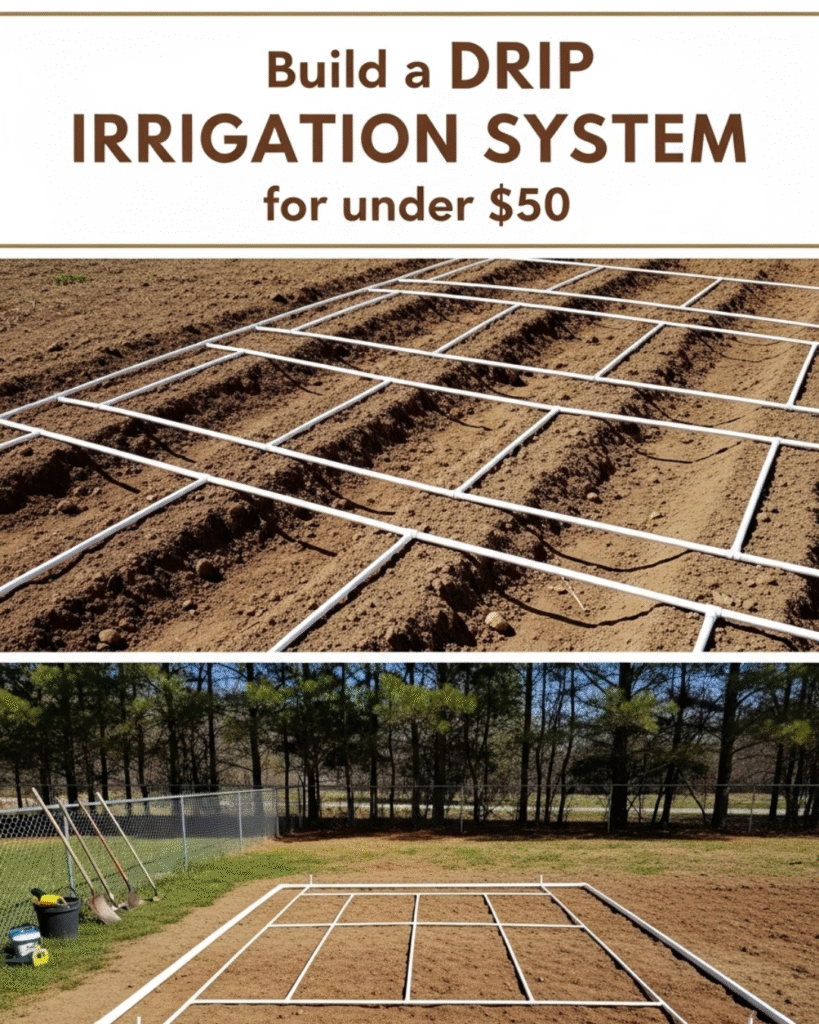
Understanding the Foundation of Drip Irrigation
Before purchasing materials or assembling components, understanding how drip irrigation works builds your confidence for creating a system perfectly suited to your garden’s unique needs. This knowledge transforms you from someone following instructions into a gardener who can adapt and customize intelligently.
Why Drip Irrigation Outperforms Traditional Watering
Traditional watering methods—hoses, sprinklers, and hand watering—waste significant water through evaporation, runoff, and imprecise application. When you spray water overhead, much of it never reaches plant roots. On hot days, evaporation claims up to 30% of the water before plants can absorb it. Runoff carries another portion away, along with valuable nutrients.
Drip irrigation delivers water at ground level, directly to the root zone where plants actually use it. This precision reduces water consumption by 30-70% while improving plant health. Roots develop deeper, stronger systems because they’re encouraged to grow down toward consistent moisture rather than staying shallow where surface watering pools.
The Science Behind Efficient Water Delivery
Drip systems work through slow, steady water release that matches plants’ absorption capacity. Rather than flooding soil and watching excess water drain away, drip emitters release water gradually—typically 0.5 to 2 gallons per hour per emitter. This slow application rate allows complete soil saturation without waste.
The consistent moisture level drip irrigation provides promotes optimal nutrient uptake. When soil alternates between saturated and dry conditions, plants experience stress that slows growth and reduces productivity. Steady moisture eliminates this stress while preventing the waterlogged conditions that encourage root rot.
Components of a Basic Drip System
Every drip irrigation system, regardless of size or complexity, consists of the same fundamental components working together. The main supply line carries water from your source (faucet, rain barrel, or existing irrigation line) throughout your garden. Distribution tubing branches from the main line, delivering water to different planting areas.
Emitters attach to distribution tubing at intervals matching your plants’ locations. These devices regulate water flow, ensuring consistent delivery. Connectors, elbows, and tees allow you to route tubing around obstacles and into every corner of your garden. A pressure regulator and filter protect system components from damage and clogging.
Understanding these components helps you visualize how they’ll work in your specific garden layout. Take a moment to walk your garden space, noting where water needs to flow and which areas require more or fewer emitters.
Step-by-Step Process for Building Your System
Creating your budget-friendly drip irrigation system follows a logical progression from planning through installation. Take your time with each step—careful planning and patient installation pay dividends in reliable, efficient operation.
Planning Your System Layout
Begin by sketching your garden layout on paper or using your smartphone’s notes app. Mark existing plants, planting beds, and water sources. Measure distances between your water source and farthest plants—this determines how much main line tubing you need. Add 10-15% extra for routing around obstacles and making adjustments.
Count individual plants or calculate linear feet of planting beds requiring irrigation. This helps determine how many emitters you need and their optimal spacing. Vegetables and annual flowers typically need emitters every 12-18 inches, while established shrubs might require only one or two emitters each.
Consider water pressure at your source. Standard drip systems work best with 20-30 PSI (pounds per square inch). Most residential water sources provide 40-80 PSI, making a pressure regulator essential for protecting your system components.
Gathering Materials on Budget
For a basic 50-foot system covering approximately 100-200 square feet of garden space, budget $40-50 for these essential components:
Main Supply Line ($8-12):
- 25-50 feet of ½-inch polyethylene tubing (main line)
- Choose UV-resistant tubing for above-ground installations
Distribution Components ($15-20):
- 50-100 feet of ¼-inch distribution tubing
- 20-40 drip emitters (adjustable or fixed-rate)
- Assorted barbed connectors, elbows, and tees
System Controls ($10-15):
- Pressure regulator (25 PSI)
- Y-connector with shutoff valves
- Filter to prevent clogging
- End caps or figure-eight closures
Installation Tools ($5-8):
- Tubing punch tool
- Scissors or tubing cutter
- Marking stakes (optional)
Purchase components at home improvement stores, irrigation specialty shops, or online retailers. Buying complete starter kits often saves money compared to purchasing individual components, though kits may include items you don’t need for your specific layout.
Installing Your Main Supply Line
Start installation at your water source, attaching the Y-connector to your outdoor faucet. This allows you to use the faucet for other purposes while running your drip system. Attach the pressure regulator and filter to the Y-connector’s output—this sequence ensures proper water pressure and clean water throughout your system.
Connect your main supply line (½-inch tubing) to the filter outlet. Lay the tubing along your garden’s perimeter or through the center, depending on your layout plan. If installing above ground, secure the tubing with landscape staples every few feet to prevent movement. For a cleaner appearance, bury the main line 2-4 inches deep, though this isn’t necessary for system function.
During warm weather, tubing becomes more flexible and easier to work with. On cool days, let tubing sit in the sun for 15-20 minutes before installation to soften it. This flexibility makes bending around corners and positioning much easier.
Adding Distribution Lines and Emitters
Using your tubing punch tool, create holes in the main supply line wherever you need distribution lines to branch off. Insert barbed connectors firmly—they should fit snugly and resist pulling out. If insertion is difficult, soften the tubing in warm water first.
Attach ¼-inch distribution tubing to these connectors, running lines to individual plants or along rows. Space emitters according to your plants’ needs—closer together for vegetables and container gardens, farther apart for established shrubs and trees. Push emitters into the distribution tubing at appropriate intervals, or use individual emitter stakes for precise placement.
Test your system before final installation by turning on the water briefly. Check for leaks at connections, verify that all emitters are dripping properly, and ensure water reaches all intended areas. Make adjustments by adding or repositioning emitters as needed.
Finalizing Your Installation
Once satisfied with emitter placement and system performance, secure all tubing with landscape staples or partially bury it to prevent tripping hazards and sun damage. Close the end of each distribution line with an end cap or figure-eight closure—this maintains pressure throughout the system.
Add a simple timer to your faucet (available for $10-20 if budget allows) to automate watering schedules. This convenience factor transforms your drip system from manual to truly automated, ensuring consistent watering even when you travel or forget.
Label your system components with weatherproof markers or tags noting what each section irrigates. This documentation helps during troubleshooting and when making future modifications or expansions.
Advanced Strategies for Optimal Performance
Once your basic system runs reliably, these expert techniques maximize efficiency and adapt your setup for changing garden needs. Small refinements create significant improvements in water delivery and plant health.
Customizing Emitter Placement for Different Plants
Not all plants require identical watering. Tomatoes and squash, with their extensive root systems, benefit from multiple emitters positioned around their drip line (the area beneath their outer leaves). Leafy greens like lettuce need closer emitter spacing—every 6-8 inches—to maintain the consistent moisture they prefer.
Container gardens require special consideration. Use individual emitter stakes or create dedicated loops of distribution tubing for each container. Containers dry faster than in-ground plantings, often needing longer watering durations despite their smaller volume.
Newly planted seedlings need frequent light watering while establishing roots. Position emitters close to young plants (within 2-3 inches), gradually moving them outward as plants mature and root systems expand. This encourages deep root development and creates stronger, more drought-resistant plants.
Adapting for Slopes and Uneven Terrain
Gardens on slopes present unique challenges for drip irrigation. Water naturally flows downhill, potentially causing emitters at lower elevations to drip faster than those uphill. Compensate by using pressure-compensating emitters that maintain consistent flow regardless of elevation changes, or by adjusting emitter types—lower-flow emitters downslope, higher-flow upslope.
For steep slopes, run your main supply line horizontally across the slope rather than straight up and down. Branch distribution lines perpendicular to the main line, creating a grid pattern that ensures even water distribution. This configuration also reduces pressure differences that cause uneven watering.
Terraced gardens work beautifully with drip irrigation. Install separate zones for each terrace level, allowing you to adjust watering duration based on each level’s specific drainage characteristics and sun exposure.
Expanding Your System Efficiently
As your garden grows, expand your drip system incrementally rather than starting over. Add new distribution lines to your existing main supply line by punching additional holes and inserting connectors. This modular approach keeps costs low while accommodating evolving garden layouts.
Consider creating separate zones for plants with different watering needs. Use Y-connectors with individual shutoff valves to control each zone independently. Run vegetables on a different schedule than established perennials, or separate sun-loving plants from shade dwellers that require less frequent watering.
Rain barrels integrate beautifully with drip systems for sustainable watering. Position your barrel elevated 3-4 feet above the garden to create sufficient pressure through gravity alone—no electricity required. This setup works perfectly for small to medium gardens when combined with low-flow emitters.
Seasonal Adjustments for Changing Conditions
Your drip system’s watering schedule should change with seasons, weather, and plant growth stages. During cool spring weather, plants need less water than during hot summer months. Adjust your timer accordingly, lengthening watering duration as temperatures rise and shortening it during cooler periods.
Monitor soil moisture regularly, especially during the first few weeks of operation. Push your finger 2-3 inches into the soil near emitters—it should feel evenly moist but not saturated. If soil feels dry at this depth, increase watering duration. If it’s soggy or water pools on the surface, reduce duration or emitter flow rate.
Mulching around plants enhances your drip system’s efficiency dramatically. A 2-3 inch layer of organic mulch reduces evaporation, moderates soil temperature, and helps water penetrate deeper rather than running off. This simple addition can reduce watering needs by an additional 20-30%.
Troubleshooting Common Drip System Challenges
Even well-designed systems occasionally need adjustments or repairs. Understanding common issues and their solutions keeps your irrigation running smoothly throughout the growing season.
Addressing Clogged Emitters
Clogged emitters are the most common drip system problem, usually caused by mineral deposits, algae, or debris in your water supply. Prevention starts with proper filtration—clean or replace your filter monthly during active growing season. If you have hard water, consider adding a second filter or flushing your system weekly.
When emitters do clog, remove them and soak in a solution of water and white vinegar (1:1 ratio) for several hours. The vinegar dissolves mineral deposits effectively. For stubborn clogs, use a small wire or pin to carefully clear the emitter opening, then rinse thoroughly before reinstalling.
Some regions’ water contains high levels of iron or sulfur bacteria that form persistent biofilms. For these challenging conditions, occasionally running a dilute hydrogen peroxide solution through your system (1 cup per 5 gallons of water) helps control biological growth without harming plants.
Fixing Leaks and Connection Problems
Leaks typically occur at connection points where barbed fittings attach to tubing. If a connection leaks, remove the fitting, ensure the tubing end is cut cleanly and squarely, then reinsert the fitting firmly. Tubing often needs forceful insertion—don’t be afraid to push hard.
For persistent leak problems, try heating the tubing end briefly with a hair dryer before inserting fittings. This softens the plastic just enough to create a better seal. As the tubing cools, it contracts around the barbed fitting, creating a water-tight connection.
Tubing damage from animals, garden tools, or sun exposure requires patching or replacement. For small punctures, cut out the damaged section and use a straight connector to join the ends. For extensive damage, replace the entire run—this is quick and inexpensive with basic tubing.
Solving Uneven Water Distribution
When some plants receive abundant water while others remain dry, pressure imbalances usually cause the problem. Verify that your pressure regulator functions correctly—it should reduce incoming pressure to 20-30 PSI. If pressure varies throughout your system, consider adding pressure-compensating emitters that maintain consistent flow.
Distribution line length affects pressure significantly. Lines longer than 30 feet may experience pressure drops that reduce flow in distant emitters. Solve this by keeping distribution lines shorter and running additional branches from your main supply line instead.
Sometimes uneven distribution simply reflects emitter clogging in some areas but not others. Systematically check each emitter’s output, cleaning or replacing those that drip slowly or not at all. This methodical approach quickly identifies problem areas.
Managing Winter Preparation
In regions with freezing temperatures, winterizing your drip system prevents damage from ice formation inside tubing. Before first frost, disconnect the system from your water source and open all end caps to allow water to drain completely. Blow out remaining water using an air compressor if available, though this isn’t essential for above-ground systems that drain naturally.
Remove and store sensitive components like timers, filters, and pressure regulators indoors where they won’t freeze. Above-ground tubing can remain in place if completely drained, though bringing it indoors extends its lifespan. Bury buried lines deep enough to stay below your region’s frost line for year-round protection.
In mild climates without hard freezes, winter maintenance involves simply reducing or pausing watering schedules to match dormant plants’ minimal needs. Flush the system monthly during winter to prevent algae and mineral buildup during idle periods.
Maximizing Results Through Smart Water Management
Building your drip system is just the beginning. These advanced strategies help you fine-tune water delivery, adapt to changing conditions, and create the healthiest possible growing environment for your plants.
Developing Effective Watering Schedules
The perfect watering schedule depends on multiple factors: soil type, climate, plant varieties, and season. Clay soils require longer but less frequent watering—they absorb water slowly but hold it well. Sandy soils need shorter, more frequent sessions because they drain quickly. Start with these baseline schedules and adjust based on observation:
Clay Soils: 60-90 minutes every 2-3 days
Loam Soils: 45-60 minutes every 2 days
Sandy Soils: 30-45 minutes daily
During establishment (first 2-3 weeks after planting), increase frequency while reducing duration. This keeps surface soil moist where new roots are developing. Once plants establish, transition to less frequent but longer watering that encourages deep root growth.
Integrating Soil Moisture Monitoring
Simple moisture meters ($10-15) provide objective data about when plants actually need water. Insert probes near different emitters throughout your garden, checking readings before scheduled watering. If soil registers as moist, delay watering a day. This prevents overwatering while ensuring plants never experience drought stress.
Alternatively, use the low-tech finger test: push your finger 2-3 inches into soil near plants. If it feels dry at that depth, water. If moist, wait. This hands-on approach keeps you connected with your garden’s rhythms while preventing wasteful overwatering.
Some gardeners create simple testing stations—one spot in full sun, one in partial shade, one in each distinct soil type. Checking these representative locations provides quick insights into overall garden moisture status without testing every plant.
Combining Drip with Companion Planting
Drip irrigation pairs beautifully with companion planting strategies that maximize space and improve plant health. Group plants with similar water needs on the same distribution lines, making irrigation management straightforward. Place water-loving plants like tomatoes and cucumbers together, while drought-tolerant herbs share different zones.
Consider root depth when positioning emitters around companion plantings. Deep-rooted tomatoes and shallow-rooted basil can share space, but they need emitters at different depths or flow rates. Place high-flow emitters for tomatoes while using low-flow for basil to prevent overwatering the herbs.
Succession planting—growing multiple crops in the same space across seasons—works seamlessly with drip systems. As one crop finishes, simply adjust emitter positions for the next planting without modifying your basic system layout.
Long-Term Maintenance and System Longevity
Well-maintained drip systems last 5-10 years or longer with minimal component replacement. Establish a simple maintenance routine: monthly filter cleaning, quarterly system flushing, and annual emitter inspection. This regular attention prevents small issues from becoming system failures.
Keep spare parts on hand—extra emitters, connectors, and a few feet of tubing. When you discover a problem during peak growing season, immediate repairs keep your plants healthy without emergency trips to the store. A small parts kit costs $10-15 and provides peace of mind.
Document your system modifications and seasonal adjustments in a garden journal. Note which emitter placements worked well, where you added capacity, and timing adjustments that proved optimal. This knowledge becomes invaluable when planning next season’s garden or helping friends create their own systems.
Consider upgrading components gradually over time. That $15 timer becomes a $40 smart controller with rain delay and soil moisture sensor integration. Basic emitters evolve into pressure-compensating models. These improvements spread costs while continually enhancing your system’s sophistication and efficiency.
Conclusion
Building a drip irrigation system for under $50 represents one of the smartest investments you’ll make in your garden’s success and your own free time. You’ve discovered how simple components combine into a professional-grade watering solution that conserves water, promotes healthier plants, and eliminates the daily chore of hand watering. The satisfaction of creating something functional and efficient with your own hands adds another dimension to your gardening journey.
Remember that every expert gardener started with basic systems and learned through observation and adjustment. Your first installation teaches fundamental principles, while successive seasons refine your understanding of how water, soil, and plants interact. The drip system you create today becomes increasingly optimized as you gain experience reading your garden’s unique needs.
Ready to transform your garden care from time-consuming chore to automated efficiency? Gather your materials, sketch your layout, and build your budget-friendly drip irrigation system this weekend. Your plants—and your water bill—will thank you for discovering this game-changing approach to garden irrigation.