
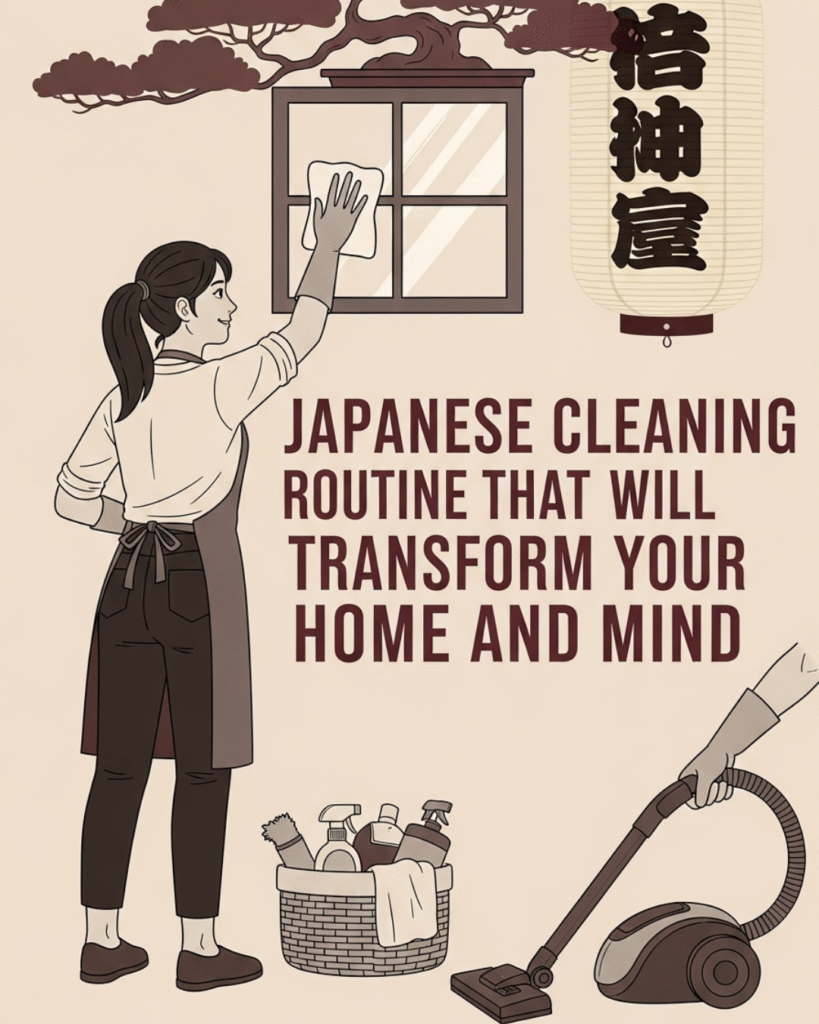
Do you view cleaning as a dreaded chore, a perpetual battle against clutter and dust? It’s time to transform your perspective by adopting the philosophical and practical approach embedded in JAPANESE CLEANING ROUTINE TIPS THAT WILL TRANSFORM YOUR HOME AND MIND. In Japan, cleaning (souji) is often seen as a spiritual practice, a way to purify the mind and honor the space, not just a way to achieve tidiness. This comprehensive guide will help you discover how to shift your routine from reactive scrubbing to proactive maintenance, empowering you to achieve a sense of peace, order, and deep mental clarity by embracing these sustainable lifestyle changes.
🧘 Foundation First: The Philosophy of Japanese Cleaning
The effectiveness of the Japanese cleaning routine is rooted in cultural concepts that elevate the act of tidying beyond mere aesthetics. Understanding these core concepts is essential for building confidence and achieving lasting results.
H3: Embracing Oosouji and Kakeibo
Before tackling the physical steps, you must grasp the mental framework—the “why” behind the discipline.
- Oosouji (The Great Cleanup): This isn’t just spring cleaning; it’s an annual ritual, often performed at the end of the year, to purify the space before welcoming the new year. It symbolizes clearing out the physical and mental clutter of the past, creating a fresh, energetic slate for the future. Oosouji focuses on deep cleaning neglected areas and removing things that no longer serve a purpose, preparing the home for the mindset shift.
- Kakeibo (The Budgeting Mindset): While primarily about financial budgeting, the Kakeibo concept encourages intentionality and mindful consumption, which directly impacts clutter. If you mindfully track where your money (and resources) go, you become less likely to bring unnecessary items into your home. This preventive measure drastically reduces the need for constant, large-scale cleanup.
H3: The Mental Transformation: Mindful Cleaning
The key distinction in the Japanese cleaning routine tips is that the process is often more important than the outcome.
- Focus and Flow: Treat cleaning as a meditative practice. Instead of listening to music or watching TV, focus entirely on the task at hand. Notice the texture of the cloth, the smell of the cleaner, and the motion of your hands. This engagement turns the task into a form of active meditation, offering a natural path to stress relief and mental clarity. This is the ultimate goal of sustainable lifestyle changes.
🧹 Section 2: Core Methods—Daily and Weekly Rituals
The secret to a consistently clean home is integrating small, non-overwhelming tasks into your daily schedule. This approach breaks down complex processes into manageable, achievable, step-by-step guidance.
The 5-Minute Daily Habit (Cho-tto Souji)
The power of a Japanese routine lies in prevention rather than cure. These tasks must be done immediately after use.
- Kitchen Wipe-Down (Immediately After Meals): Do not let dishes sit. Wipe down all counters, the sink, and the stovetop immediately after cooking or eating. Use a single cloth or sponge. Actionable language: “Finish eating, finish cleaning.”
- Bathroom Squeegee (Immediately After Showering): Keep a squeegee in the shower and wipe down the glass door and tiles after every use to prevent hard water stains and mildew buildup.
- The Floor Sweep (Entryway): Designate a five-minute window to quickly sweep or vacuum the main entryway. In Japan, removing shoes before entering (Genkan) minimizes dirt tracked inside, but quickly cleaning the entry prevents dirt migration throughout the house.
- Tidy Before Bed: Spend three minutes returning every item to its designated home (see Section 3). Never go to sleep with clutter on the floor, on the kitchen counters, or draped over furniture.
Weekly Maintenance: The “Zone” Approach
Instead of dedicating an entire Saturday, the Japanese routine favors spreading the work into concentrated zones.
| Day/Zone | Focus Task | Timing & Planning Consideration |
| Monday | Kitchen & Fridge Detox | Empty all waste, organize one shelf in the fridge (no more than 30 min). |
| Wednesday | Bathroom Deep Clean | Scrub toilet, shower, and sink. Replace hand towels. |
| Friday | The Floor Reset | Vacuum or mop all main floor areas. Clean baseboards. |
🧼 Section 3: Advanced Strategies for Clutter Control
Once the routine is established, the real work begins: managing the volume of items in your home. These JAPANESE CLEANING ROUTINE TIPS draw heavily on minimalist and organizational principles.
H3: Creating a Home for Everything (Ichi-Betsu)
This principle dictates that every single item in your home must have a designated, easy-to-access storage location.
- Rule of Three: Never have more than three storage layers. If an item is buried in a box, which is inside a cupboard, which is behind another object, it is too hard to retrieve and return. Ichi-Betsu prioritizes immediate returnability.
- Encourage Experimentation: Use small baskets, trays, or drawer dividers to contain items before they spill onto surfaces. For example, a dedicated charging tray prevents electronic clutter from scattering across the living room. (Internal Linking Opportunity: For detailed guidance on organizational techniques, see our article, “Mastering the Art of Drawer Dividers.”)
H3: The Power of Intentional Discarding (Danshari)
While often associated with decluttering experts, Danshari is a core philosophy meaning refuse, dispose, and detach.
- Refuse (Dan): Consciously refuse to accept new items you don’t need (e.g., promotional freebies, cheap souvenirs). This is a strong preventive measure against future clutter.
- Dispose (Sha): Regularly dispose of items you no longer use or need. This should not be a massive yearly purge but a weekly, gentle letting go. Keep a small donation box handy.
- Detach (Ri): Detach from the emotional need to own certain things. This supportive, non-judgmental language encourages you to acknowledge that an item’s value is not tied to your identity.
⚠️ Section 4: Troubleshooting Common Challenges
Adopting a new routine can lead to setbacks. Here are solutions to frequent obstacles encountered when implementing the Japanese cleaning routine.
Featured Snippet Potential: “What is the key difference between Japanese cleaning and Western cleaning styles?”
The key difference between the Japanese cleaning routine and typical Western cleaning styles is the focus on daily maintenance and spiritual purification versus periodic deep cleaning. Japanese routines emphasize souji (daily cleaning as self-discipline) and oosouji (annual purification), focusing on proactive prevention, honoring the space, and minimizing ownership (Danshari) to reduce the need for reactive, overwhelming weekend cleaning marathons.
Practical Troubleshooting Tips
- Problem: Fatigue or Overwhelm.
- Obstacle: Trying to do too much at once.
- Solution: Practice the 5-minute rule rigorously. If a task takes longer than five minutes (e.g., organizing a messy closet), stop and reschedule it for a dedicated time slot. Focus only on the maintenance and daily return of items. This offers encouragement for setbacks.
- Problem: Lack of Buy-in from Family Members.
- Obstacle: Cleaning is viewed as your job, not a shared responsibility.
- Solution: Frame it not as a chore but as honoring the shared space. Assign clear, non-negotiable zones (e.g., “everyone cleans their own dishes immediately”). Use supportive language to reinforce that order benefits everyone’s peace of mind.
- Problem: Stagnation and Clutter Creep.
- Obstacle: New items constantly entering the home faster than old items leave.
- Solution: Introduce the “One In, One Out” rule. Every time a new item is purchased or gifted, an equivalent item must leave the house immediately. This is a crucial alternative approach to maintaining equilibrium.
✨ Section 5: Maximizing Results—Beyond the Surface
Achieving the Japanese standard of clean is about building a foundation of order that supports deeper well-being.
- Sensory Cleanliness (Next Level Tips): Go beyond visual tidiness. Open windows daily for fresh air and light (Shinen). Use essential oils or subtle incense to purify the air. A space that smells clean, feels clean, and looks clean reinforces mental calm.
- The Wabi-Sabi Balance: The goal is not perfection, but acceptance. Wabi-Sabi appreciates the beauty in imperfection and impermanence. While you strive for order, accept that your home is lived in. If a towel is slightly askew or a dish waits in the rack, acknowledge it without self-judgment. This approach focuses on long-term considerations—sustaining the routine without burnout.
- Complementary Strategies: Digital Declutter: Extend the Oosouji principle to your digital life. Organize your computer files, delete unnecessary emails, and declutter your phone apps. A tidy digital space is equally important for mental clarity in the modern world. This inspires continued growth and learning.
✅ Conclusion: Your Capability to Achieve Tranquility
You now possess the foundational JAPANESE CLEANING ROUTINE TIPS THAT WILL TRANSFORM YOUR HOME AND MIND. By embracing daily, mindful rituals, applying the philosophical intent of Oosouji and Danshari, and committing to gradual progress and self-care, you can achieve an organized home and a peaceful mind.
Your capability to succeed is not measured by the speed of your scrubbing, but by the consistency of your intention.
Which tip—integrating the 5-Minute Daily Habit or practicing the intentional discard of Danshari—will you implement today to unlock a calmer, clearer living space?