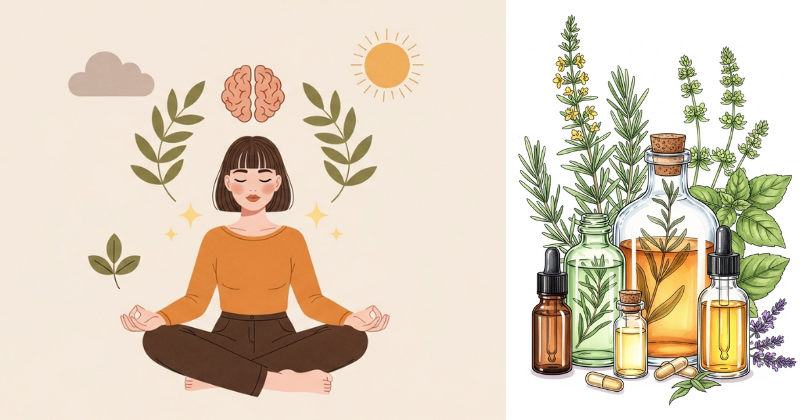
Feeling overwhelmed by stress or struggling to find focus? You are not alone. While professional support is essential, integrating natural allies into your daily routine can offer profound support. Discover 5 herbs to protect your mental health, providing scientific backing and natural, achievable methods to manage anxiety, enhance mood, and improve sleep. This guide emphasizes a supportive, non-judgmental language, encouraging gradual progress and self-care as you transform your approach to sustainable mental wellness.
Important Disclaimer: This article is for informational purposes only and should not replace professional advice. For health-related topics, including mental health, always consult healthcare providers before starting any new supplement, especially if you are currently taking medication. Individual results may vary.

🌿 Foundation First: Understanding Adaptogens and Nootropics
To effectively utilize 5 herbs to protect your mental health, it helps to understand the two main categories they fall into: Adaptogens and Nootropics. These concepts build confidence in choosing the right herbal allies.
H3: Building Confidence with Basic Concepts
- Adaptogens: These are non-toxic plants that help the body adapt to stress. They normalize physiological function, resisting physical, chemical, or biological stressors. Think of them as helping your stress response system maintain balance.
- Nootropics: These substances enhance cognitive function, particularly executive functions, memory, creativity, or motivation. They help improve clarity and focus, supporting brain health under mental duress.
- Encouraging Reassurance for Beginners: Many traditional systems have relied on these natural compounds for centuries. We are simply applying scientific backing to ancient wisdom, providing a safe, supportive pathway to wellness.
H3: Addressing Common Concerns: Quality and Interactions
When considering herbs to protect your mental health, quality and potential drug interactions are critical safety considerations.
- Quality: Always source herbs from reputable suppliers who provide third-party testing for purity, potency, and absence of heavy metals or contaminants. The active compounds are only effective when the herb is high quality.
- Interactions: Several popular herbs (especially St. John’s Wort, which is NOT included in our top five due to high interaction risk) can severely interact with common medications, particularly antidepressants and blood thinners. Always consult your physician or pharmacist first.
🌟 Section 2: Core 5 Herbs to Protect Your Mental Health
Here are five scientifically supported herbs known for their powerful effects on mood, stress, and cognition.
1. Ashwagandha (Withania somnifera): The Calming Adaptogen
Ashwagandha is arguably the most famous adaptogen, central to Ayurvedic medicine.
- Action: It works primarily by regulating cortisol, the body’s main stress hormone. Chronic stress leads to elevated cortisol, which disrupts sleep and mood. Ashwagandha helps lower elevated cortisol levels.
- Scientific Backing: Research indicates that Ashwagandha can significantly reduce scores on stress assessment scales and lower serum cortisol levels in chronically stressed adults.
2. Rhodiola Rosea: The Energy-Boosting Adaptogen
Known as the “Golden Root,” Rhodiola is traditionally used to improve physical and mental stamina.
- Action: Unlike Ashwagandha (which is often calming), Rhodiola is slightly stimulating. It supports energy metabolism in the brain and reduces mental fatigue, making it excellent for dealing with high-demand periods without causing jitters.
- Relatable Scenario: When you feel mentally drained but need to maintain focus and energy, Rhodiola offers a non-caffeine lift that supports sustained performance.
3. Bacopa Monnieri: The Memory Nootropic
Bacopa, or Brahmi, is a popular nootropic used for centuries to enhance memory and learning.
- Action: Bacopa works by influencing the growth of nerve endings (dendrites) in the brain, improving communication between neurons. It is particularly effective for memory recall and reducing anxiety associated with mental performance.
- Gradual Progress: This herb requires consistent, gradual progress. Its benefits are cumulative and may take 4 to 12 weeks of daily use to become noticeable.
4. Lemon Balm (Melissa officinalis): The Anxiety Soother
Lemon Balm is a gentle, fragrant herb known for its immediate calming properties.
- Action: It contains compounds that interact with $\text{GABA}$ receptors in the brain. $\text{GABA}$ is the primary inhibitory neurotransmitter that helps slow down nerve activity, promoting relaxation.
- Application: It is most commonly used as a tea or tincture to quickly reduce mild anxiety, nervousness, and promote restful sleep.
5. Holy Basil (Ocimum tenuiflorum): The Sacred Mood Lifter
Also known as Tulsi, Holy Basil is revered in India for its spiritual and therapeutic properties.
- Action: As an adaptogen, Holy Basil aids in systemic stress management. It can enhance mood by supporting healthy levels of neurotransmitters and providing neuroprotection against oxidative stress, contributing to sustainable lifestyle changes.
🍵 Section 3: Step-by-Step Process for Integration
Knowing 5 herbs to protect your mental health is the first step; incorporating them safely and effectively is the next.
Core Methods: Dosage and Preparation
The most common mistake is taking the wrong form or dosage. Follow these achievable, step-by-step guidance tips.
| Herb | Recommended Form | General Daily Dosage Range | Best Time to Take |
| Ashwagandha | Powder, Capsules, Tincture | 300 – 600 mg of root extract (standardized) | Morning and/or Evening |
| Rhodiola | Capsules, Tincture | 200 – 400 mg of standardized extract | Morning (avoid evenings) |
| Bacopa | Capsules, Powder | 300 mg of standardized extract (55% bacosides) | Morning or Afternoon |
| Lemon Balm | Tea (infusion), Tincture | 1-3 cups of tea, or 2-3 ml tincture | As needed for anxiety, or before bed |
| Holy Basil | Tea, Capsules | 500 – 1000 mg of dried herb powder | Anytime |
Actionable Focus: When purchasing encapsulated herbs, always look for the word “standardized” on the label, which ensures a consistent level of the active beneficial compounds.
🧘 Section 4: Advanced Strategies and Customization
Herbalism is deeply personal. Use these pro tips to customize your approach and maximize benefits from the 5 herbs to protect your mental health.
Featured Snippet Potential: “Can I combine adaptogens for better stress relief?”
Yes, you can often combine adaptogens for synergistic stress relief, but it is important to understand their profiles. For example, combining the calming, cortisol-lowering properties of Ashwagandha with the energy-boosting, anti-fatigue effects of Rhodiola can provide balanced support for both anxiety and low motivation. Always start with one herb at a time to monitor your body’s reaction, then combine at lower doses only after consulting a healthcare professional.
Practical Troubleshooting Tips (Wellness Focus)
- Problem: Ashwagandha is causing slight drowsiness during the day.
- Obstacle: Your body is highly sensitive to its sedative qualities.
- Solution: Alternative approaches: Shift your entire dosage to be taken only in the evening, approximately one hour before bed. This allows you to benefit from the reduced anxiety without daytime fatigue.
- Problem: Bacopa is causing mild digestive upset.
- Obstacle: Bacopa can sometimes be harsh on an empty stomach.
- Solution: Ensure you always take Bacopa with a full meal that includes some healthy fats. This drastically improves absorption and reduces gastric distress.
- Problem: The herbal tea taste is unpleasant.
- Solution: Creative solutions: For herbs like Lemon Balm or Holy Basil, blend the dried leaves with pleasant-tasting ingredients like peppermint, ginger, or a small amount of honey to make the content relatable and palatable.
🔑 Section 5: Maximizing Results: Sustainable Integration
Truly supporting your mental health is a marathon, not a sprint. Use these tips to ensure long-term, sustainable lifestyle changes.
- Cycle Your Herbs: It’s often beneficial to cycle adaptogens. Use one for 6-8 weeks, then take a 1-2 week break before resuming or switching to a different herb. This prevents your body from developing a tolerance and helps maintain efficacy. This is a crucial maintenance and long-term consideration.
- Complementary Strategies: Herbal supplements work best when paired with fundamental lifestyle habits. Ensure you are addressing sleep hygiene, maintaining consistent movement, and focusing on whole foods. The herbs are powerful allies, but they cannot replace the basics of self-care. (Internal Linking Opportunity: For tips on improving sleep, see our article, “Three Steps to Mastering Sleep Hygiene.”)
- Inspire Continued Growth and Learning: Keep a journal documenting when you take the herbs, the dosage, and how you feel mentally, emotionally, and physically. This allows you to precisely customize your approach and find the perfect gradual progress plan for your unique needs.
✅ Conclusion: Your Capability to Support Mental Wellness
You have successfully unlocked the knowledge of 5 herbs to protect your mental health, empowering you with science-backed, natural tools for self-care. By understanding the roles of adaptogens and nootropics, and implementing safe, practical dosing strategies, you can begin to experience greater calm, focus, and resilience.
Remember that mental health is dynamic, and your capability to succeed in supporting it naturally is strong. Be patient, be consistent, and honor the gradual progress you make.
Which herb—the calming Ashwagandha or the focusing Rhodiola—will you research further to begin your journey toward greater mental well-being?