
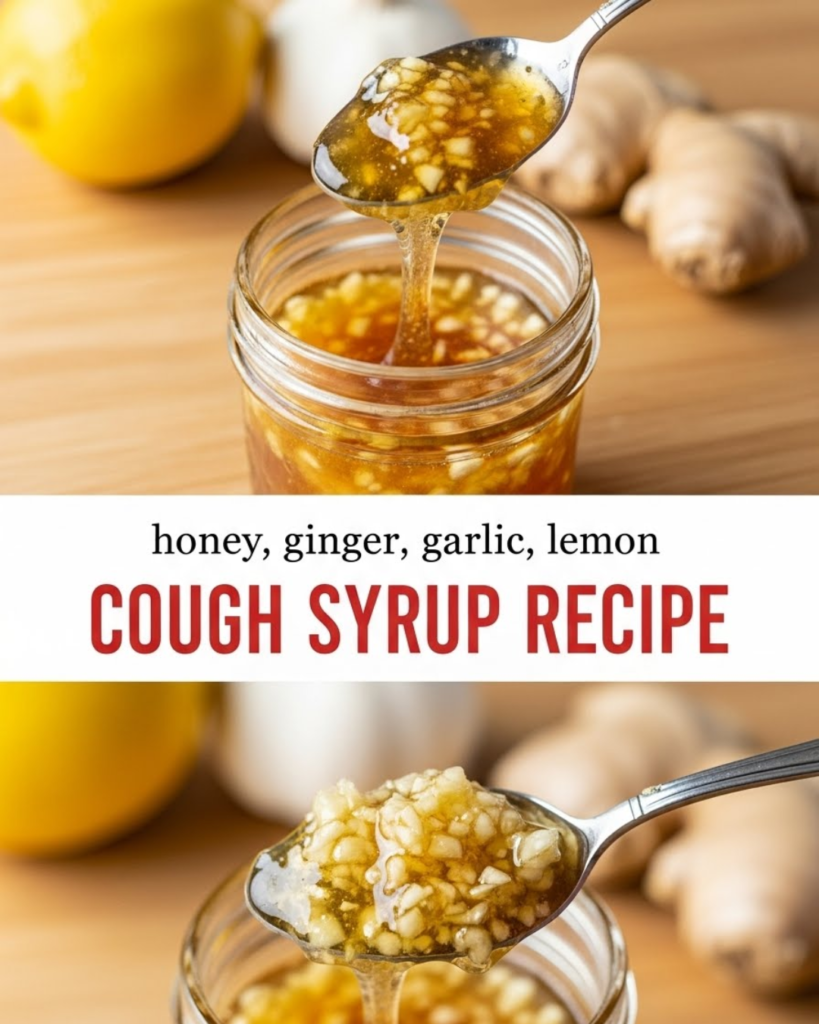
The moment that tickle in your throat turns into a persistent cough, you start searching for soothing relief. Instead of reaching for complicated, store-bought formulas, why not tap into the powerful, time-tested ingredients found right in your kitchen? Learning the honey, ginger, garlic, lemon COUGH SYRUP RECIPE is a simple, achievable Home Tips & DIY project that perfectly aligns with wellness topics and sustainable lifestyle changes. This comprehensive guide will empower you to transform everyday kitchen staples into a potent, all-natural tonic. Get ready to discover how to craft a soothing, effective syrup using the scientific backing of these four powerhouse ingredients.
🛑 Important Disclaimer
Important Disclaimer: This article is for informational purposes only and should not replace professional advice. For health-related topics, consult healthcare providers. For financial or legal matters, seek qualified professional guidance. For safety procedures, verify current best practices and local regulations. Individual results may vary, and personal circumstances should always be considered when implementing any suggestions.
🍯 Section 1: Foundation First: The Science Behind the Synergy
To truly appreciate the honey, ginger, garlic, lemon COUGH SYRUP RECIPE, it helps to build confidence with basic concepts regarding the therapeutic properties of each ingredient. This combination isn’t just a traditional remedy; it’s a synergistic blend of natural compounds.
H3: Building Confidence with Basic Concepts: The Role of Each Ingredient
Each component plays a specific role in soothing the throat, supporting the immune system, and addressing respiratory discomfort.
- Honey (The Soother): Known as a natural demulcent, honey coats the throat, reducing irritation and acting as a mild cough suppressant. Scientific Backing: Studies suggest honey can be as effective as dextromethorphan (a common OTC cough suppressant) in children (though never use for infants under one year due to botulism risk).
- Ginger (The Anti-Inflammatory): Ginger contains gingerols and shogaols, which possess potent anti-inflammatory and antioxidant effects. These compounds help relax the smooth muscles in the airways, potentially easing coughing fits.
- Garlic (The Immune Booster): Garlic contains allicin, a compound famous for its immune-supporting and antimicrobial properties.
- Lemon (The Vitamin C Carrier): Rich in Vitamin C and antioxidants, lemon juice supports immune function and acts as an astringent, helping to break up mucus.
H3: Addressing Common Concerns: Is it Safe for Everyone?
While this honey, ginger, garlic, lemon COUGH SYRUP RECIPE uses natural ingredients, safety considerations and age limits are crucial.
- The Infant Rule: Never give honey to children under 1 year old due to the risk of infant botulism. Always consult a pediatrician before giving any remedy to young children.
- Encouraging Reassurance for Beginners: This recipe is gentle and uses easily accessible items. The intensity of the garlic and ginger can be customized, allowing for gradual progress in creating a palatable tonic.
🍋 Section 2: Step-by-Step Process: Core Methods for the Syrup
Making your own honey, ginger, garlic, lemon COUGH SYRUP RECIPE is simple. We use a gentle infusion method to extract the medicinal properties without excessive heat, preserving the integrity of the raw honey and vitamins.
Ingredients and Tool Requirements
| Ingredient | Quantity | Purpose | Tool Requirement |
| Raw, Local Honey | 1 cup | Base, demulcent, carrier | Clean, airtight glass jar (8-10 oz) |
| Fresh Ginger Root | 1/4 cup, finely chopped/grated | Anti-inflammatory, soothing | Knife, Cutting Board, Grater |
| Fresh Garlic Cloves | $4 \text{-} 6 \text{ cloves}$, thinly sliced | Immune support, antiviral properties | Strainer (optional, for smooth syrup) |
| Fresh Lemon Juice | 2 Tbsp (or 1/4 cup lemon slices) | Vitamin C, mucus thinner |
Step-by-Step Guidance (Core Methods)
- Prepare the Herbs (Actionable Language): Peel and finely chop or grate the fresh ginger root. Peel and thinly slice the garlic cloves. Optional: Slice one whole lemon into thin rounds.
- Combine Ingredients: Place the prepared ginger and garlic (and lemon slices, if using) into the bottom of your clean, airtight glass jar.
- The Infusion (Timing and Planning Considerations): Pour the raw honey over the herbs, ensuring they are completely submerged. If using lemon juice, stir the two tablespoons in gently now.
- Seal and Activate: Seal the jar tightly. Place the jar in a cool, dark location. Shake the jar once daily for $2 \text{-} 5 \text{ days}$. The honey will naturally draw the medicinal compounds out of the ginger and garlic. Practical Tips and Shortcuts: The longer you infuse, the stronger the flavor and potency will be, but $48 \text{ hours}$ is the minimum time needed.
- Straining (Optional): After infusion, you can strain the syrup through a fine-mesh sieve or cheesecloth to remove the solids for a smoother, more palatable consistency. Store the final syrup in a fresh, clean jar.
🌶️ Section 3: Advanced Strategies: Customizing for Potency
Once you master the basic honey, ginger, garlic, lemon COUGH SYRUP RECIPE, you can apply expert-level insights to customize the tonic for enhanced flavor and potency.
H3: Creative Solutions: Enhancing the Respiratory Blend
You can safely add other powerful natural ingredients to your syrup blend for specialized relief.
- Cough Suppressant Power: Add $1 \text{ tablespoon}$ of dried Thyme. Thyme contains thymol, a compound known for its antispasmodic effects that help relax the cough reflex. (Internal Linking Opportunity: See our guide on Growing Thyme and Other Medicinal Herbs at Home.)
- Soothing Heat: For extra throat comfort, add a generous pinch (1/4 tsp) of Cayenne Pepper. The capsaicin in cayenne helps stimulate mucus flow and provides a warming sensation.
- Immune System Variation: Add $1 \text{ tablespoon}$ of dried Elderberries to the infusion process. Elderberries are packed with antioxidants and historically used to shorten cold and flu durations.
H3: Ways to Customize Approach: Serving Suggestions
The finished syrup can be used in several ways to suit different age groups and preferences, making the honey, ginger, garlic, lemon COUGH SYRUP RECIPE highly versatile.
- Direct Dose: Take $1 \text{ teaspoon}$ every $2 \text{-} 4 \text{ hours}$ as needed for cough suppression.
- Warming Tea: Stir $1 \text{ tablespoon}$ of the syrup into a mug of warm water or herbal tea (like Chamomile or Peppermint) to create a soothing, self-care beverage.
- Throat Gargle: Mix $1 \text{ teaspoon}$ with $1/2 \text{ cup}$ of warm water and gargle to help soothe throat irritation before swallowing.
🧊 Section 4: Troubleshooting and Common Challenges
While the honey, ginger, garlic, lemon COUGH SYRUP RECIPE is simple, storage and palatability can present challenges. Here are practical troubleshooting tips for success.
Featured Snippet Potential: “How long can I safely store homemade honey, ginger, garlic, lemon cough syrup?”
Homemade honey, ginger, garlic, lemon cough syrup can be safely stored in an airtight glass jar in the refrigerator for up to 3-4 weeks. Due to the high sugar content of the honey, the environment is generally inhospitable to bacteria. However, because fresh garlic and ginger contain moisture, it is crucial to refrigerate the syrup and inspect it for signs of fermentation (bubbling or sour odor) before each use. Always discard the syrup after one month.
Practical Troubleshooting Tips (Wellness Focus)
- Problem: The taste is too strong (too much garlic/ginger).
- Obstacle: The intensity of raw garlic can be overwhelming, especially for first-time users.
- Solution: Alternative Approaches: After the initial infusion, filter the solids (ginger/garlic) completely. Then, simply add $1/4 \text{ cup}$ more raw honey and $1 \text{ tablespoon}$ more lemon juice to the strained liquid to dilute the intensity.
- Problem: My syrup started to bubble or ferment.
- Obstacle: This happens when residual moisture or yeasts are present.
- Solution: Preventive Measures: Use a very clean, sterilized jar. Always store the finished syrup in the refrigerator immediately. If bubbling starts, the syrup is compromised and should be discarded to maintain safety considerations.
- Problem: The syrup solidified or became too thick to pour.
- Obstacle: Honey naturally crystallizes, especially when cool.
- Solution: Encouragement for Setbacks: This is completely normal and does not affect the potency. Simply place the sealed jar in a bowl of warm (not boiling) water for $10 \text{-} 15 \text{ minutes}$. The gentle heat will liquify the honey back into a pourable consistency.
🌟 Section 5: Maximizing Results: Next Level Immune Support
Creating the honey, ginger, garlic, lemon COUGH SYRUP RECIPE is an excellent sustainable lifestyle change. Here are next level tips to ensure you maximize its benefits and build upon basic success.
- Show How to Build Upon Basic Success: Consistency is Key. Don’t wait until you’re completely sick to use this recipe. During peak cold and flu season, take $1 \text{ teaspoon}$ daily as an immune support tonic. This is a crucial maintenance and long-term consideration for overall wellness.
- Maintenance and Long-Term Considerations: Use Local Raw Honey. Sourcing honey locally may offer an extra benefit by potentially exposing you to local pollens, which some believe can help with seasonal sensitivities. Always choose raw honey as heat processing destroys many of the beneficial enzymes and antioxidant compounds.
- Suggest Complementary Strategies: Hydration and Sleep: Remember that the most potent immune boosters are hydration and rest. Pair your honey, ginger, garlic, lemon COUGH SYRUP RECIPE with plenty of fluids (water, bone broth, herbal tea) and prioritize 7-9 hours of quality sleep. This comprehensive approach is the true path to sustainable lifestyle changes. (Internal Linking Opportunity: Read our article on Boosting Immunity with Fermented Foods.)
✅ Conclusion: Your Capability to Nurture Wellness
You have successfully mastered the honey, ginger, garlic, lemon COUGH SYRUP RECIPE, proving your capability to succeed in crafting powerful, natural remedies. By harnessing the proven scientific backing of these simple ingredients, you’ve taken an active step toward transforming your approach to seasonal wellness topics. This homemade tonic is more than just cough syrup; it’s a commitment to cleaner, more natural self-care.
Ready to create your soothing immune elixir? Which advanced ingredient—thyme or cayenne pepper—will you try first to customize your blend?