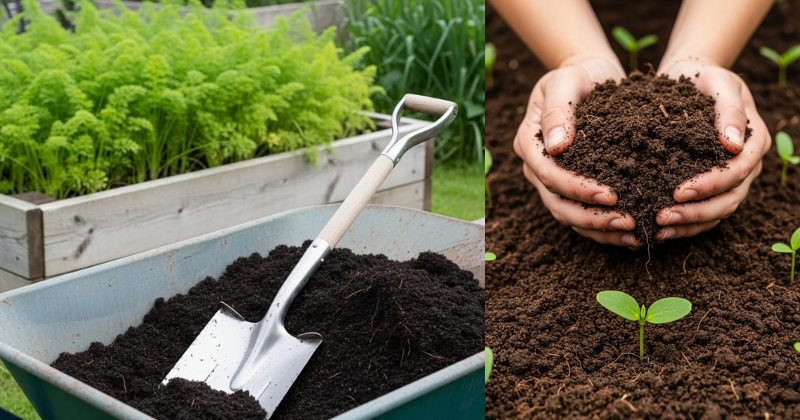
The secret to a thriving garden isn’t just water and sunlight—it’s the foundation beneath your plants. Learning 7 SIMPLE WAYS TO IMPROVE GARDEN SOIL can fundamentally transform your harvests, leading to healthier plants, better yields, and vibrant blooms. This Gardening Topics guide provides achievable, step-by-step guidance and encouraging language about growing and nurturing your soil. Get ready to discover how easy it is to unlock your yard’s full potential and achieve a deeper connection with nature by feeding the earth beneath your feet.
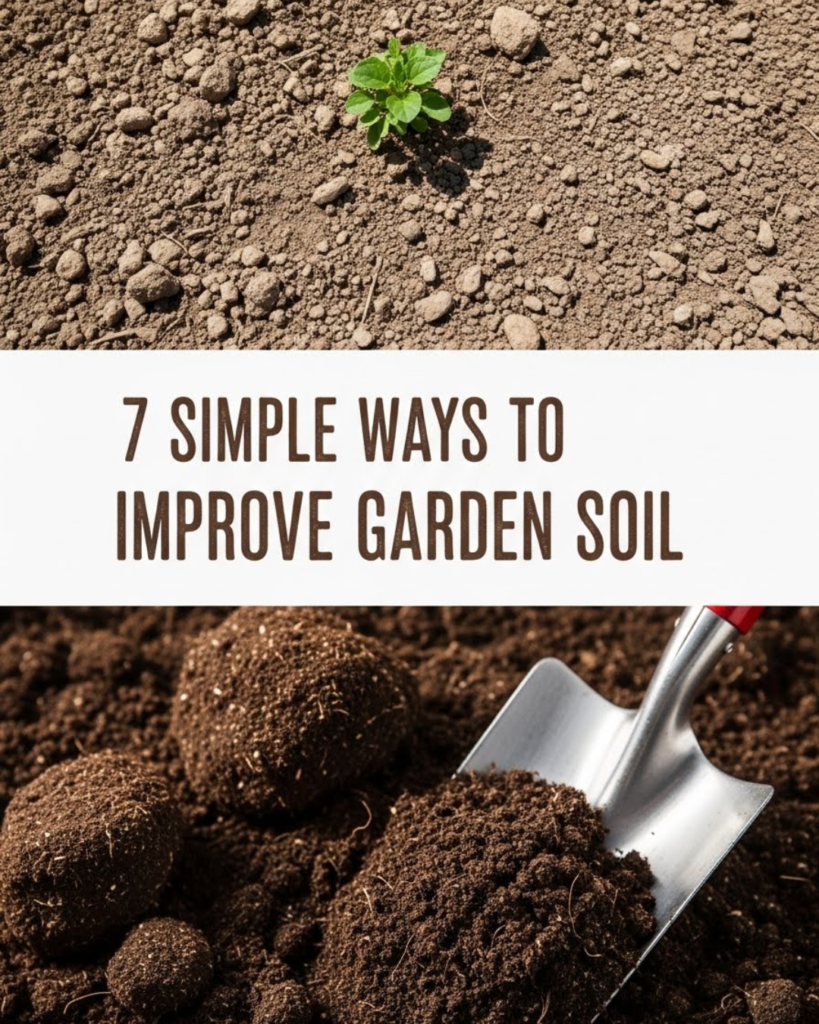
🌱 Section 1: Foundation First: The Importance of Soil Health
Before diving into the 7 SIMPLE WAYS TO IMPROVE GARDEN SOIL, it is crucial to build confidence with basic concepts about what constitutes healthy soil and why it matters more than anything else in your garden.
H3: Building Confidence with Basic Concepts: What is Healthy Soil?
Healthy soil is not just dirt; it’s a living ecosystem. The key components that make soil productive are texture, structure, and organic matter.
- Structure and Aeration: Good soil has a crumbly structure, allowing water to drain properly and oxygen to reach the roots. Poor soil is often compacted, suffocating roots and leading to rot.
- The Ecosystem Benefit: Soil is home to billions of beneficial microorganisms, fungi, and earthworms. These organisms decompose organic matter, release nutrients plants can absorb, and create the optimal environment for growth. This is the ultimate connection with nature.
- Encouraging Reassurance for Beginners: You don’t need a Ph.D. in soil science! Focusing on the 7 SIMPLE WAYS TO IMPROVE GARDEN SOIL through organic material addition is the fastest and easiest path to success.
H3: Addressing Common Concerns: Starting with a Soil Test
Before you add any amendments, you must know what your soil is lacking. This prevents unnecessary work and potential imbalances.
- The Soil Test: A professional soil test (available from local agricultural extensions or garden centers) gives you precise readings on three things:
- pH Level: Determines how acidic or alkaline your soil is (and therefore how well plants can absorb nutrients).
- Nutrient Levels: Measures the amount of major nutrients (Nitrogen, Phosphorus, Potassium – NPK).
- Organic Matter Percentage: Ideally should be between $3\%$ and $5\%$.
- Actionable Focus: Use the results of your soil test to customize your approach and choose the most effective of the 7 SIMPLE WAYS TO IMPROVE GARDEN SOIL listed below.
🛠️ Section 2: Step-by-Step Process: The First 3 Simple Ways to Improve Soil
These first three methods are the most fundamental and effective steps for learning 7 SIMPLE WAYS TO IMPROVE GARDEN SOIL and dramatically increasing its fertility and structure.
Way 1: The Magic of Compost (Core Methods)
Compost is the single greatest amendment you can add to any garden. It addresses every common soil problem.
- What it does: Compost adds essential organic matter, improves drainage in clay soil, increases water retention in sandy soil, and introduces beneficial microorganisms.
- Achievable Step-by-Step Guidance: Every spring and fall, spread a layer of aged compost ($1 \text{-} 2 \text{ inches}$ deep) over your garden beds. Gently work it into the top $3 \text{ inches}$ of soil using a garden fork, or simply let nature pull it down. (Internal Linking Opportunity: See our guide on “Composting 101: Transforming Kitchen Scraps into Gold.”)
Way 2: The Power of Cover Crops (Practical Tips and Shortcuts)
Cover cropping is one of the most effective and natural of the 7 SIMPLE WAYS TO IMPROVE GARDEN SOIL when your beds are not in active production.
- What they do: Cover crops (like clover, buckwheat, or rye) prevent erosion, suppress weeds, and, most importantly, add organic matter and nutrients when they are cut down and incorporated into the soil (a practice called “green manure”).
- Timing and Planning Considerations: Plant cover crops in the late fall or early spring during the seasonal considerations when beds are empty. Turn them under $3 \text{-} 4 \text{ weeks}$ before you plan to plant your main crop.
Way 3: Minimal Tillage (Actionable Language)
Tilling, or deep digging, is a practice we must change to truly improve garden soil.
- What it does: Tilling breaks apart the soil structure created by fungi and earthworms, releasing carbon, drying out the soil, and killing beneficial organisms.
- Actionable Language: Commit to minimal tillage. Instead of turning the soil over, use a broadfork or a regular garden fork to gently lift and loosen the soil, preserving the fungal networks and microbial life. This supports the long-term ecosystem benefits of your garden.
🌎 Section 3: Advanced Strategies: Natural Amendments (Ways 4-5)
Once the foundational work is done, these advanced strategies show you how to improve garden soil by providing targeted nutritional boosts using natural, low-cost amendments.
H3: Way 4: Utilizing Aged Manure and Leaf Mold
These are nutrient-dense amendments that dramatically boost fertility.
- Aged Manure: Manure (from cows, chickens, or horses) is high in nitrogen and organic matter. Pro Tip: Manure must be aged for at least six months to prevent burning your plants with excess ammonia and to kill potential pathogens and weed seeds.
- Leaf Mold: This is simply decomposed leaves, a phenomenal, free soil conditioner. Collect and shred fall leaves, then let them decompose in a pile for a year. The resulting leaf mold is excellent for moisture retention and attracting earthworms. This offers a huge cost-saving benefit while nurturing the soil.
H3: Way 5: Adjusting pH Naturally (Creative Solutions)
Using targeted amendments helps you manage the soil’s acidity or alkalinity based on your soil test results.
- Raising pH (Making it Less Acidic): Add limestone (calcium carbonate or dolomite) in the fall, as it takes time to break down.
- Lowering pH (Making it More Acidic): For acid-loving plants (like blueberries or rhododendrons), use elemental sulfur or peat moss (though use peat moss sparingly due to environmental concerns). Provide ways to customize approach: Always re-test the soil after one season to track your $\text{pH}$ gradual progress.
💧 Section 4: Troubleshooting and Common Challenges (Ways 6-7)
Two of the biggest obstacles gardeners face are dealing with clay and sandy soils. These methods complete the 7 SIMPLE WAYS TO IMPROVE GARDEN SOIL by offering targeted solutions for drainage and retention.
Featured Snippet Potential: “What is the best amendment for heavy clay soil?”
The best long-term amendment for heavy clay soil is high-quality, aged compost. Clay soil is dense and lacks pore space for air and water. While sand is sometimes suggested, it can actually create concrete-like conditions. Compost works by creating aggregation (clumping), improving the soil structure, increasing drainage, and introducing microbial life, transforming the heavy clay into loose, fertile loam over several seasons.
Way 6: Fixing Poor Drainage (Targeting Clay)
If your soil holds water like a sponge and cracks when dry, you have clay soil.
- The Solution: Focus exclusively on adding large amounts of organic matter (compost, mushroom compost, aged wood chips). The large particles in the organic matter prevent the tiny clay particles from packing together tightly, creating necessary air pockets. Encouragement for Setbacks: Fixing clay takes time—often $2 \text{-} 3$ years of heavy organic matter addition—but the results are truly transformative.
Way 7: Boosting Water Retention (Targeting Sand)
If your soil drains water instantly and dries out quickly, you have sandy soil.
- The Solution: Offer Alternative Approaches: Add organic matter rich in moisture retention properties, such as compost, well-rotted leaf mold, and finely ground coconut coir or peat moss. These materials act like sponges, holding water and nutrients near the roots, preventing them from washing away.
🏆 Section 5: Maximizing Results: Next Level Soil Health
Once you have mastered the 7 SIMPLE WAYS TO IMPROVE GARDEN SOIL, you can move on to strategies that ensure long-term health and inspire continued growth and learning.
- Show How to Build Upon Basic Success:Permanent Mulching. Do not leave soil bare. Apply a $2 \text{-} 3 \text{-inch}$ layer of organic mulch (shredded leaves, straw, or wood chips) over the surface.
- Maintenance and Long-Term Considerations: Mulch suppresses weeds (reducing competition for nutrients), moderates soil temperature, prevents moisture loss, and slowly breaks down to feed the microbes beneath, providing continuous improvement and protection.
- Suggest Complementary Strategies: Deep Root Watering. When you water, water deeply and less frequently. Deep watering encourages roots to grow downward, making them more resilient to drought and promoting a healthier, deeper soil profile. This is crucial for regional variations during dry seasons. (Internal Linking Opportunity: Read “Water-Wise Gardening: Drip Systems and Efficiency.”)
- Inspire Continued Growth: Observe your results. Yellowing leaves may indicate a nitrogen deficiency, while purple leaves suggest a phosphorus issue. Learn to read your plants—they are the most accurate indicators of your soil’s nutritional state.
✅ Conclusion: Your Capability to Nurture the Earth
You now possess the achievable, step-by-step guidance for implementing the 7 SIMPLE WAYS TO IMPROVE GARDEN SOIL. By focusing on organic matter, minimal disturbance, and targeted amendments, you are not just improving your garden; you are nurturing a thriving mini-ecosystem. This conscious effort provides profound satisfaction of completion and truly elevates your gardening success. The greatest lesson is that you feed the soil, and the soil feeds your plants.
Ready to start digging? Which of the 7 SIMPLE WAYS TO IMPROVE GARDEN SOIL—composting, cover cropping, or minimal tillage—will you implement in your garden this season?