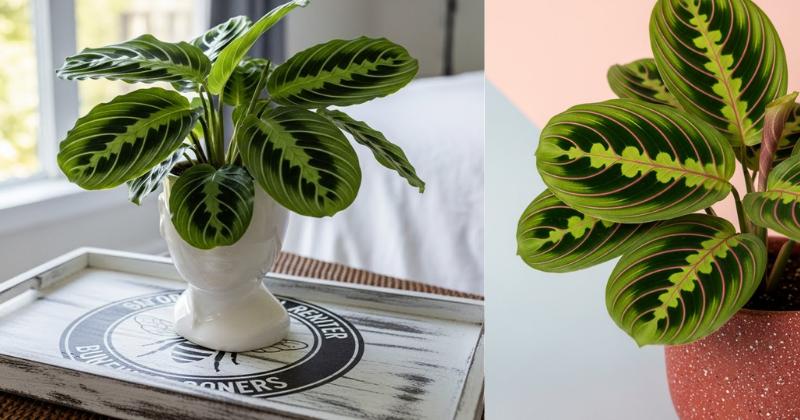
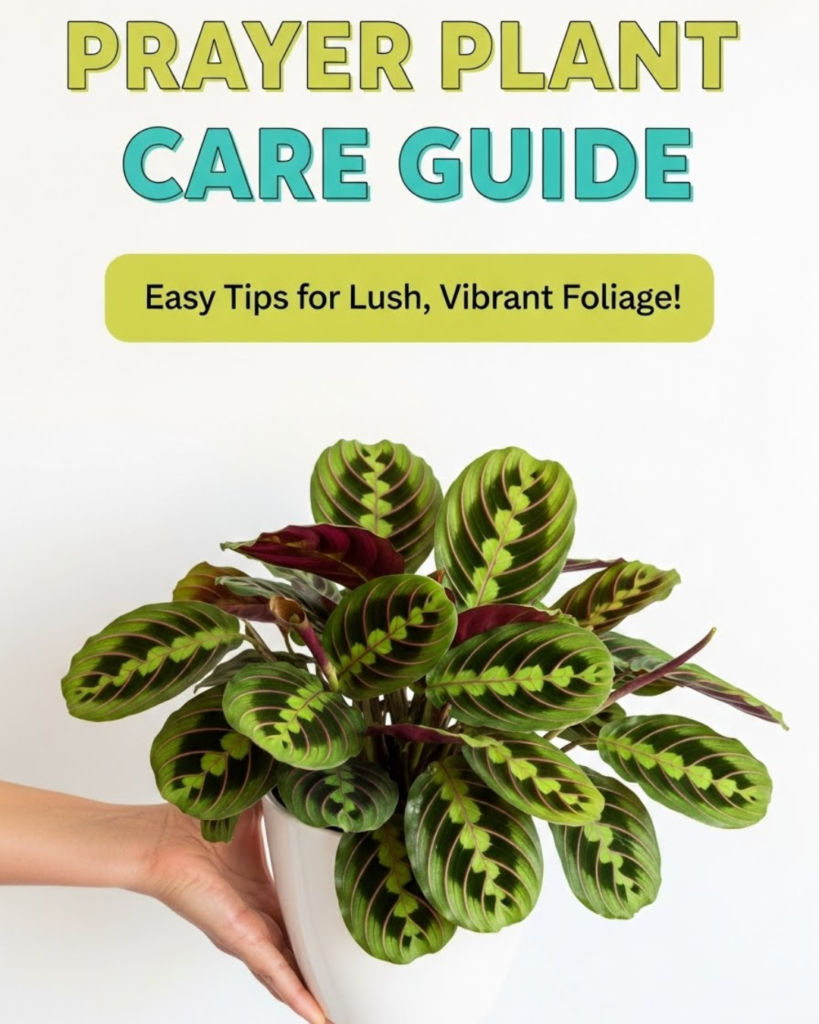
The Prayer Plant (Maranta leuconeura) is famous for its stunning, velvety leaves and unique habit of folding them up at night, resembling praying hands. If you want to transform your home into a lush, tropical oasis, you need our PRAYER PLANT CARE GUIDE Easy Tips for Lush, Vibrant Foliage! This Home Tips & DIY guide provides achievable, step-by-step guidance that will help you unlock the secret to thriving, colorful Prayer Plants, allowing you to achieve confidence in growing and nurturing this beloved houseplant.
🌿 Section 1: Foundation First: Understanding the Maranta’s Needs
To successfully nurture a Prayer Plant, you must build confidence with basic concepts by understanding its natural environment. Native to the Brazilian rainforest floor, the Maranta thrives on high humidity, indirect light, and constant moisture—but never sogginess.
H3: Building Confidence with Basic Concepts: The Phenomenon of Nyctinasty
The most captivating feature of the Prayer Plant is its daily movement, known as nyctinasty.
- The Mechanism: As light levels decrease in the evening, specialized cells at the base of the leaf stems (pulvini) lose turgor pressure. This causes the leaves to fold upward. In the morning, turgor pressure returns, and the leaves flatten out to maximize light absorption.
- The Lesson: This movement is your plant’s way of communicating. If your plant is not “praying,” it may signal issues with light or water. This unique connection with nature makes the plant highly engaging.
- Encouraging Reassurance for Beginners: The Prayer Plant is relatively forgiving once you master two main elements: light and water. You can achieve that desirable lush, vibrant foliage!
H3: Addressing Common Concerns: Light Requirements
Many struggle with leaf scorch or dull color, issues directly related to improper light.
- The Light Sweet Spot: Prayer Plants require bright, indirect light. Think of their native habitat: the dim, dappled light that filters through the dense rainforest canopy.
- Safety Considerations: Never place a Prayer Plant in direct sunlight. Direct, harsh sun will bleach the vibrant colors from the leaves and cause brown, crispy patches (leaf scorch). A north-facing window, or a spot several feet away from a bright south or west window, is ideal.
💧 Section 2: Step-by-Step Process: Core Watering and Humidity Methods
Mastering the perfect balance of moisture is the most critical element in any PRAYER PLANT CARE GUIDE Easy Tips for Lush, Vibrant Foliage! This section provides the core methods for watering and increasing ambient humidity.
Step 1: The Goldilocks Watering Rule (Actionable Language)
Prayer Plants hate being bone-dry, but they equally despise sitting in soaked soil.
- Check the Soil: Stick your finger $1 \text{-} 2 \text{ inches}$ into the potting mix. Only water when the top layer feels slightly dry to the touch.
- Water Deeply: When watering, drench the soil thoroughly until water drains freely from the bottom drainage holes. This ensures the entire root ball is saturated.
- Timing and Planning Considerations: Empty the saucer immediately after watering. Allowing the plant to sit in residual water leads to root rot, the number one Prayer Plant killer. Reduce watering frequency in winter during the seasonal considerations of slower growth.
Step 2: Boosting Humidity (Core Methods)
Due to their tropical origins, Prayer Plants demand high humidity (ideally $50\% \text{-} 60\%$). Low humidity leads to brown, crispy leaf edges.
| Method | Description | Practical Tips and Shortcuts |
| Pebble Trays | Place the pot on a tray filled with pebbles and water, ensuring the pot bottom sits above the water line. | Provides localized, steady humidity as the water evaporates. |
| Grouping Plants | Place your Prayer Plant near other houseplants. | Plants naturally release moisture through transpiration, raising the local humidity level. |
| Misting | Mist the leaves daily with distilled water. | Offers a quick, temporary fix; best used in combination with another method. |
Step 3: The Importance of Water Quality (Pro Tip)
Prayer Plants are notoriously sensitive to chemicals found in tap water.
- Actionable Tip: If you notice the leaf tips browning even when humidity seems sufficient, switch to distilled water, collected rainwater, or filtered water. The plant is likely reacting to the fluoride or chlorine present in municipal tap water. Using better water ensures you maintain that lush, vibrant foliage.
🪴 Section 3: Advanced Strategies: Soil, Feeding, and Pruning
Once the basics of light and water are mastered, these expert-level insights guide you on how to use proper soil mixes and feeding schedules to maximize growth and maintain plant shape.
H3: Sharing Expert-Level Insights: The Perfect Soil Mix
The right potting mix is essential for maintaining the ideal moisture balance—holding enough water without becoming waterlogged.
- Custom Mix: A simple, effective mix is $2 \text{ parts}$ high-quality indoor potting soil, $1 \text{ part}$ perlite (for aeration), and $1 \text{ part}$ peat moss or coco coir (for moisture retention).
- Repotting: Prayer Plants have shallow roots. Repot only when they become root-bound (roots circling the pot), usually every $1 \text{-} 2$ years. Choose a pot that is only $1 \text{-} 2 \text{ inches}$ larger in diameter.
H3: Encouraging Experimentation: Feeding for Vibrant Color
A proper feeding schedule is key to ensuring your PRAYER PLANT CARE GUIDE Easy Tips result in truly colorful, healthy leaves.
- Fertilizer Type: Use a balanced, water-soluble liquid fertilizer ($10 \text{-} 10 \text{-} 10$) diluted to half or even quarter strength.
- Schedule: Feed monthly during the growing season (spring and summer). Do not fertilize at all during the dormant winter months. Over-fertilization can cause a build-up of salts that burn the sensitive roots, leading to more brown tips.
🐛 Section 4: Troubleshooting and Common Challenges
Even with the best care, Prayer Plants can present obstacles. Here are practical troubleshooting tips for common issues.
Featured Snippet Potential: “Why are my Prayer Plant leaves turning yellow and brown?”
Prayer Plant leaves turn yellow and brown primarily due to inconsistent watering or low humidity. Yellowing often signals overwatering or insufficient drainage, leading to root rot. Brown, crispy edges or tips, however, are typically caused by insufficient humidity or sensitivity to chemicals (fluoride/chlorine) in tap water. Check your soil moisture, increase humidity using a pebble tray or humidifier, and switch to distilled or rainwater to address the browning.
Practical Troubleshooting Tips (Pests and Browning)
- Problem: Brown, crispy leaf edges persist despite daily misting.
- Obstacle: Misting alone is not raising the overall ambient humidity sufficiently, or the plant is reacting to tap water chemicals.
- Solution: Offer Alternative Approaches: Stop misting (which can encourage fungus) and implement a constant method like a nearby humidifier or a full pebble tray setup. Ensure you are exclusively using filtered or distilled water.
- Problem: Small, sticky spots or webbing appear on the undersides of leaves.
- Obstacle: Common houseplant pests like spider mites (tiny red or black specks) or mealybugs (white, cottony masses).
- Solution: Preventive Measures: Isolate the plant immediately. Treat with a horticultural oil (like neem oil) solution. Wipe the leaves thoroughly, paying close attention to the undersides. Check the plant weekly for pests as a maintenance and long-term consideration.
- Problem: New leaves are small and pale.
- Obstacle: Insufficient light or lack of nutrients (or both).
- Solution: Move the plant to a brighter, indirect light spot and ensure you are using a diluted liquid fertilizer monthly during the growing season. This ensures continued lush, vibrant foliage.
📈 Section 5: Maximizing Results: Propagation and Display
These next level tips focus on expanding your collection and integrating your thriving Prayer Plant into your home aesthetic.
- Show How to Build Upon Basic Success:Easy Propagation. Prayer Plants are incredibly easy to propagate, allowing you to share the beauty or expand your collection, offering great cost-saving benefits.
- Method: Simply take a cutting just below a node (the bumpy joint on the stem) that has $2 \text{-} 3$ leaves. Place the cutting in a glass of water, ensuring the node is submerged. Roots will appear within a few weeks. Plant in soil once the roots are $1 \text{ inch}$ long.
- Maintenance and Long-Term Considerations: Pruning for Bushiness. Prayer Plants naturally sprawl and trail. To encourage a fuller, bushier plant, occasionally trim back the longest vines just above a leaf node. This promotes branching and denser growth, maximizing the lively, vibrant foliage effect.
- Suggest Complementary Strategies: Creative Display. Because Prayer Plants tend to sprawl and slightly trail, they look spectacular in hanging baskets or placed on high shelves, allowing the foliage to cascade. They also thrive in terrariums due to the controlled, high-humidity environment. This is a great General Lifestyle/Casual Tip for decor. (Internal Linking Opportunity: Learn “How to Build a High-Humidity Houseplant Display.”)
✅ Conclusion: Your Capability to Nurture Vibrant Foliage
You are now fully equipped with the PRAYER PLANT CARE GUIDE Easy Tips for Lush, Vibrant Foliage! By controlling the light, mastering the moisture, and utilizing soft water, you have unlocked the secrets to keeping your Prayer Plant thriving. This conscious effort to provide the right environment is a rewarding form of self-care and demonstrates your capability to succeed in growing and nurturing this beautiful plant. Now go enjoy the sight of those leaves moving in their daily, silent prayer!
Ready to implement these changes? Will you focus on fixing your humidity problem first, or are you going to start a new cutting in water today?