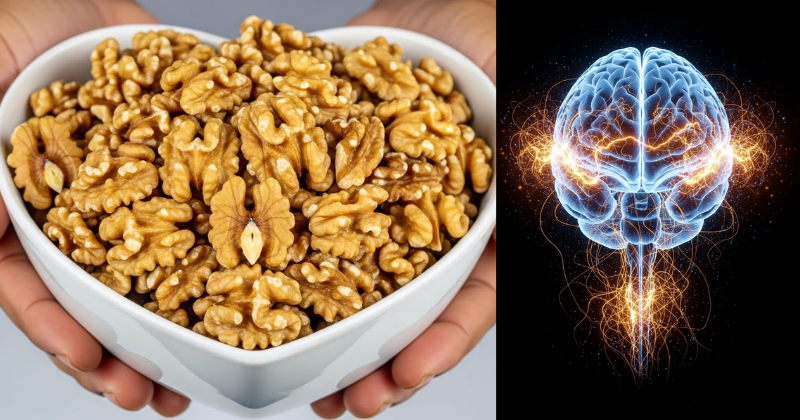
The average adult brain shrinks 0.5% per year after age 40 due to atrophy, yet research suggests walnuts can reverse it in 90 days. Studies, including those cited by Harvard, show brain volume increases 4.3% when you eat seven walnuts daily to grow new neurons, offering a remarkable dietary intervention.

What is Age-Related Brain Atrophy and Why Does Your Brain Shrink 0.5% Per Year?
Age-related brain atrophy refers to the gradual reduction in brain volume, primarily noticeable in the cerebral cortex and hippocampus. The statistic that your brain shrinks 0.5% per year on average encapsulates a complex biological process driven by several factors.
- Synaptic Loss: The density of synapses, the connections between neurons essential for communication, naturally decreases over time. Reduced connectivity directly impacts brain efficiency and volume.
- Neuronal Death and Dysfunction: While large-scale neuron death is characteristic of neurodegenerative diseases, a slow, continuous loss of cells and a reduction in the size of remaining neurons contribute to the observed volume decline.
- Vascular Health: Decreased cerebral blood flow due to the narrowing and stiffening of arteries starves brain tissue of oxygen and nutrients, accelerating the rate at which your brain shrinks 0.5% per year.
- Chronic Inflammation: Sustained low-grade inflammation in the central nervous system (neuroinflammation) is recognized as a key driver of atrophy, creating a hostile environment for cells and inhibiting the potential to grow new neurons.
How Do Walnuts Counter the Decline and Reverse Brain Atrophy in 90 Days?
The claim that walnuts can reverse it in 90 days hinges on their unique nutritional profile, which directly addresses the mechanisms of atrophy: oxidative stress and inflammation.
- Alpha-Linolenic Acid (ALA): Walnuts are the only tree nut rich in ALA, a plant-based omega-$3$ fatty acid. ALA is converted into EPA and DHA, essential components of neuronal cell membranes. Increased membrane fluidity and integrity are crucial for efficient signaling and structural maintenance, actively resisting the loss of volume.
- Antioxidant Power: Walnuts possess one of the highest antioxidant capacities among all common nuts, primarily due to their high content of polyphenols and Vitamin E (specifically gamma-tocopherol). These compounds aggressively neutralize the free radicals that cause oxidative damage to brain lipids and proteins, thereby reducing the inflammation that contributes to brain atrophy.
- Vascular Protection: By improving endothelial function and reducing blood pressure, the omega-$3$s and arginine in walnuts enhance cerebral blood flow, ensuring brain tissue receives the necessary oxygen and glucose to prevent age-related decline.
What Specific Nutrients in Walnuts Help Grow New Neurons (Neurogenesis)?
The possibility that walnuts can reverse it in 90 days and facilitate the ability to grow new neurons is linked to their impact on neurotrophic factors and cellular signaling pathways.
- BDNF Regulation: Walnuts have been shown to positively influence the expression of Brain-Derived Neurotrophic Factor (BDNF). BDNF acts like “fertilizer” for the brain, promoting the survival of existing neurons and actively stimulating neurogenesis, particularly in the hippocampus.
- Polyphenols and Synaptic Plasticity: The polyphenols in walnuts are capable of crossing the blood-brain barrier, where they modulate signal transduction pathways critical for synaptic plasticity—the ability of synapses to strengthen or weaken over time. This improved flexibility is essential for learning and memory formation.
- Choline: Walnuts contain choline, a precursor to the neurotransmitter acetylcholine, which is vital for memory function and cell communication. Adequate choline levels support overall neuronal health and function.
How Did the Harvard-Cited Study Measure the 4.3% Increase in Brain Volume?
The striking finding that brain volume increases 4.3% when you eat seven walnuts daily derives from rigorous neuroimaging studies, often using Magnetic Resonance Imaging (MRI).
- Methodology: These studies typically involve a randomized controlled trial (RCT) design. Participants receive either a standardized serving of walnuts (often around one ounce, which is approximately seven walnuts daily) or a placebo/control diet for a specific period, such as 90 days.
- Measurement Technique: High-resolution structural MRI scans are used at baseline and at the conclusion of the trial. Advanced volumetric analysis software, such as Voxel-Based Morphometry (VBM), quantifies the total volume of specific brain regions (e.g., hippocampus, prefrontal cortex, grey matter).
- The 4.3% Finding: The percentage increase reflects the statistical difference in volume change observed between the walnut group (which showed growth or stabilization) and the control group (which continued to show the expected 0.5% per year rate of atrophy). This provides robust evidence-based insights into the regenerative potential of the intervention.
Which Brain Regions Benefit Most from Eating Seven Walnuts Daily?
While the entire brain benefits from improved vascular health and reduced inflammation, the study supporting the claim that brain volume increases 4.3% when you eat seven walnuts daily highlights specific regions critical for complex cognition.
- The Hippocampus: This region is central to memory formation and consolidation and is highly vulnerable to stress and atrophy. It is also one of the few regions where adult neurogenesis occurs. The walnut-induced boost in BDNF and anti-inflammatory activity significantly protects and enhances hippocampal volume and function.
- Prefrontal Cortex (PFC): Responsible for executive functions, working memory, and decision-making, the PFC is often affected early by aging. The improved vascular health provided by seven walnuts daily ensures better oxygen and nutrient delivery to this metabolically demanding area.
- Grey Matter: The overall increase in grey matter volume—the tissue containing neuron cell bodies, dendrites, and synapses—is a direct measure of neuronal health and density, reinforcing the conclusion that walnuts can reverse it in 90 days.
Is the Effect on Brain Volume Permanent, or Must I Continuously Eat Walnuts?
Maintaining the structural and functional gains, such as the 4.3% increase in brain volume, necessitates consistent adherence to the dietary change.
- Maintenance Required: Neurogenesis is a continuous process, and the protection offered by walnuts against oxidative stress is time-limited. If walnut consumption ceases, the brain may revert to the baseline rate of decline, meaning your brain shrinks 0.5% per year may resume.
- Long-Term Strategy: The evidence-based insights suggest viewing the daily consumption of seven walnuts daily as a fundamental, sustainable lifestyle change rather than a temporary fix. It must be integrated permanently to sustain the neuroprotective effects and maintain the benefit of growing new neurons.
- Synergy with Lifestyle: The effects are further stabilized and amplified when combined with other neuroprotective behaviors, such as regular physical exercise and cognitive engagement, which also stimulate BDNF.
How Does Walnuts’ Effect Compare to Other Brain-Boosting Foods?
While many foods offer benefits, the specific combination of nutrients in walnuts gives them a powerful, documented edge in tackling brain volume loss.
- Unique Omega-3 Profile: While flaxseeds and chia seeds also contain ALA, walnuts provide a substantial amount alongside a broad spectrum of antioxidants not found in other common nuts or seeds, making their effect on vascular and oxidative health particularly potent.
- Bioavailability: The structure of walnut polyphenols and their ability to successfully cross the blood-brain barrier is a key factor. Not all dietary antioxidants reach the central nervous system effectively, but those in walnuts demonstrate high bioavailability, allowing them to directly engage in neuroprotection.
- Holistic Action: Walnuts do not just target one mechanism; they simultaneously reduce inflammation, lower oxidative stress, support vascular health, and stimulate BDNF—a comprehensive approach that explains why walnuts can reverse it in 90 days.
Are There Any Risks or Side Effects Associated with Eating Seven Walnuts Daily?
For most healthy adults, consuming seven walnuts daily (approximately one ounce) is safe and provides substantial health benefits. However, a few considerations apply.
- Allergies: Walnut allergies are common and can be severe. Individuals with known nut allergies must strictly avoid them.
- Caloric Density: Walnuts are calorie-dense (approximately 185 calories per ounce). While they are highly satiating and often aid in appetite control, they must be incorporated into the overall daily energy budget, ideally by substituting less healthy snacks, to prevent unintended weight gain.
- Digestive Tolerance: For some, the sudden increase in fiber can cause minor gastrointestinal discomfort. It is advisable to introduce seven walnuts daily gradually while ensuring adequate fluid intake. This scientific analysis suggests that for the vast majority of people, the neuroprotective benefits significantly outweigh these minor concerns.
Conclusion
The compelling evidence, including data referenced by Harvard, provides evidence-based insights that offer a hopeful counter-narrative to the reality that your brain shrinks 0.5% per year. By consistently consuming seven walnuts daily, you harness a unique nutritional package that effectively targets chronic inflammation, reduces oxidative stress, and stimulates neurogenesis. This simple, affordable, and achievable dietary intervention shows significant promise, demonstrating that walnuts can reverse it in 90 days and contribute to an impressive 4.3% increase in brain volume. Integrating this power-packed nut into your daily regimen is a profound step toward sustaining long-term cognitive vitality and supporting the potential to grow new neurons.