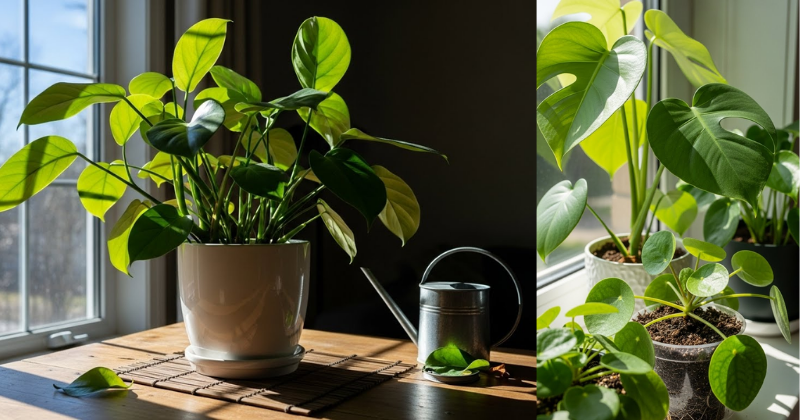
Your houseplants get water and sunlight, yet they refuse to grow—this common indoor plant mystery has a hidden cause most plant owners overlook, and fixing it can transform your plants.
You’ve done everything “right.” You water consistently. You place your plants near a bright window. You even talk to them sometimes. Yet weeks—or months—pass, and nothing changes. No new leaves. No visible growth. Just a healthy-looking plant stuck in pause mode.
If this sounds familiar, you’re not failing as a plant parent. You’re simply missing one critical factor that most indoor gardening advice barely mentions. Understanding this overlooked element can unlock growth, revive stalled plants, and completely change how you care for houseplants indoors.
This guide breaks it down clearly, practically, and encouragingly—so you can finally understand why some houseplants stop growing indoors even with water and sunlight, and exactly what to do about it.
H2: Why do houseplants stop growing indoors even when basic care seems correct?
When indoor plants stop growing, most people assume something is “wrong.” In reality, plants often pause growth as a survival response—not a sign of failure.
Growth requires more than water and light. It depends on a balanced system where roots, leaves, soil, and air all work together. Indoors, that system is very different from nature.
H3: Growth versus survival mode
Many houseplants are not actively growing—they are merely surviving. They maintain existing leaves, perform photosynthesis at a low level, and conserve energy.
Signs your plant is in survival mode:
- Leaves look healthy but no new growth appears
- Growth is extremely slow compared to previous seasons
- Stems remain short and compact
This usually means one essential growth trigger is missing.
H3: Indoor environments are not natural ecosystems
In nature, plants receive:
- Continuous air movement
- Microbial-rich soil
- Seasonal light shifts
- Natural root expansion
Indoors, plants are isolated from most of these cues. The missing piece often has nothing to do with watering or sunlight.
H2: What is the overlooked factor that stops indoor plants from growing?
The most commonly overlooked factor is root space and soil oxygenation—not just pot size, but how roots breathe and interact with soil.
Roots need oxygen just as much as leaves need light. Without it, growth slows or stops entirely.
H3: Roots don’t just absorb water—they breathe
Plant roots require oxygen to:
- Convert sugars into usable energy
- Build new root tissue
- Support leaf and stem growth
In compacted or old soil, oxygen pockets disappear. Even if you water correctly, roots can’t function efficiently.
H3: The silent impact of root binding
A plant that has outgrown its pot becomes root-bound. Roots circle the container, limiting:
- Nutrient absorption
- Water distribution
- New root development
This is one of the most common reasons houseplants stop growing indoors.
H2: How soil quality and age affect indoor plant growth
Soil is not permanent. Over time, it breaks down, compacts, and loses structure—especially indoors where there are no worms, insects, or natural soil renewal.
H3: Old soil becomes suffocating
As soil ages:
- Air pockets collapse
- Drainage worsens
- Salts from tap water accumulate
This leads to roots sitting in low-oxygen conditions, even if the soil looks dry on the surface.
H3: Nutrients can exist but still be unavailable
Even fertilized soil can fail plants. Compacted soil prevents roots from accessing nutrients efficiently. This is why fertilizing alone often doesn’t restart growth.
Internal linking opportunities:
You could link here to articles on:
- How to repot houseplants correctly
- Best soil mixes for indoor plants
- Signs of root-bound plants
- How often to change potting soil
H2: How indoor air, temperature, and seasons influence plant growth
Plants are seasonal organisms—even indoors.
H3: Why plants slow down in winter (even near windows)
During shorter days:
- Light intensity drops dramatically
- Photosynthesis slows
- Plants conserve energy
Even a sunny window in winter delivers far less usable light than summer sun.
H3: Stagnant indoor air limits growth signals
In nature, airflow:
- Strengthens stems
- Encourages gas exchange
- Prevents moisture buildup
Still indoor air reduces carbon dioxide availability around leaves, subtly limiting photosynthesis.
A small fan on low speed can sometimes stimulate growth more than extra watering.
H2: Step-by-step: How to restart growth in stalled houseplants
Here’s how you can gently move your plant from survival mode back into growth mode.
H3: Step 1 – Check the roots
Remove the plant from its pot and look for:
- Tightly circling roots
- Dense root mass with little soil
- Roots pressing against drainage holes
If you see these signs, it’s time to repot.
H3: Step 2 – Refresh the soil
Use fresh, well-draining potting mix appropriate for your plant type:
- Add perlite or bark for airflow
- Avoid reusing old, compacted soil
H3: Step 3 – Slightly increase space, not dramatically
Choose a pot only 2–5 cm wider than the previous one. Oversized pots hold excess moisture and slow root development.
H3: Step 4 – Adjust expectations
After repotting, growth may pause briefly as roots settle. New growth usually appears within 2–6 weeks during active seasons.
H2: Advanced strategies to keep indoor plants growing year-round
Once growth resumes, you can support long-term success.
H3: Rotate plants regularly
Turning pots every 1–2 weeks ensures even light exposure and balanced growth.
H3: Mimic natural cycles
- Reduce watering in winter
- Resume feeding in spring
- Accept slower growth during colder months
Plants thrive when their natural rhythms are respected.
H3: Observe, don’t overcorrect
Constant adjustments can stress plants more than stability. Make one change at a time and observe for two weeks.
Conclusion: Unlocking growth is about understanding, not doing more
When houseplants stop growing indoors, it’s rarely because you’re neglecting them. More often, it’s because their roots can’t breathe, expand, or function properly.
By focusing on root health, soil quality, airflow, and seasonal rhythms, you unlock growth in a way that water and sunlight alone never could. You don’t need complicated tools or expert-level knowledge—just awareness and small, intentional changes.
Your plants want to grow. Once you remove the hidden barriers, they will show you exactly what they’re capable of.