
Introduction
A struggling rosemary plant can be discouraging, especially when you’ve cared for it with love. But the good news is this: most dying rosemary plants can be revived with the right steps, and you’re about to learn exactly how. This guide walks you through the real reasons rosemary declines, the signs you should never ignore, and the exact actions you can take to bring your plant back to life.
(First 150–160 characters for meta description: Learn how to save a dying rosemary plant with simple, effective steps. Fix yellowing leaves, root rot, dryness, and revive growth fast.)
Rosemary is tough by nature, but when it starts turning brown, dropping needles, or drying out, it’s calling out for help. Whether yours is indoors, outdoors, in a pot, or part of a herb garden, you’ll discover the practical, gardener-approved steps you need to revive it. Let’s transform your rosemary from brittle and fading to strong, fragrant, and thriving again.
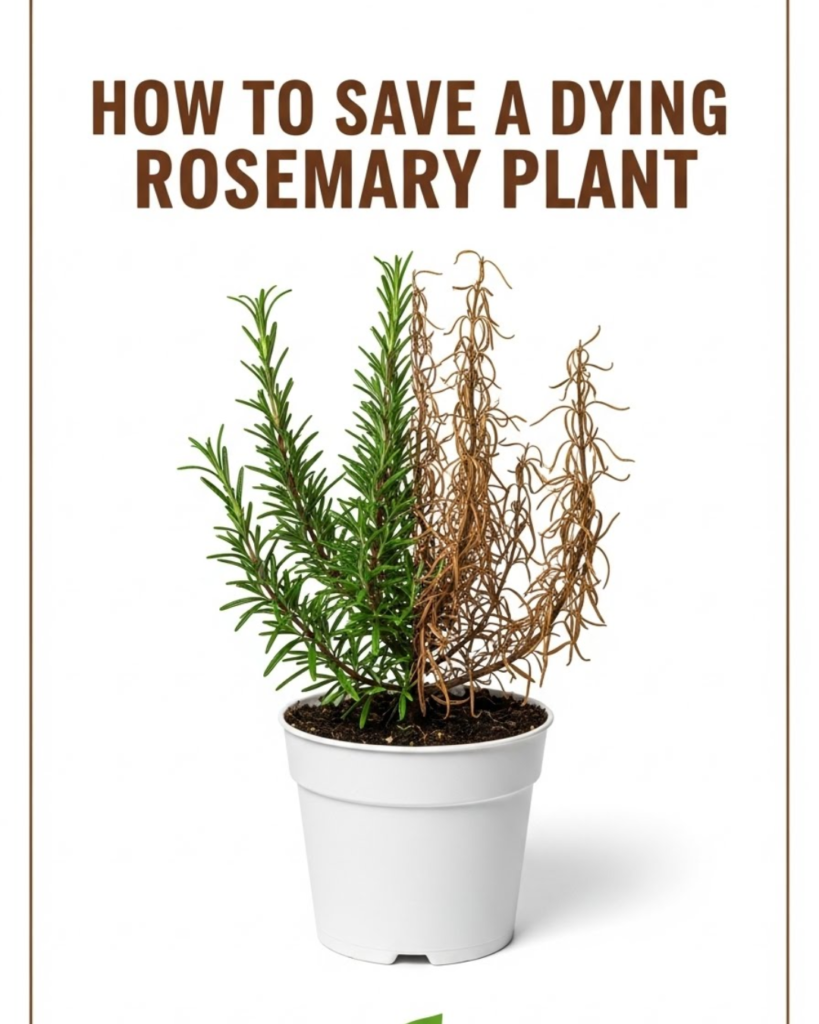
What You Need to Know Before Saving a Dying Rosemary Plant
Rosemary isn’t delicate, but it is particular. Before you begin reviving your plant, understanding its natural preferences gives you a strong foundation.
Why Rosemary Declines
Rosemary grows naturally in dry, rocky, sun-drenched Mediterranean soils. When you place it in conditions that differ too much—like soggy soil, shade, or compact pots—it starts to weaken.
H3: Common Symptoms of a Dying Rosemary Plant
Look for these signs so you know what issue you’re dealing with:
- Browning or brittle stems
- Yellowing needle-like leaves
- Dropping foliage
- Slow or stopped growth
- Mushy stems or roots (severe)
- Strong musty or sour smell from soil
H3: Encouragement for Beginners
Even experienced gardeners lose rosemary plants from time to time. You’re not doing anything “wrong”—you’re simply learning what rosemary needs. With the steps in this article, you can absolutely bring it back.
Step-by-Step: How to Save a Dying Rosemary Plant
This is the core section you’ll return to whenever your rosemary shows distress. The steps below offer clear, practical actions you can apply right now.
Step 1: Identify the Main Cause
Before doing anything, determine what’s actually harming the plant.
H4: Check the Soil Moisture
Use your finger to feel 2–3 inches down.
- If it’s wet, you’re overwatering.
- If it’s bone dry, your rosemary is dehydrated.
- If it’s compacted, it needs aeration or repotting.
Step 2: Fix Overwatering (The #1 Reason Rosemary Dies)
If the soil is soggy, act quickly.
- Remove the plant from the pot.
- Trim mushy, dark, or rotten roots.
- Let the root ball air-dry for 2–3 hours.
- Repot using fresh, fast-draining soil (cactus or Mediterranean herb mix).
- Water lightly and allow full drainage.
Step 3: Rescue a Dry or Underwatered Rosemary
Dry rosemary is easier to save than overwatered rosemary.
- Bottom-water the plant by placing the pot in a shallow tray for 20–30 minutes.
- Mist lightly—not heavily—to avoid fungal issues.
- Place in bright sunlight immediately.
Step 4: Give It Proper Light
Rosemary needs at least 6–8 hours of direct sunlight daily.
If indoors, place it:
- Near a south-facing window
- Under a grow light (LED is fine)
Insufficient light leads to weak, leggy, pale growth.
Step 5: Improve Airflow
Stagnant air causes bacteria and fungus to thrive.
- Avoid cramped corners
- Don’t crowd rosemary with other plants
- Trim dense growth to allow internal airflow
Advanced Strategies to Help Your Rosemary Thrive
These techniques take your rosemary care to the next level and ensure its long-term survival.
H3: Use the Right Soil Mix
Rosemary hates heavy soil. A perfect mix includes:
- 50% potting soil
- 25% coarse sand
- 25% perlite or pumice
This mimics its native environment.
H3: Choose Terracotta Pots
Terracotta breathes and prevents moisture buildup.
Plastic pots trap water longer, often leading to root rot.
H3: Prune to Encourage New Growth
Remove:
- Brown stems
- Leggy branches
- Soft, weak tips
This stimulates rosemary to push out fresh, healthy shoots.
Troubleshooting: Common Problems and How to Fix Them
Even with all the right care, rosemary sometimes struggles. Here’s how to recognize and solve the most frequent challenges.
Why Are My Rosemary Leaves Turning Brown?
Likely causes include:
- Overwatering
- Poor drainage
- Frost damage
- Sunburn (rare, but possible with sudden exposure)
Why Is My Rosemary Turning Yellow?
This is usually a sign of:
- Root rot
- Nutrient imbalance
- Standing water
A quick repot often solves this.
Why Is My Rosemary Dying in Winter?
Indoors, the air becomes too dry; outdoors, frost can kill roots.
Protect rosemary by:
- Bringing pots inside
- Using frost cloth
- Watering lightly in winter (not too much)
Maximizing Results and Keeping Rosemary Healthy Long-Term
Once your rosemary recovers, maintaining its health becomes straightforward.
Build a simple care routine:
- Water only when the top 2 inches are dry
- Provide consistent sunlight
- Rotate the pot weekly for even growth
- Prune lightly every 1–2 months
- Repot every 1–2 years
Complementary Strategies
These topics connect well for internal linking:
- Best Soil Mix for Mediterranean Herbs
- How to Grow Basil, Thyme, and Rosemary Together
- DIY Natural Fertilizers for Herbs
- How to Fix Root Rot in Potted Plants
- Indoor Herb Gardening for Beginners
These related topics help reinforce your plant-care skills and offer deeper guidance.
Conclusion
Saving a dying rosemary plant isn’t just possible—it’s incredibly rewarding. You’ve learned how to identify the real causes, revive the plant step-by-step, and prevent future problems with smart habits. Rosemary is resilient, and with the right care—proper watering, sunlight, drainage, and pruning—it can bounce back stronger than ever.
Your plant is not beyond saving. With patience, small adjustments, and the confidence you’ve gained here, you can absolutely transform your struggling rosemary into a thriving, fragrant plant again. You’ve got this—happy growing!