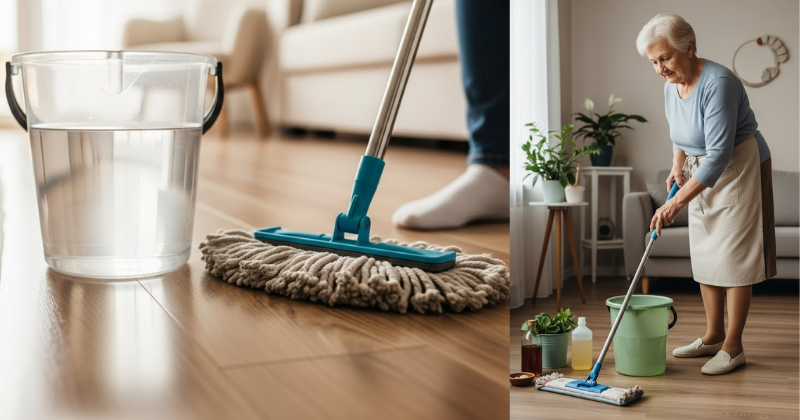
There’s something profoundly sacred about the cleaning rituals passed down through generations, whispered secrets that transform mundane housework into alchemy. My grandmother’s mop water recipe wasn’t merely a cleaning solution—it was liquid tradition, a potion that made hardwood floors gleam like rivers of amber while filling the house with memories of simpler times when cleanliness spoke of dignity and care.

La Sagesse Ancestrale : Quand le Nettoyage Devient Rituel
The mop water my grandma swore by contained only four ingredients, yet its effectiveness surpassed countless commercial products laden with chemicals whose names require chemistry degrees to pronounce. She would prepare this solution every Saturday morning, the ritual as predictable and comforting as sunrise itself. Hot water formed the foundation, followed by white vinegar for its cutting power, a splash of dish soap for lifting grime, and finally—the secret ingredient that made neighbors comment on how our home always smelled divine—a handful of fresh herbs or a few drops of essential oil.
Les Ingrédients de la Tradition : Simplicité et Puissance
This humble formula succeeded because it honored fundamental cleaning principles while respecting the materials it touched. Vinegar’s acetic acid dissolves mineral deposits and cuts through grease without harsh abrasives that damage floor finishes. The pH balance creates an environment inhospitable to bacteria while remaining gentle enough for daily use. Dish soap provides surfactant action, breaking surface tension and allowing water to penetrate and lift dirt particles from microscopic crevices in wood grain or tile grout.
What commercial products achieve through synthetic fragrances and optical brighteners, grandma’s recipe accomplished through authentic cleansing action and natural aromatics. The herbs she added—usually lavender from her garden in summer, rosemary in winter, or pine needles gathered from the yard—provided antimicrobial compounds that continued working long after floors dried.
La Philosophie du Nettoyage Conscient : Au-Delà de la Propreté
Grandma understood something modern culture has forgotten: cleaning serves purposes beyond sanitation. The act itself becomes meditation, each stroke of the mop a prayer of gratitude for the home sheltering your family. The fragrance lingering afterward creates invisible boundaries between indoor sanctuary and outdoor chaos. Her Saturday morning ritual wasn’t merely removing dirt—it was renewing the home’s spirit, establishing order that rippled through the entire week.
I remember watching her move across those floors with deliberate grace, the mop gliding in figure-eight patterns that covered every inch without wasted motion. She didn’t rush. The process deserved respect, time, full presence. In our age of robotic vacuums and spray-and-go solutions, we’ve lost this contemplative dimension of housekeeping that transforms chore into ceremony.
La Recette Exacte : Mesures et Méthodes Précises
Creating grandma’s legendary mop water requires attention to proportion and temperature, each element contributing to the symphony of cleanliness that follows.
Le Fondement Aqueux : L’Importance de la Chaleur
Begin with one gallon of hot water—genuinely hot, not merely warm. The heat activates cleaning compounds, opens pores in flooring materials, and helps dissolve stubborn residues that cold water cannot touch. Grandma used water hot enough to produce visible steam, testing temperature by hovering her hand above the bucket. If she couldn’t hold it there comfortably for five seconds, the temperature was correct.
This heat consideration matters more than most realize. Hot water reduces surface tension by approximately 30% compared to cold water, dramatically improving penetration and cleaning efficiency. It also evaporates faster, preventing prolonged moisture exposure that damages wood floors or seeps into grout lines.
L’Acidité Équilibrée : Le Vinaigre Comme Allié
Add one-half cup of white distilled vinegar to your hot water, creating a mildly acidic solution that dissolves alkaline deposits and neutralizes odors at molecular levels. Vinegar’s acetic acid concentration of 5% provides sufficient cleaning power without risking damage to floor finishes. This proportion—roughly one part vinegar to thirty-two parts water—strikes perfect balance between effectiveness and safety.
Some worry vinegar will damage hardwood floors, but this fear stems from misunderstanding. Diluted vinegar used occasionally actually benefits sealed wood floors by removing buildup from other cleaners while the quick evaporation prevents moisture penetration. Avoid vinegar only on unsealed wood, natural stone, or marble, which require pH-neutral solutions.
La Touche Émulsifiante : Savon en Quantité Mesurée
Incorporate one tablespoon of gentle dish soap—no more. Grandma emphasized this restraint rigorously. Excess soap leaves residue that attracts dirt, creating the paradox of floors that dirty faster after cleaning. One tablespoon provides sufficient surfactant action to lift oil-based grime while remaining easy to rinse away during mopping.
Select mild, biodegradable dish soap without dyes or synthetic fragrances that might conflict with your aromatic additions. The soap’s role is functional, not olfactory. Its molecules have hydrophobic tails that attach to dirt and hydrophilic heads that bond with water, creating microscopic packages that lift and suspend grime until you rinse it away.
L’Âme Aromatique : Herbes et Essences de Vie
This final element transforms functional cleaner into sensory experience. Grandma added fresh lavender sprigs in summer, crushing them slightly to release volatile oils. Winter brought rosemary branches or pine needles gathered from the yard, their resinous compounds providing antimicrobial benefits alongside nostalgic fragrance. Spring featured mint leaves, while autumn introduced sage from her herb garden.
For modern adaptation, add ten to fifteen drops of essential oils: lavender for calming spaces, lemon for energizing kitchens, eucalyptus for bathrooms, pine for entryways. These aren’t mere fragrances—they contain bioactive compounds that inhibit bacterial growth and purify air quality. The aromatherapeutic benefits remain hours after cleaning completes, influencing mood and creating ambiance that welcomes family and guests alike.
Les Techniques d’Application : Chorégraphie du Nettoyage
Proper technique amplifies even the best cleaning solution. Grandma’s method maximized efficiency while protecting floors from excess moisture.
La Préparation du Terrain : Balayage Initial
Never mop without sweeping first. This fundamental rule prevents pushing dirt around, which grinds particles into floor surfaces and creates muddy residue. Use a microfiber dust mop or soft-bristle broom to remove loose debris, paying special attention to corners where dust accumulates. This preliminary step takes five minutes but doubles cleaning effectiveness.
Grandma kept a dedicated dust mop hanging by the back door, using it daily for quick passes that prevented significant buildup. Saturday’s thorough mopping thus addressed only ingrained grime rather than battling layers of accumulated dust and tracked-in dirt.
Le Mouvement du Serpent : Figure-Eight Patterns
Dip your mop in the solution, wring thoroughly—grandma insisted the mop should be damp, never soaking. Excess water damages wood floors, seeps into grout lines, and extends drying time unnecessarily. Begin in the farthest corner from your exit point, working backward toward doorways so you never walk on freshly cleaned areas.
Move the mop in figure-eight patterns, overlapping each stroke slightly. This motion covers maximum surface area while the curved path prevents streaking that straight lines often create. Rinse your mop every few strokes, especially in high-traffic areas where dirt concentration is highest. Dirty mop water spreads grime rather than removing it.
Le Tempo du Processus : Patience et Présence
Grandma mopped methodically, never rushing through rooms. She understood that hurried cleaning misses spots and leaves residue. Each room received focused attention, the process taking whatever time necessary for thorough coverage. This patience produced floors that remained cleaner longer because the job was done properly the first time.
Modern life resists this deliberate pace, yet slowing down paradoxically saves time. Thorough mopping weekly means you don’t repeat the task mid-week. Floors maintained properly require less aggressive cleaning later, preserving their finish and extending their lifespan significantly.
Les Variations Saisonnières : Adapter la Formule aux Cycles
Grandma adjusted her recipe subtly throughout the year, responding to seasonal dirt patterns and household needs.
Printemps : Renouveau et Fraîcheur
Spring cleaning demanded extra strength formula: she increased vinegar to three-quarters cup, addressing winter’s accumulated grime and salt residue tracked in during snowy months. Fresh mint from emerging garden growth added brightness that matched season’s energy. The windows would be open, cross-breezes carrying mint-scented air through every room as floors dried quickly in warming temperatures.
This seasonal intensification targeted winter’s specific challenges—road salt deposits, increased moisture from melting snow, mud tracked repeatedly across entryways. The stronger solution cut through these tougher residues while spring’s lower humidity ensured rapid drying that prevented water damage.
Été : Légèreté et Protection
Summer brought lighter formula with emphasis on fragrance. She reduced soap slightly and added lavender abundantly, the scent mingling with garden aromas drifting through open windows. Summer’s challenge wasn’t heavy dirt but dust and pollen infiltration. Her solution maintained cleanliness while creating aromatic barrier that made indoor space distinct from outdoor environment.
Automne : Chaleur et Transition
Fall introduced warming scents—cinnamon sticks broken into the bucket, clove buds, or drops of orange essential oil. These autumn aromatics created cozy atmosphere as days shortened and temperatures dropped. The formula returned to standard proportions, addressing leaf debris and preparing home for winter’s heavier cleaning demands ahead.
Hiver : Force et Résilience
Winter required pragmatic adjustments. She increased soap slightly to combat tracked-in road treatments and heavier dirt from boots. Pine or fir needles provided evergreen freshness when herb garden lay dormant. The hot water needed to be even hotter, combating winter’s chill and ensuring proper drying despite reduced air circulation from closed windows.
Les Surfaces Compatibles : Connaître Vos Sols
Understanding which floors benefit from this solution prevents damage while maximizing effectiveness.
Bois Franc Scellé : Compatibilité Idéale
Sealed hardwood floors thrive with this gentle formula. The diluted vinegar removes buildup without stripping protective finishes, while minimal soap prevents residue accumulation. Ensure thorough wringing so mop is barely damp—excess moisture remains wood’s primary enemy even when sealed.
Carreaux et Céramique : Partenaires Parfaits
Tile floors love vinegar’s grease-cutting power. The solution penetrates grout lines, lifting embedded dirt and preventing mildew growth. For heavily soiled grout, let the solution sit briefly before mopping, allowing acids time to work on stubborn stains.
Linoléum et Vinyle : Alliés Appropriés
These resilient floors handle the formula beautifully. Vinegar’s gentle acidity maintains their finish without the harsh chemicals that dull synthetic surfaces over time. Regular use actually extends their lifespan by preventing buildup that degrades protective coatings.
Surfaces à Éviter : Prudence Nécessaire
Skip this formula on unsealed wood, natural stone, marble, or slate. These materials require pH-neutral cleaners that won’t etch surfaces or damage natural patina. Grandma kept separate solutions for her bathroom’s marble vanity, respecting each material’s unique requirements.
La Science Derrière la Magie : Pourquoi Cette Recette Fonctionne
Modern chemistry validates grandma’s empirical wisdom, revealing why simple ingredients outperform complex commercial formulations.
L’Action Synergique des Composants
Each ingredient performs specific function while supporting others’ effectiveness. Hot water provides solvent base and heat energy. Vinegar adjusts pH and breaks molecular bonds. Soap reduces surface tension and creates emulsions. Essential oils add antimicrobial properties. Together, they create cleaning system more effective than any single component alone.
Research confirms that combination cleaning approaches produce superior results compared to single-action products. The multi-modal attack on dirt—simultaneous acid dissolution, surfactant lifting, and heat activation—removes contaminants more thoroughly than specialized chemicals targeting only one mechanism.
L’Avantage Environnemental : Santé et Durabilité
Commercial floor cleaners contain phosphates, synthetic fragrances, optical brighteners, and preservatives unnecessary for actual cleaning. These additives serve marketing purposes—creating colorful, fragrant products that feel premium—but provide no functional benefit. Many irritate respiratory systems, accumulate in waterways, and pose risks to children and pets.
Grandma’s formula contains nothing you wouldn’t consume—vinegar appears in salads, soap cleans dishes, herbs season food, hot water makes tea. This inherent safety means no ventilation requirements, no glove necessity, no warning labels. Children can help with cleaning, learning valuable skills without exposure to toxic substances.
Conclusion
The mop water my grandma swore by endures because it honors timeless principles: simplicity, effectiveness, and respect for both materials and inhabitants. Her Saturday morning ritual taught me that housekeeping transcends mere sanitation, becoming instead an act of caring for space and those who occupy it. This humble mixture of hot water, vinegar, gentle soap, and fragrant herbs cleans floors beautifully while creating sensory experience that commercial products cannot replicate. Your home deserves this level of thoughtful care, and you possess the knowledge to provide it through this time-tested formula that transforms mopping from tedious chore into meaningful ritual. Begin your own tradition today, discovering how grandma’s wisdom still shines—quite literally—across floors that gleam with authentic cleanliness and the fragrance of home lovingly maintained.