
Creating your own dishwasher tablets is an act of domestic rebellion—a quiet declaration that you refuse to pay premium prices for simple chemistry wrapped in plastic. These homemade tablets transform ordinary pantry ingredients into powerful cleaning allies, saving money while gifting you the profound satisfaction of self-sufficiency. In your hands, washing soda and citric acid become alchemical elements, blending into tablets that clean as effectively as their store-bought counterparts at a fraction of the cost.
The Chemistry of Clean: Understanding What Makes Dishwasher Tablets Work
Before we embark on this crafting journey, let’s illuminate the science dancing within each tablet. Commercial dishwasher detergents rely on a symphony of alkaline compounds, acids, and surfactants working in harmony. The alkaline elements—typically sodium carbonate or washing soda—break down grease and protein residues. Citric acid prevents hard water mineral deposits from clouding your glassware. Coarse salt acts as an abrasive gentle enough not to scratch yet powerful enough to scour.
Understanding this chemistry liberates you from mystery. You’re not following blind recipes but consciously assembling components that each serve specific cleaning purposes. This knowledge transforms the process from mere mixing into intentional creation.
The Essential Ingredients and Their Roles
Washing soda (sodium carbonate) serves as your primary cleaning agent, cutting through grease with alkaline determination. Don’t confuse this with baking soda—washing soda possesses greater alkalinity, making it significantly more effective for dishwashing. You’ll find it in the laundry aisle of most supermarkets, often marketed as a laundry booster.
Citric acid counteracts hard water minerals, preventing that cloudy film on glasses that makes them look perpetually dirty even when clean. It also provides gentle acidic balance to the washing soda’s alkalinity. Look for it in the canning section or order it economically online in bulk quantities.
Coarse salt adds mild abrasive action and helps the tablets bind together during the drying process. Regular table salt works, but kosher salt or sea salt provides better texture and dissolves more completely during the wash cycle.
The Basic Recipe: Your Foundation for DIY Dishwasher Tablets
This foundational recipe produces approximately 40-50 tablets, depending on your mold size. Each batch costs mere dollars compared to the $15-20 you’d spend on equivalent commercial tablets. The mathematics of savings become poetry when you realize that same $20 could create over 200 homemade tablets.
You’ll need one cup of washing soda, one cup of baking soda (which adds gentle scrubbing action), one-half cup of citric acid, and one-half cup of coarse salt. These dry ingredients form your base—the foundation upon which clean dishes are built.
The Binding Process: Bringing Elements Together
In a large bowl, combine all dry ingredients thoroughly. This mixing stage matters more than it might seem—uneven distribution means some tablets will clean better than others. Take your time, stirring with meditative attention, ensuring every granule mingles with its companions.
Now comes the delicate part: adding moisture. Fill a spray bottle with water and mist the mixture lightly—three to four sprays at a time—stirring constantly. You’re seeking a texture like damp sand, just moist enough to hold together when squeezed but not so wet it becomes paste. This balance determines whether your tablets will dry properly or crumble uselessly.
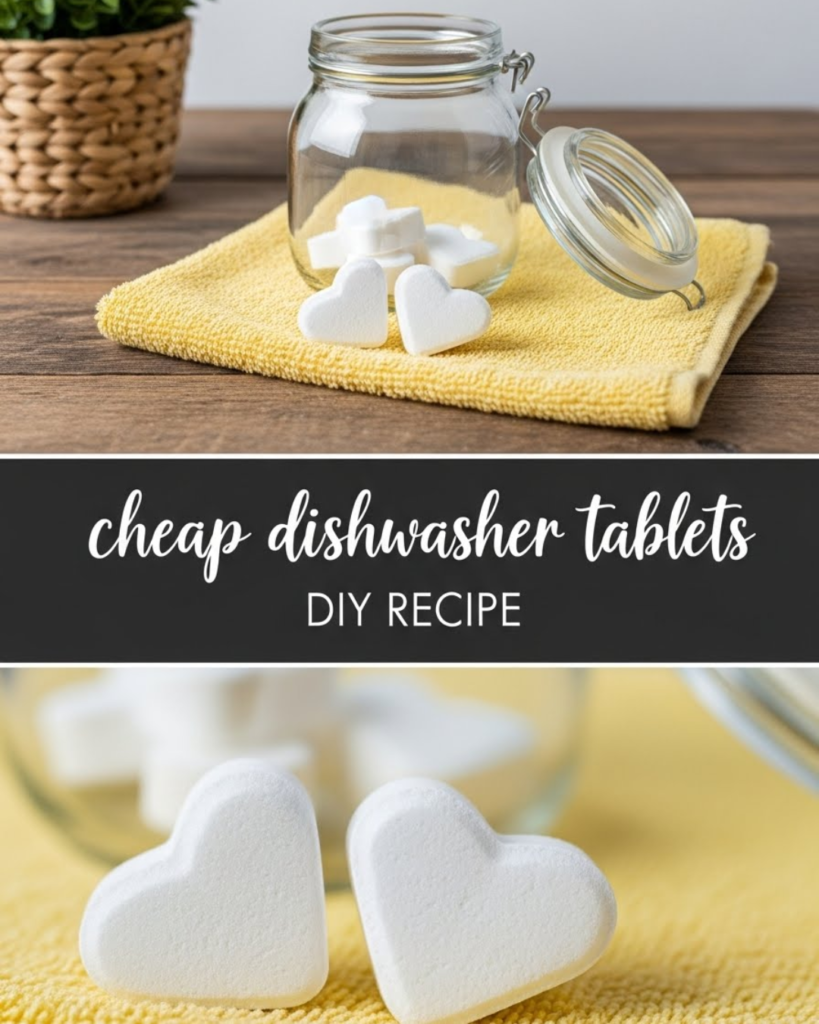
Press the mixture firmly into silicone ice cube trays or candy molds. Apply real pressure here—timid pressing creates tablets that disintegrate prematurely. Leave them to dry for 24 hours in a warm, dry location. Patience during this curing time transforms soft mixture into hard, durable tablets.
Advanced Formulations: Enhancing Your Tablets
Once you’ve mastered the basic recipe, you can explore enhancements that address specific water conditions or add beneficial properties. These variations aren’t mere novelties but practical adaptations that optimize cleaning for your unique situation.
For particularly hard water, increase citric acid to three-quarters cup. The additional acid provides extra mineral-fighting power, preventing the dreaded cloudy glassware syndrome that plagues many regions. I discovered this adjustment necessity after moving to an area with exceptionally mineral-rich water—my initial batches left everything looking foggy until I adjusted the formula.
Adding Natural Rinse Aid Properties
Incorporate two tablespoons of food-grade lemon essential oil to provide natural rinse aid properties. The oil helps water sheet off dishes rather than forming droplets that leave spots. Mix the essential oil with the dry ingredients before adding water—this ensures even distribution throughout your tablets.
Some crafters add liquid castile soap for extra grease-cutting power, but use this sparingly—one tablespoon per batch maximum. Too much soap creates excessive suds that can overflow your dishwasher, and few domestic disasters compare to returning home to find your kitchen floor covered in soapy water. Trust me on this wisdom born from experience.
Storage Solutions: Preserving Your Tablets’ Potency
Proper storage determines whether your tablets remain effective for months or deteriorate into useless powder. Moisture is your enemy here—even ambient humidity can gradually soften tablets, causing them to crumble or stick together.
Store completely dried tablets in airtight glass jars or plastic containers with tight-fitting lids. Add a small silica gel packet (those little sachets from vitamin bottles or shoe boxes) to absorb any moisture that sneaks in. Label your containers with creation dates—though these tablets technically don’t expire, knowing their age helps you rotate stock if you make multiple batches.
Handling Seasonal Humidity Challenges
Summer humidity presents special challenges for tablet storage. During humid months, consider storing your tablets in containers with even more aggressive moisture protection—multiple silica packets or containers kept in climate-controlled spaces. Some dedicated DIY enthusiasts keep their tablets in the refrigerator during summer, though this seems excessive unless you live in tropical climates.
If tablets do soften slightly, they’re still usable—just handle them more gently when placing them in the dishwasher’s detergent compartment. Slightly soft tablets actually dissolve faster, which isn’t necessarily negative unless they’ve become so soft they fall apart when touched.
Troubleshooting Common Issues: Perfecting Your Process
Sometimes initial batches don’t turn out perfectly. This isn’t failure but learning—each problem teaches you something about the delicate balance of ingredients and moisture.
If tablets crumble when you remove them from molds, you didn’t add enough moisture during mixing. The mixture should feel slightly damp, able to hold a squeezed shape for a few seconds before slowly falling apart. Add moisture more generously in your next batch, though still cautiously—the line between too dry and too wet is surprisingly narrow.
Addressing Cleaning Performance Issues
If your tablets aren’t cleaning effectively, several factors might be responsible. First, examine your dishwasher’s spray arms—clogged holes prevent proper water circulation regardless of detergent quality. Remove and rinse these arms monthly for optimal performance.
Hard water requires formula adjustment, as mentioned earlier. But soft water presents opposite challenges—too much washing soda in soft water can leave a white film on dishes. If you have soft water, reduce washing soda to three-quarters cup and increase baking soda slightly for balance.
Pre-rinsing dishes too thoroughly actually reduces cleaning effectiveness. Modern dishwasher detergents—including your homemade versions—need some soil to activate properly. Scrape large food particles but leave a light residue for your tablets to work on. This counterintuitive advice comes from appliance manufacturers who design detergents to perform optimally with lightly soiled rather than spotless dishes.
Cost Analysis: The Mathematics of Savings
Let’s examine the financial poetry of DIY dishwasher tablets. A typical batch costs approximately $3-4 in ingredients and produces 45 tablets. That’s roughly 8 cents per tablet. Compare this to commercial tablets averaging 35-50 cents each, and the savings become undeniable.
If you run your dishwasher five times weekly—a reasonable frequency for a family of four—you’ll use 260 tablets annually. At commercial prices, this represents $91-130 in yearly costs. Your DIY tablets reduce this to approximately $21 annually. That’s $70-100 in savings—enough for a nice dinner out or several bags of quality coffee, simply by spending 30 minutes every few months mixing ingredients.
Beyond Direct Savings: Hidden Benefits
The financial benefits extend beyond ingredient costs. Commercial tablets come in plastic packaging that you discard after use. Your homemade tablets eliminate this ongoing waste stream, reducing both environmental impact and the psychological weight of contributing to plastic pollution. You’re also avoiding the synthetic fragrances and dyes in commercial products—invisible costs to indoor air quality and potential skin sensitivities.
Making your own tablets gifts you control over ingredients, letting you adjust formulas for your specific water hardness, machine type, and cleaning preferences. This customization is impossible with one-size-fits-all commercial products.
Scaling Up: Creating Larger Batches
Once you’ve confirmed your recipe works well, consider making larger batches. Quintupling the recipe creates enough tablets for six months, and the time investment only doubles—mixing larger quantities takes longer but not proportionally so.
Store bulk batches in five-gallon buckets with gamma seal lids if you’re truly committed to this craft. These airtight containers hold hundreds of tablets while protecting them from humidity. Place multiple silica gel packets throughout the container to maintain dryness at all levels.
Some enthusiasts create production lines, dedicating an afternoon to making six-month supplies. Put on music, set up your workspace, and transform the process into meditative practice rather than chore. The rhythmic mixing, pressing, and molding becomes almost therapeutic—a tangible break from screen-based work that yields concrete, useful results.
Conclusion: The Satisfaction of Self-Sufficiency
Creating your own dishwasher tablets represents more than cost savings—it’s reclaiming a small piece of domestic autonomy. You’re no longer dependent on corporations to provide basic household necessities at their chosen prices. Instead, you’ve mastered simple chemistry that serves your needs precisely.
Start with one batch using the basic recipe. Test these tablets on your dishes, observing how they perform in your specific water conditions with your particular dishwasher. Adjust the formula as needed, documenting changes so you can replicate success in future batches. Soon, mixing dishwasher tablets becomes routine, barely requiring thought, yet saving you significant money year after year.
Your kitchen holds this power—the power to create rather than consume, to craft rather than purchase. These tablets, pressed from ordinary ingredients, become small monuments to your resourcefulness and willingness to question whether expensive commercial products are truly necessary. The answer, dissolved in clean water and shining on spotless dishes, is clear.