
Learn how sleep position affects hip and knee joint pain. Discover easy adjustments to align your spine and reduce inflammation for a pain-free morning today.
Have you ever spent your night tossing and turning, trying to find a “sweet spot” where your hips don’t ache and your knees don’t feel like they are grinding together? You wake up feeling more exhausted than when you went to bed, hobbling to the kitchen with stiff, clicking joints. It is a frustrating cycle, but you don’t have to be a victim of your own rest. You are about to discover how how sleep position affects hip & knee joint pain and, more importantly, how a few simple, strategic adjustments can turn your bed back into a place of recovery.
By mastering the art of “supportive sleeping,” you will transform your morning mobility and achieve a deeper, more restorative rest. This guide will empower you with achievable, step-by-step guidance to realign your body tonight. You have the capability to wake up feeling refreshed and limber. Get ready to discover the secrets of orthopedic alignment and achieve the pain-free life you deserve!
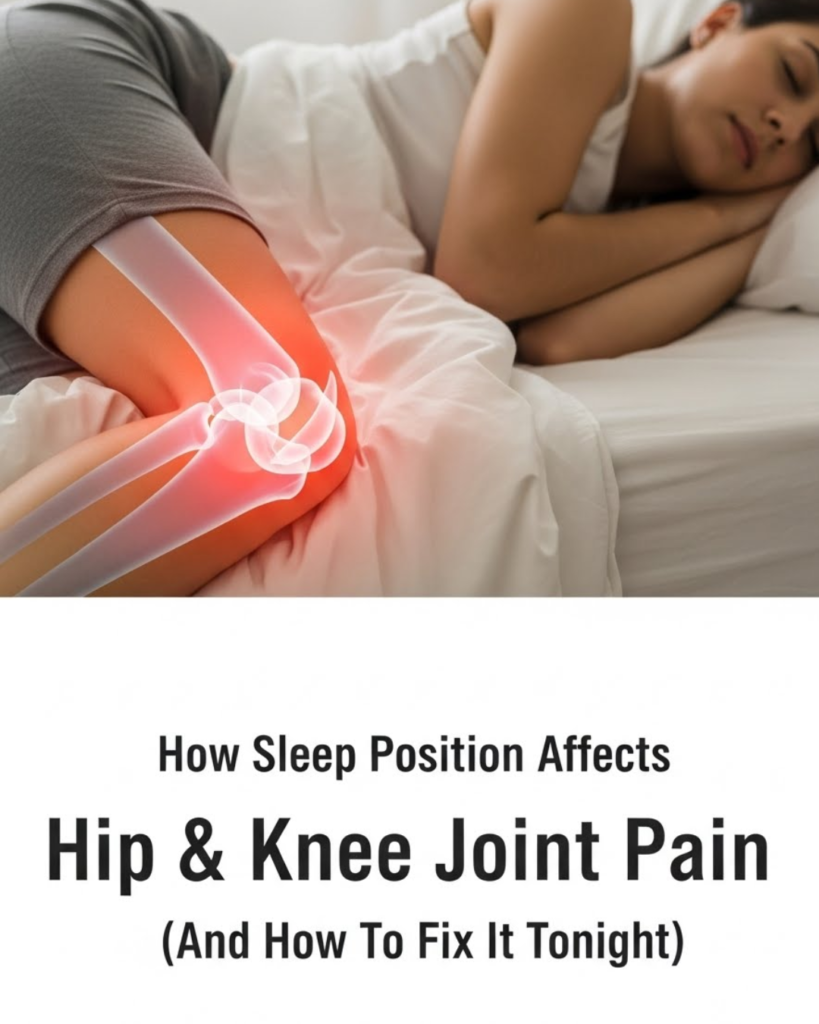
Foundation: Why Your Bedtime Stance Matters
Before we fix your form, let’s build your confidence with the basic concepts of joint biomechanics. Your body doesn’t shut down when you sleep; it enters a state of repair, but only if the “blueprint” is aligned.
The Problem with Spinal Misalignment
When you sleep in an awkward position, your spine twists, pulling on the muscles and ligaments surrounding your hips and knees. This “mechanical stress” prevents blood flow and keeps your joints in a state of tension. If you’ve been wondering how sleep position affects hip & knee joint pain, the answer lies in torque. Constant pressure on the joint capsule leads to inflammation, which is why that dull ache is waiting for you at sunrise.
The Role of Gravity
Gravity is always at work. If you are a side sleeper, your top leg can slide forward and down, pulling your hip out of its socket and putting a shearing force on your knee. If you are a back sleeper without support, your lower back may arch, shortening the hip flexors and causing referred pain down to the knees.
Encouraging Reassurance for Beginners
If you have been sleeping the same way for thirty years, the idea of changing might feel impossible. Be encouraged! Your body is incredibly adaptable. You don’t need a new mattress or expensive medical equipment to see a change. With just a few pillows you already own, you can achieve a professional level of joint support. You are taking a proactive step toward your long-term wellness.
Step-by-Step: How to Fix Your Sleep Position Tonight
Ready to achieve a better night’s sleep? Follow these manageable steps to optimize your body’s alignment based on your preferred sleeping style.
1. The Side Sleeper Solution
Side sleeping is the most common position, but it is also the biggest culprit for hip “collapse.”
- The Fix: Place a firm pillow between your knees and ankles.
- Why it works: This keeps your hips, knees, and ankles stacked in a straight line. It prevents the top leg from pulling the pelvis into a tilt, instantly reducing pressure on the IT band and hip socket.
2. The Back Sleeper Alignment
Sleeping on your back is generally great for the spine, but it can be tough on the hip flexors.
- The Fix: Place a medium-sized pillow or a rolled-up towel under your knees.
- Why it works: A slight bend in the knees flattens the lower back against the mattress. This “unloads” the hip joints and allows the surrounding muscles to fully relax.
3. The Stomach Sleeper Transition
Stomach sleeping is generally the most stressful for joint pain as it forces the neck to turn and the back to arch.
- The Fix: If you can’t switch, place a very flat pillow under your pelvis.
- Why it works: This lifts the hips and prevents the “hammock effect” that pinches the lower back and strains the hip capsules.
Featured Snippet: What is the best sleep position for hip and knee pain?
The best sleep position for hip and knee pain is side sleeping with a pillow between the knees. This configuration keeps the hips, pelvis, and spine in a neutral alignment, preventing the top leg from rotating the pelvis and straining the hip joint. For back sleepers, placing a pillow under the knees is the best way to reduce pressure on the lower back and hip flexors, allowing the joints to rest in a neutral, “unloaded” state.
Advanced Strategies: Pro Tips for Joint Recovery
Once you have mastered the pillow placement, share expert-level insights by addressing the “biological” side of joint comfort.
Temperature and Inflammation
Cold joints are stiff joints. If your room is too chilly, your muscles might micro-contract all night, causing you to wake up in pain.
- Action: Use a heating pad on low for 10 minutes before bed to “soften” the tissues around the hip and knee.
- Internal Link: To further soothe inflammation from the outside in, consider applying a homemade Sinus & Headache Balm (which uses cooling menthol) to your temples to relax your nervous system before sleep.
Nutritional Support for Sleep
What you eat affects how your joints feel when you wake up.
- Internal Link: Review The 20 Worst Foods For People with Arthritis, Ranked in Order to ensure your dinner isn’t fueling a midnight flare-up. Reducing sugar and processed oils can significantly decrease the “heat” in your joints while you rest.
Pro Tip: The “Pillow Sandwich”
For those with severe knee-on-knee pain, a single pillow might slip. Use a long “body pillow” that you can hug with both your arms and your legs. This provides a total-body anchor that prevents you from rolling into a bad position during the night.
Troubleshooting: Common Challenges and Solutions
Adjusting your sleep can be a “two steps forward, one step back” process. Here is how to address frequent obstacles:
- “I wake up and the pillow is on the floor”: This is normal! Your body is used to moving. Try a “knee pillow” with a strap, or simply tuck the covers tightly around your legs to create a “cocoon” that keeps the pillow in place.
- “The new position feels weird”: It takes about three to seven days for your nervous system to accept a new sleep posture. Stick with it! The “weirdness” is just your muscles lengthening into their correct positions.
- “I still have morning stiffness”: This might be due to your evening routine.
- Internal Link: Try a gentle soak with DIY Rose Shower Gel before bed to lower cortisol and relax the muscles before you hit the sheets.
Preventive Measures
Don’t wait until you are in pain to use these hacks. Using a pillow between the knees is a “preventive” measure that keeps your joints healthy even on days you feel great.
- Internal Link: Just like keeping your pipes clear with a sink hack, keeping your joints clear of tension requires regular maintenance!
Maximizing Results: Holistic Joint Wellness
Now that you’ve fixed your sleep, build upon your success by looking at how you treat your joints during the day.
Active Recovery
Movement is medicine. While sleep is for repair, movement is for lubrication.
- Internal Link: Explore these knee pain relief remedies for gentle stretches you can do the moment you wake up to “unlock” the work you did overnight.
- Internal Link: If you find yourself tensing up during house chores, use a floor cleaner diy routine that encourages ergonomic movement to avoid mid-day hip strain.
Long-Term Considerations
Remember, the body doesn’t heal best during sleep — it heals when sleep is undisturbed. By removing the “interruption” of joint pain, you are allowing your immune system to function at 100%. Over several weeks, you may find that your overall inflammation levels drop simply because you are finally getting high-quality, aligned rest.
Conclusion: Achieve the Rest You Deserve
You have now discovered exactly how sleep position affects hip & knee joint pain and you have the tools to fix it tonight. You have moved from waking up in agony to being an empowered architect of your own recovery. By following these steps—aligning your spine, using pillow supports, and watching your evening nutrition—you have achieved a strategy for long-term joint health.
The journey to a pain-free morning is an achievable path that starts the moment you close your eyes. We encourage you to grab an extra pillow and try the side-sleeping “stack” tonight. You are more than capable of achieving a deep, healing sleep and waking up ready to conquer your day!
Would you like me to help you create a “Bedtime Alignment Checklist” to keep by your nightstand? Your path to better joints starts tonight!
Important Disclaimer: This article is for informational purposes only and should not replace professional medical advice. For chronic or severe joint pain, consult healthcare providers or orthopedic specialists. Verify safety for any physical adjustments if you have recently had surgery. Individual results may vary.