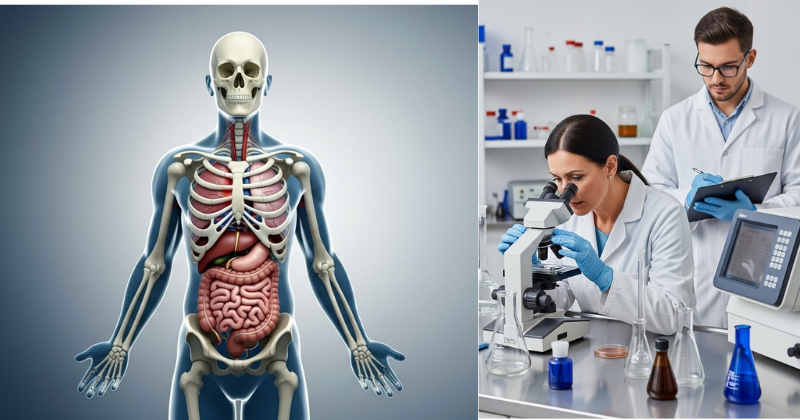
Explore how the human body functions as a biological masterpiece. Did you know that the human body is an incredible machine with complex systems for life?
The marvel of biological engineering is most evident in our own anatomy and physiology. When we observe the synchronized firing of neurons, the rhythmic contraction of cardiac muscle, and the precise filtration of the renal system, we are forced to ask: Did you know that the human body is an incredible machine? This organic system operates with an efficiency that modern technology still struggles to replicate. From the atomic level to the integration of organ systems, our bodies manage billions of simultaneous chemical reactions every second. This article provides a methodical analysis of the physiological wonders that make our existence possible, combining rigorous scientific data with the narrative of our survival.
What are the physiological mechanisms that define the human body as an incredible machine?
At the core of our existence is a principle known as homeostasis. This is the body’s ability to maintain a stable internal environment despite massive fluctuations in the external world. To understand why the human body is an incredible machine, one must look at the endocrine and nervous systems acting as a dual-governing board. They regulate temperature, pH levels, and glucose concentration with a precision that exceeds the most advanced industrial thermostats.
The cellular level reveals even more complexity. Each cell contains DNA, a biological storage medium so dense that all the data currently on the internet could theoretically be stored in a few grams of it. These cells are not static; they are bustling factories producing proteins, generating ATP for energy, and communicating with neighboring cells via chemical signals. This internal orchestration ensures that even while you are asleep, your body is actively repairing tissue and processing information.
How does the human brain manage 86 billion neurons simultaneously?
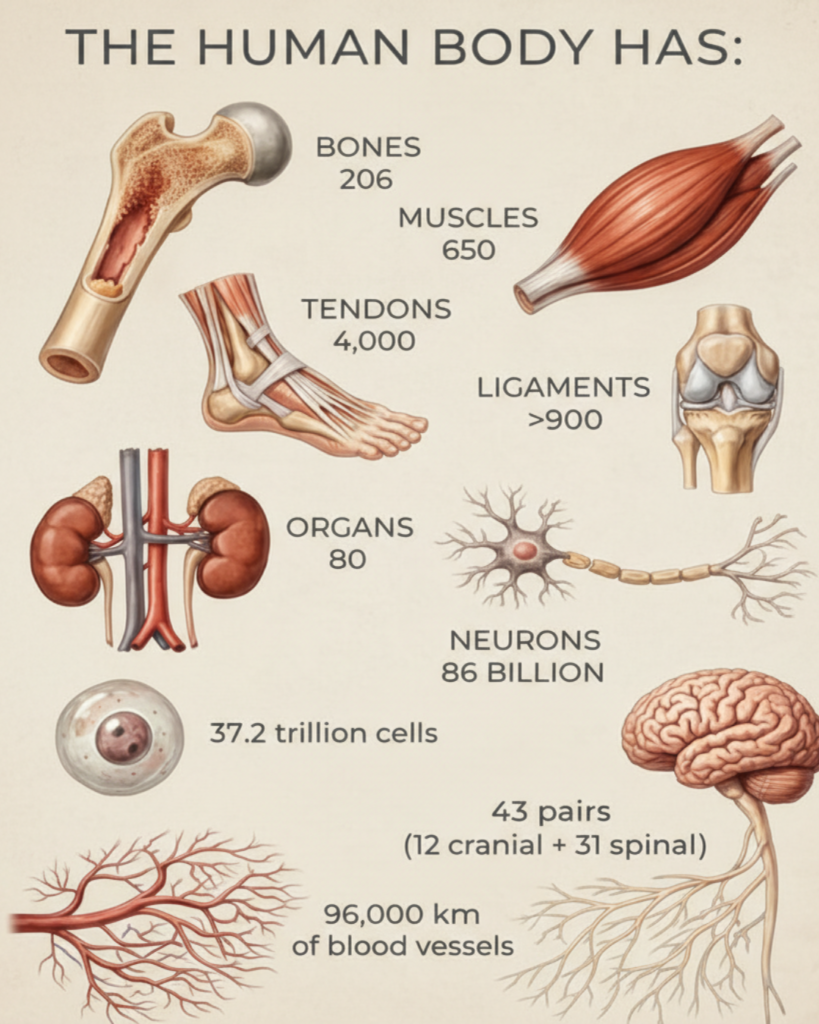
The brain is the central processing unit of this biological system. It is often cited as the most complex structure in the known universe. With approximately 86 billion neurons, each capable of forming thousands of synaptic connections, the brain handles an astronomical amount of data. This computational power is what leads many researchers to conclude that the human body is an incredible machine.
Neuroplasticity is perhaps the most impressive feature of the brain. Unlike a metal computer that has a fixed circuit board, the brain can physically rewire itself in response to learning or injury. It processes sensory input—sight, sound, touch, taste, and smell—and integrates it into a cohesive narrative of reality in milliseconds. This processing occurs with an energy consumption of only about 20 watts, roughly the same as a dim lightbulb, showcasing an efficiency that silicon-based computers cannot yet match.
Why is the human circulatory system considered a masterpiece of hydraulic engineering?
If the brain is the processor, the circulatory system is the logistics network. The heart, a muscular pump no larger than a clenched fist, circulates approximately 2,000 gallons of blood every day. Over a lifetime, this pump will beat over 2.5 billion times without ever taking a rest. When you consider the vastness of this network—stretching over 60,000 miles if all vessels were laid end-to-end—it becomes clear that the human body is an incredible machine.
The blood itself is a complex fluid tissue. It carries oxygen via hemoglobin, transports nutrients, delivers hormones, and acts as a primary defense against pathogens. The system’s ability to redirect blood flow based on immediate need—such as shunting blood to the muscles during exercise or to the stomach after a meal—demonstrates a dynamic resource allocation strategy that is essential for survival.
Which factors contribute to the bone’s remarkable strength-to-weight ratio?
Human bone is a living, dynamic tissue that is surprisingly strong. Ounce for ounce, bone is stronger than steel and even some reinforced concrete. The skeletal system provides more than just a framework; it is a mineral reservoir and a factory for blood cells. The structural integrity of bone comes from a composite of collagen (for flexibility) and calcium phosphate (for hardness).
This composite structure allows bones to absorb significant impact without fracturing. Furthermore, the human body is an incredible machine because it employs “Wolff’s Law,” which states that bone will adapt to the loads under which it is placed. If loading on a particular bone increases, the bone will remodel itself over time to become stronger to resist that loading. This self-strengthening mechanism ensures that our skeletal system remains optimized for our specific physical activities.
How does the immune system distinguish between self and non-self?
The immune system is our internal security force, an intricate network of cells, tissues, and organs that defend the body against “invaders” like bacteria, viruses, and parasites. Its ability to distinguish between the body’s own cells and foreign substances is a pinnacle of biological recognition. This sophisticated detection system is a primary reason why the human body is an incredible machine.
Through a process called “thymic education,” the body’s T-cells are trained to recognize the specific molecular signatures of the individual. Any cell that fails this test is eliminated before it can cause harm. When a pathogen is detected, the immune system launches a multi-tiered attack, utilizing everything from physical barriers like the skin to chemical warfare via antibodies. Most impressively, the system “remembers” every pathogen it has ever defeated, providing lifelong immunity to many diseases.
What makes the respiratory system’s gas exchange so efficient?
Breathing is a process we rarely think about, yet the respiratory system is performing a delicate chemical exchange every moment. The lungs contain roughly 300 million alveoli—tiny air sacs that provide a massive surface area for gas exchange. If spread out, this surface area would cover half a tennis court. This vast area is necessary to ensure that oxygen enters the bloodstream and carbon dioxide leaves it with maximum speed.
The regulation of this system is purely chemical. Sensors in the carotid arteries and the brainstem monitor the pH of the blood. If carbon dioxide levels rise slightly, the brain automatically triggers a faster breathing rate to restore balance. This autonomous regulation is another example of why the human body is an incredible machine; it solves complex physiological problems without requiring conscious intervention.
How does the digestive system transform food into cellular energy?
Digestion is a multi-stage chemical and mechanical process that begins the moment food enters the mouth. The gastrointestinal tract is a tube approximately 30 feet long, lined with specialized cells designed for secretion and absorption. The stomach uses hydrochloric acid—a substance strong enough to dissolve metal—to break down proteins, yet the stomach lining itself remains unharmed due to a constantly regenerating mucus barrier.
As food moves into the small intestine, millions of microscopic projections called villi absorb nutrients into the bloodstream. This system does not just extract calories; it identifies and harvests specific vitamins, minerals, and amino acids required for cellular repair. The precision with which the gut manages this extraction process confirms that the human body is an incredible machine capable of fueling itself from a vast variety of organic sources.
Which biological processes allow for the continuous regeneration of the skin?
The skin is the body’s largest organ and its first line of defense. It is a waterproof, self-repairing, and sensory-rich barrier. The outermost layer, the epidermis, completely replaces itself roughly every 27 to 30 days. This means that throughout your life, you will grow and shed nearly 1,000 different skins. This constant renewal is a testament to the fact that the human body is an incredible machine.
Beyond protection, the skin regulates temperature through sweat glands and provides critical sensory feedback through millions of nerve endings. It synthesizes Vitamin D from sunlight, a crucial nutrient for bone health and immune function. The ability of the skin to heal a wound—moving through stages of inflammation, tissue formation, and remodeling—is a complex coordinated effort involving blood clotting factors, white blood cells, and collagen-producing fibroblasts.
Conclusion: Summarizing the Human Machine
In analyzing the various systems of our anatomy, the conclusion remains unavoidable: the human body is an incredible machine of unparalleled complexity and resilience. We have observed the brain’s computational efficiency, the heart’s tireless endurance, the skeletal system’s adaptive strength, and the immune system’s intelligent defense. Each of these components works in a seamless, integrated fashion to maintain the miracle of life.
Understanding the scientific reality of our bodies does not diminish the wonder of existence; rather, it enhances it. By recognizing the methodical and rigorous processes that keep us alive, we can better appreciate the importance of nutrition, exercise, and rest in maintaining this biological masterpiece. The human machine is our most precious possession, a legacy of billions of years of biological refinement.