
Discover the best exercises for knee osteoarthritis to reduce joint pain, improve mobility, and strengthen supporting muscles with this comprehensive, low-impact guide.
Important Disclaimer: This article is for informational purposes only and should not replace professional advice. For health-related topics, consult healthcare providers. For financial or legal matters, seek qualified professional guidance. For safety procedures, verify current best practices and local regulations. Individual results may vary, and personal circumstances should always be considered when implementing any suggestions.
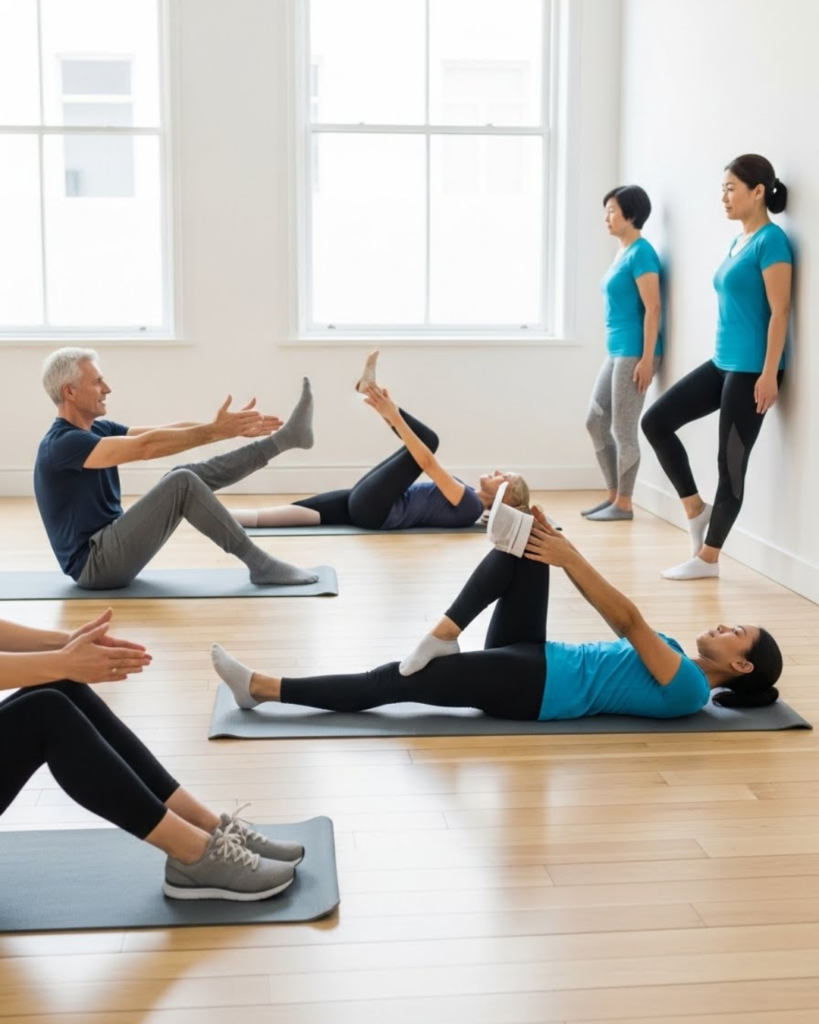
Do you often feel like your knees are betraying you when you try to stand up from a chair or walk down a flight of stairs? If you are living with the stiffness and discomfort of “wear and tear” in your joints, it is tempting to believe that rest is the only solution. However, the exact opposite is true. Movement is medicine, and by engaging in the best exercises for knee osteoarthritis, you can actually lubricate the joint, reduce inflammation, and regain your independence.
In this guide, we are going to explore a specialized selection of movements designed to protect your cartilage while strengthening the muscles that support your weight. We will break down why these specific routines work and provide you with an achievable path toward a more active lifestyle. You are about to discover how to transform your daily comfort levels and achieve a level of mobility you might have thought was gone forever. Let’s unlock your potential for pain-free movement!
Foundation: Why Exercise is Essential for Osteoarthritis
Building confidence in your ability to move starts with understanding the biology of your joints. Osteoarthritis (OA) occurs when the protective cartilage on the ends of your bones wears down over time. While you cannot “regrow” this cartilage through exercise, you can create a stronger “muscular sleeve” around the joint to take the pressure off the bone.
The “Motion is Lotion” Concept
Your joints do not have a direct blood supply. Instead, they rely on synovial fluid to stay healthy. This fluid is only circulated through movement. When you perform the best exercises for knee osteoarthritis, you are essentially “oiling the gears.” This process helps flush out inflammatory waste products and delivers fresh nutrients to the joint capsule.
Addressing Common Hesitations
It is completely normal to feel nervous about exercising when your knees already hurt. You might worry that you are causing more damage. Reassurance comes from scientific research: controlled, low-impact exercise is one of the most effective non-surgical treatments for OA pain. By starting with basic concepts and respecting your body’s limits, you can safely build a foundation of strength.
Key Components of a Knee-Safe Routine
- Low Impact: Minimizing jarring forces like running or jumping.
- Flexibility: Maintaining the range of motion so the joint doesn’t “lock up.”
- Strength: Focusing on the quadriceps, hamstrings, and glutes to absorb shock.
Step-by-Step: The Best Exercises for Knee Osteoarthritis
Ready to start your journey? These exercises are selected for their high efficacy and low risk. Use clear, deliberate movements and focus on your form.
1. Straight Leg Raises (Strength)
This is the gold standard for strengthening the quadriceps without putting any pressure on the knee joint itself.
- Step 1: Lie flat on your back on a firm surface (like a yoga mat).
- Step 2: Bend one knee and place that foot flat on the floor for support.
- Step 3: Keep the other leg straight and slowly lift it to the height of the opposite knee.
- Step 4: Hold for three seconds and slowly lower it back down. Repeat 10 times per leg.
2. Seated Knee Extensions (Mobility)
This move helps maintain your ability to fully straighten the leg, which is crucial for a normal walking gait.
- Step 1: Sit in a sturdy chair with your back straight and feet flat.
- Step 2: Slowly straighten one leg out in front of you until it is parallel to the floor.
- Step 3: Squeeze your thigh muscle at the top of the movement.
- Step 4: Lower it slowly. Aim for 2 sets of 12 repetitions on each side.
3. Clamshells (Stability)
Strengthening your hips (gluteus medius) is vital because weak hips often cause the knees to “cave in,” worsening osteoarthritis pain.
- Step 1: Lie on your side with your hips and knees bent.
- Step 2: Keeping your feet together, slowly lift your top knee as high as you can without tilting your pelvis.
- Step 3: Pause, then lower the knee back down. This stabilizes the entire lower body chain.
Advanced Strategies: Pro Tips for Progress
Once you have mastered the basics, you can share expert-level insights by subtly increasing the challenge. This encourages experimentation and ensures your body continues to adapt.
Utilizing Resistance Bands
Adding a light resistance band around your thighs during clamshells or around your ankles during leg raises can significantly increase muscle activation. This “progressive overload” is how you build the strength needed to tackle more difficult tasks, like hiking or gardening.
Aquatic Therapy Variations
If land-based exercise is still too painful, take it to the pool! The buoyancy of water supports up to 90% of your body weight. You can perform “water walking” or submerged leg lifts to achieve incredible results without the gravitational stress.
The Power of “Eccentric” Control
Focus on the lowering phase of every exercise. For example, when lowering your leg during a straight leg raise, take four full seconds. This eccentric control builds more functional strength and helps stabilize the knee during activities like walking down stairs.
Troubleshooting: Common Challenges and Solutions
Setbacks are a part of any wellness journey. Address frequent obstacles with these preventive measures and alternative approaches.
“My knees hurt more the day after exercise”
It is common to feel some muscle soreness, but “sharp” joint pain is a sign to scale back.
- The Solution: Follow the “2-hour pain rule.” If your joint pain is worse two hours after exercise than it was before you started, you likely did too much. Next time, reduce the number of repetitions by half and focus on a smaller range of motion.
“I don’t have enough time for a full workout”
Consistency is more important than duration.
- Alternative Approach: “Exercise snacking.” Instead of one 30-minute session, do 5 minutes of seated knee extensions every time you boil the kettle or watch a commercial break.
“My joints feel too stiff to even start”
Stiffness is often at its worst in the morning.
- The Fix: Apply a warm compress or take a warm shower before exercising. You can also try drinking a [Golden Milk Latte] or a [morning turmeric tonic] to reduce systemic inflammation before you begin your movement.
Maximizing Results: Next Level Tips
To build upon your basic success, look at long-term maintenance and lifestyle factors that support joint health.
Complementary Strategies
- Weight Management: Every pound of body weight lost removes four pounds of pressure from the knee joint.
- Proper Footwear: Invest in supportive shoes with good arch support to ensure your knees are aligned correctly when you walk.
- Topical Support: Using a [clove-infused oil] or a [natural anti-inflammatory cream] after exercise can help soothe the joint.
Maintaining Your Success
Osteoarthritis is a chronic condition, which means your exercise routine should be a lifelong habit. Inspire continued growth by tracking your progress. Can you walk further today than you could last month? Are the stairs feeling a little easier? These small victories are the true markers of success.
Conclusion
Embracing the best exercises for knee osteoarthritis is a powerful way to reclaim your life from joint pain. You have discovered that movement isn’t just possible—it’s necessary for your recovery. By strengthening your supporting muscles and keeping your joints lubricated, you achieve a level of freedom that allows you to enjoy your favorite hobbies again.
You have the capability to succeed! Start with just one of the exercises mentioned above today. The transformation from “stiff and painful” to “strong and mobile” is a gradual process, but every rep brings you closer to your goal. You’ve got this—your journey to better knee health starts now.