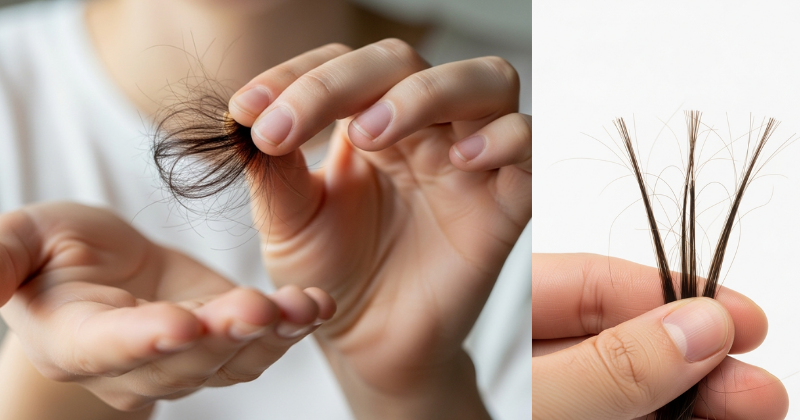
Distinguish between hair loss vs. breakage using the “Bulb Check” test. Learn how to identify shedding from the root versus snapping strands to save your hair today.
Important Disclaimer: This article is for informational purposes only and should not replace professional advice. For health-related topics, consult healthcare providers. Individual results may vary, and personal circumstances should always be considered when implementing any suggestions.
Have you ever looked down at your hairbrush or the shower drain and felt a sudden jolt of panic? Seeing strands of hair piling up can feel overwhelming, sparking immediate fears of thinning or permanent balding. However, not all hair on the floor is a sign of a medical problem. Before you spiral into worry, you need to determine if you are dealing with hair loss vs. breakage. While they might look similar at a glance, the causes—and the solutions—are worlds apart.
In this guide, we are going to teach you the definitive “Bulb Check” test that experts use to diagnose hair health in seconds. By understanding the difference between a strand that has reached the end of its life cycle and one that has simply snapped under pressure, you can unlock the correct treatment plan. You have the capability to restore your mane’s glory. Let’s transform your panic into proactive care and achieve the healthy, resilient hair you deserve!
Foundation: Understanding Hair Loss vs. Breakage
Before we perform the test, it is essential to build confidence in the basic biology of your hair. Knowing the difference between these two issues will help you address common concerns without unnecessary stress.
What is Hair Loss (Shedding)?
True hair loss, or shedding, occurs at the scalp level. Every person naturally sheds between 50 and 100 hairs a day as part of the normal growth cycle. However, when shedding becomes excessive—a condition known as telogen effluvium—it is often triggered by internal factors. This might include [nutritional deficiencies], hormonal shifts, or high stress levels. When the hair falls out, it takes the entire follicle’s “club” hair with it.
What is Hair Breakage?
Breakage is a structural failure of the hair shaft itself. It has nothing to do with the root or the scalp’s health. Instead, breakage happens when the hair becomes brittle, dry, or over-processed. If you’ve been experimenting with [DIY home hair treatments] or excessive heat, your strands might be snapping mid-way.
Reassurance for Beginners
If you are seeing a lot of hair, remember that it is often a temporary situation. Whether it is a seasonal shed or a need for a deep conditioner, your hair is incredibly resilient. You are fully capable of identifying the root cause and implementing a fix that works for your unique lifestyle.
Step-by-Step: How to Perform the “Bulb Check” Test
Ready to find out what’s really going on? This simple, actionable process will give you an answer in minutes. Here is how to distinguish hair loss vs. breakage like a pro.
1. Collect Your Samples
The best time to do this is after brushing or washing. Gather 3–5 strands of hair that have recently “fallen” out.
- The Action: Lay them out on a high-contrast surface, like a white piece of paper or a dark countertop.
2. Inspect the Ends
Look closely at both ends of each hair strand. You might want to use a magnifying glass or the “macro” setting on your phone camera.
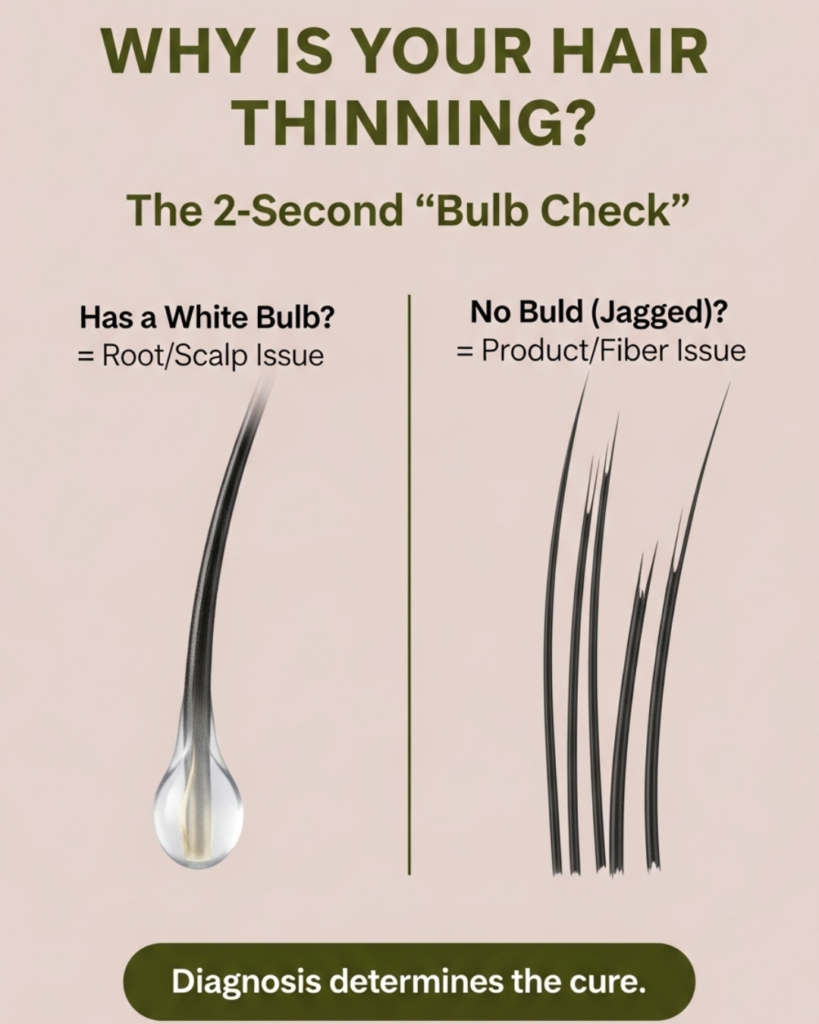
- The “Bulb” Search: Look for a tiny, white, onion-shaped bulb at one end of the hair.
- The Analysis: If you see a small, white bulb, that hair came from the root. This is shedding (hair loss). If both ends are blunt, frayed, or jagged without a bulb, the hair has snapped. This is breakage.
3. Measure the Length
Compare the fallen strands to the hair still on your head.
- The Step: Are the strands the full length of your hair, or are they short, uneven pieces?
- The Result: Short, “pointy” pieces are a classic sign of breakage. Long, full-length strands usually indicate shedding.
Advanced Strategies: Targeted Solutions for Each Issue
Once you know your result, it is time to use expert-level insights to customize your recovery plan.
If It’s Hair Loss: Focus on Internal Wellness
Since shedding starts at the root, you need to nurture your body from the inside out.
- Nutrition: Ensure you are getting enough iron, zinc, and protein. If you’ve been following [tips to lose weight in 15 days], make sure your nutrient intake hasn’t plummeted.
- Scalp Health: Incorporate a [stimulating scalp massage with essential oils] like rosemary or peppermint to encourage blood flow to the follicles.
If It’s Breakage: Focus on Structural Integrity
Breakage requires “outside-in” repair.
- Protein vs. Moisture: Your hair needs a balance. If your hair feels like mush when wet, you need protein. If it feels like straw and snaps easily, you need deep moisture.
- Mechanical Protection: Swap your cotton pillowcase for silk and avoid tight “pony-tensions” that cause snapping around the hairline. This is a great [sustainable lifestyle change] for your beauty routine.
Pro-Tip: The “Stretch Test”
To see if your hair is prone to future breakage, take a single wet strand and gently stretch it. Healthy hair should stretch about 30% and return to its original length. If it snaps instantly, you need to increase your moisture levels immediately.
Troubleshooting: Common Challenges and Setbacks
Even with the “Bulb Check,” hair care can be tricky. Here is how to handle frequent obstacles with encouragement.
“I see a bulb, but it’s dark, not white.”
- The Solution: A white bulb indicates a natural “resting” hair that was ready to fall. A dark bulb might mean the hair was pulled out prematurely by aggressive brushing. Be gentler with your detangling!
- Preventive Measure: Always brush from the ends upward to avoid “yanking” at the root.
“I have both bulbs and broken pieces.”
- The Fix: It is common to experience both! This often happens if you have a scalp condition that causes itching (leading to shedding) and then use heat tools (leading to breakage). Start by [improving your gut health] to lower inflammation and stop using heat for 14 days.
“I’ve tried everything and it’s still falling out.”
- Alternative Approach: Sometimes, hair changes are a signal of a thyroid issue or a significant hormonal shift. If the “Bulb Check” shows massive shedding that lasts longer than three months, it is time to consult a healthcare provider for blood work.
Maximizing Results: Long-Term Hair Resilience
To build upon your success, view hair care as a long-term ritual of self-care.
Maintenance and Consistency
Consistency is the secret to hair growth. You won’t see changes overnight, but after 90 days of the right routine, you will see a “halo” of new growth. Pair your hair care with [simple evening rituals that help your body heal] to maximize your body’s restorative powers.
Complementary Strategies
Consider the “Low Manipulation” lifestyle. The less you touch, heat, and chemically alter your hair, the stronger it becomes. Experiment with [natural hair styles] that protect your ends and give your scalp a rest. You’ll achieve a level of thickness and shine that you never thought possible.
Featured Snippet: How can you tell the difference between hair loss and hair breakage?
To tell the difference between hair loss and hair breakage, perform the “Bulb Check.” Examine a fallen hair strand; if there is a tiny white bulb at the end, the hair fell from the root (shedding/hair loss). If there is no bulb and the strand is shorter than your actual hair length, the hair snapped along the shaft (breakage). Shedding is usually caused by internal factors like stress or diet, while breakage is caused by external damage like heat or chemicals.
Conclusion
Understanding the difference in hair loss vs. breakage is the first step toward regaining your confidence. You have discovered that you have the capability to succeed by simply paying attention to the signals your body is sending. By using the “Bulb Check” test, you achieve a level of clarity that allows you to stop wasting money on the wrong products and start nourishing your strands effectively.
You’ve got this! Start your “Bulb Check” tonight and see what your hair is trying to tell you. Whether you need a protein mask or a stress-relief session, your path to a beautiful mane is now clear.