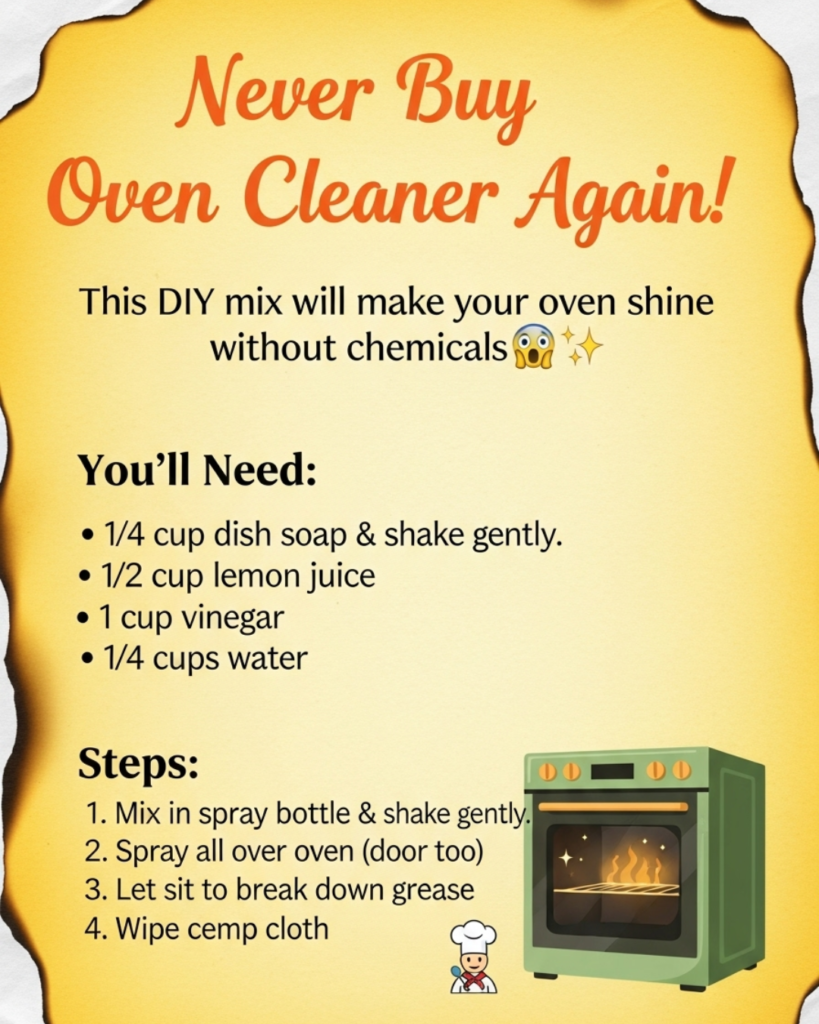
Never buy oven cleaner again! Discover how to transform your kitchen using safe, natural ingredients that crush grease and grime without harsh, toxic chemicals.
Have you ever opened your oven door to peek at a roasting chicken, only to be hit by a cloud of acrid smoke from last month’s lasagna spill? We’ve all been there. Most of us reach for those heavy-duty aerosol cans, but the fumes are often so intense they require opening every window in the house. What if I told you that you could achieve a sparkling, grease-free finish using items already sitting in your pantry? It’s true—you can never buy oven cleaner again once you master the art of natural degreasing.
In this guide, we are going to unlock a cleaner, safer way to maintain your kitchen. You will learn the exact step-by-step methods to dissolve carbonized food and stubborn grease using non-toxic powerhouses. Not only will you save money, but you will also discover the satisfaction of a deep clean that is safe for your family and your pets. You have the capability to reclaim your kitchen’s shine today. Let’s dive into the world of DIY cleaning and transform your oven from grimy to glorious!
Foundation: Why Natural Cleaning Wins Every Time
Before we roll up our sleeves, it is essential to build confidence in why natural alternatives are actually superior to store-bought chemicals. Many people hesitate because they think “natural” means “weak,” but science tells a different story.
The Power of Chemistry in Your Pantry
When you decide to never buy oven cleaner again, you are enlisting two of nature’s most effective soldiers: sodium bicarbonate (baking soda) and acetic acid (vinegar). Baking soda is an alkali that effectively dissolves organic compounds like dirt and grease. Its slight abrasive quality also helps lift stuck-on food without scratching your oven’s enamel.
Addressing Common Safety Concerns
Standard oven cleaners often contain sodium hydroxide (lye), which can cause chemical burns and respiratory irritation. By switching to DIY methods, you eliminate these risks. If you are already focused on [sustainable lifestyle changes], making your own cleaners is a massive win for your indoor air quality. You are providing a safer environment for your household while achieving professional-grade results.
Key Components You’ll Need
- Baking Soda: Your primary degreaser.
- White Vinegar: The “activator” that cuts through the final residue.
- Water: To create the perfect cleaning paste.
- Dish Soap: A secret weapon for the oven racks.
Step-by-Step: The Ultimate Natural Oven Cleaning Process
Ready to see the magic happen? Follow this manageable process to break down even the toughest baked-on messes. This core method ensures you’ll never buy oven cleaner again.
1. The Overnight Paste Application
Timing is your best friend here. Let the chemistry do the heavy lifting while you sleep.
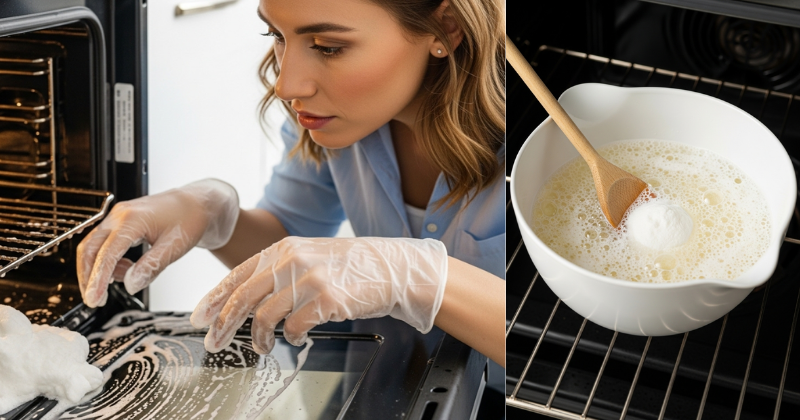
- The Mix: In a small bowl, mix ½ cup of baking soda with a few tablespoons of water until you have a spreadable paste.
- The Action: Remove the oven racks. Coat every inch of the oven interior with the paste, focusing on the extra-greasy spots. It will turn brown as it absorbs the grime—this is a great sign!
- The Wait: Let it sit for at least 12 hours (or overnight).
2. The Rack Soak
While the oven is marinating, don’t forget the racks!
- The Method: Lay the racks in a bathtub lined with an old towel (to prevent scratches). Fill with hot water and a ½ cup of dish soap.
- The Shortcut: Let them soak for 4 hours. The grease will practically slide off with a light scrub.
3. The Vinegar Rinse
Once the 12 hours are up, it’s time for the big reveal.
- The Action: Take a damp cloth and wipe out as much of the dried baking soda paste as possible.
- The Reactivation: Put some white vinegar in a spray bottle and spritz any remaining baking soda residue. It will foam up beautifully, loosening the last bits of dirt.
- The Finish: Wipe everything down with a clean, wet microfiber cloth for a streak-free shine.
Advanced Strategies: Pro Tips for Stubborn Grime
Sometimes an oven hasn’t been cleaned in years, requiring a bit more “oomph.” Share these expert-level insights to handle the most challenging scenarios.
The Lemon Steam Boost
If your oven just has a light layer of grease and a bad smell, use steam. Cut two lemons in half, place them in a baking dish filled with water, and “bake” at 250°F for 30 minutes. The citric acid vapors soften the grease, making it incredibly easy to wipe away. This is a perfect [home DIY shortcut] for busy weeks.
Dealing with Glass Doors
The glass door is the most visible part of your oven. To get it crystal clear, use the same baking soda paste but let it sit for only 30 minutes. Use a razor scraper at a 45-degree angle for any literal “burnt” spots. You’ll achieve a transparency that makes your [kitchen organization] look even better.
Pro-Tip: The Essential Oil Finish
To leave your kitchen smelling like a spa rather than a chemistry lab, add 5 drops of lemon or eucalyptus essential oil to your vinegar spray. It adds an extra layer of antimicrobial power and leaves a refreshing scent.
Troubleshooting: Common Challenges and Solutions
Even the best DIY projects can hit a snag. Here is how to handle frequent obstacles with encouragement.
“The baking soda paste is too hard to wipe off.”
- The Solution: This usually happens if the paste was too thin. Simply spray it with more vinegar or water to re-hydrate the mixture. It will soften instantly, allowing you to wipe it away with ease.
- Encouragement: Don’t worry if it takes a few passes; the fact that it’s hard means it really latched onto the grease!
“There is a white residue left on the bottom.”
- The Fix: This is just excess baking soda. A quick wipe with a 50/50 water and vinegar solution will neutralize the base and clear the film.
- Preventive Measure: Next time, use a slightly more damp cloth for the initial wipe-down.
“I have a self-cleaning oven—should I use this?”
- Alternative Approach: Many experts suggest avoiding the “self-clean” cycle as it can damage heating elements and fuses due to extreme heat. The baking soda method is much gentler on your appliance’s longevity. It’s a key part of [proactive home maintenance].
Maximizing Results: Keeping It Clean for Good
To build upon your success, implement small habits that ensure you never buy oven cleaner again because the mess never gets out of hand.
Maintenance and Long-Term Considerations
The secret to a “forever clean” oven is the “spot check.” Every time you finish cooking and the oven has cooled down, do a quick 30-second wipe of the bottom. If you see a fresh spill, sprinkle a little salt on it while it’s still warm; it makes it much easier to scrape off later. This is an easy [lifestyle habit] that saves hours of deep cleaning.
Suggesting Complementary Strategies
Consider using an oven liner or a simple baking sheet on the bottom rack to catch drips from pies or casseroles. Additionally, maintaining a clean vent hood is crucial; if the air can’t circulate, grease settles back onto your oven surfaces. You can find more tips on this in our guide on [how to clean kitchen filters naturally].
Featured Snippet: How do I clean my oven naturally?
To clean your oven naturally and never buy chemical cleaners again, create a paste of ½ cup baking soda and 3 tablespoons of water. Coat the oven interior and let it sit for 12 hours. Wipe away the paste with a damp cloth, then spray any remaining residue with white vinegar to create a foaming action. Wipe one final time with a microfiber cloth for a clean, non-toxic finish that is safe for cooking.
Conclusion
By deciding to never buy oven cleaner again, you are taking a powerful step toward a healthier home and a more sustainable lifestyle. You have discovered that you have the capability to succeed using simple, affordable ingredients that deliver stunning results. This transformation isn’t just about a clean appliance; it’s about the peace of mind that comes from knowing exactly what is in your cleaning products.
You’ve got this! Start today by mixing your first batch of baking soda paste and giving your oven racks a soak. Once you see the “before and after,” you’ll never want to go back to those chemical cans again.