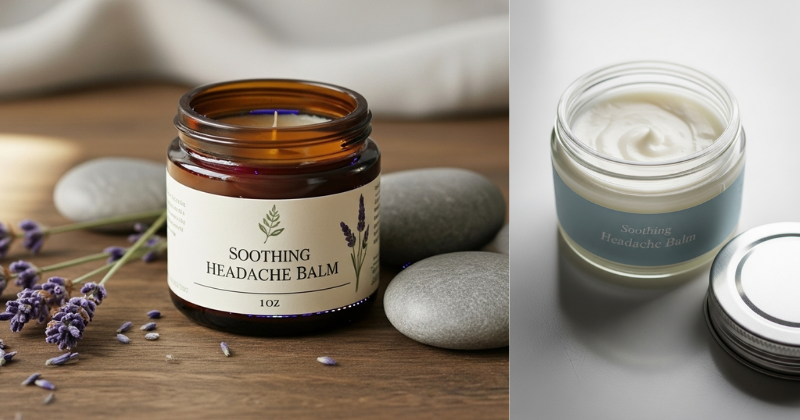
Find relief naturally with our soothing headache balm guide. Discover how to create and use this herbal remedy to ease tension and reclaim your comfort today.
Important Disclaimer: This article is for informational purposes only and should not replace professional advice. For health-related topics, consult healthcare providers. For financial or legal matters, seek qualified professional guidance. For safety procedures, verify current best practices and local regulations. Individual results may vary, and personal circumstances should always be considered when implementing any suggestions.
Have you ever felt that nagging tightness behind your eyes or a dull throb at your temples that just won’t quit? We have all been there—trying to push through a busy workday or a family gathering while our head feels like it’s caught in a vice. While reaching for a pill bottle is a common reflex, there is an empowering, aromatic alternative that brings the healing power of nature directly to your skin. A soothing headache balm can be your secret weapon for managing daily stress and physical discomfort.
In this comprehensive guide, we are going to explore the world of topical herbal relief. You will discover how specific plant-based ingredients work with your body to relax tight muscles and calm a racing mind. We will walk you through a simple, step-by-step process to create your own custom balm at home, ensuring you always have a natural remedy within reach. Get ready to transform your wellness routine and unlock a clearer, more relaxed version of yourself!
Foundation: Why a Soothing Headache Balm Works
Before we jump into the “how-to,” let’s build your confidence by understanding the “why.” A soothing headache balm isn’t just a pleasant-smelling lotion; it is a concentrated delivery system for potent botanical compounds. When you apply these oils topically, they provide relief through two main pathways: aromatherapy and transdermal absorption.
The Power of Terpenes and Menthol
Many of the plants used in these balms contain specific molecules called terpenes. For example, peppermint oil is rich in menthol. When applied to the skin, menthol creates a cooling sensation that can override pain signals sent to the brain. This is often referred to as the “gate control theory” of pain management. Lavender, on the other hand, contains linalool, which has been scientifically studied for its ability to reduce anxiety and promote muscle relaxation.
Addressing Common Hesitations
You might wonder if a topical rub can really tackle a tough headache. While it may not replace medical intervention for chronic conditions, it is incredibly effective for tension headaches caused by posture, screen time, or stress. Using a soothing headache balm allows you to take immediate action at the first sign of a “twinge,” often preventing the discomfort from escalating. It is a gentle, non-invasive way to support your body’s natural healing processes.
Key Components for Success
- Carrier Oils: Substances like coconut or almond oil that “carry” the essential oils safely into the skin.
- Beeswax or Candelilla Wax: These provide the structure of the balm, making it portable and easy to apply.
- Essential Oils: The active ingredients that provide the cooling, calming, or anti-inflammatory effects.
Step-by-Step: Crafting Your Custom Relief
Creating your own soothing headache balm is an achievable and deeply satisfying DIY project. By making it yourself, you ensure that every ingredient is pure and tailored to your specific needs. Follow this simple process to achieve professional-grade results in your own kitchen.
1. Preparation and Tools
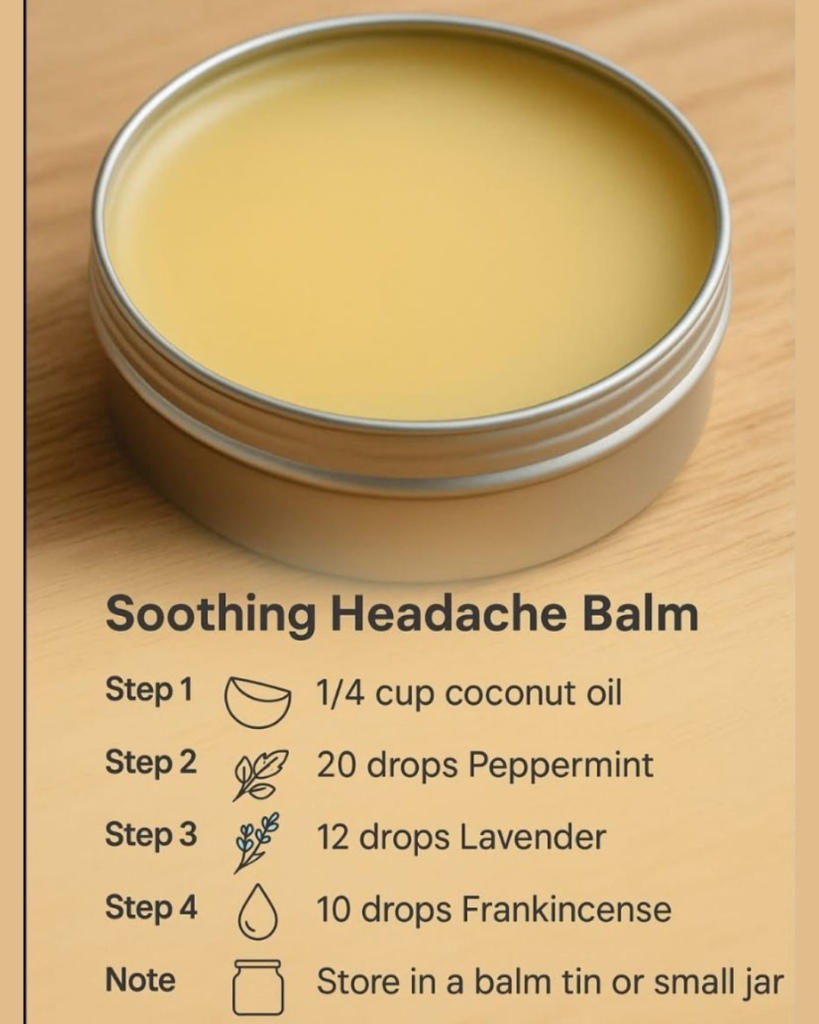
Gather your supplies before you begin. You will need a small glass jar or tin for the final product, a double boiler (or a glass bowl over a pot of simmering water), and your ingredients.
- Base: 2 tablespoons of carrier oil (like Jojoba or Sweet Almond).
- Wax: 1 tablespoon of beeswax pellets (or candelilla wax for a vegan version).
- Actives: 15-20 drops of essential oils (Peppermint, Lavender, and Eucalyptus are a classic trio).
2. The Melting Process
Place your carrier oil and wax in the double boiler. Heat gently over low heat until the wax has completely melted into the oil. Stir slowly with a clean glass rod or a wooden stick. Avoid high heat, as you don’t want to “cook” the oils—you just want them to blend.
3. Adding the Magic
Once the mixture is liquid and clear, remove it from the heat. Let it sit for about 30 seconds to a minute so it cools slightly, then stir in your essential oils. Adding them while the mixture is too hot can cause the volatile compounds to evaporate, reducing the balm’s effectiveness.
4. Cooling and Setting
Pour the liquid carefully into your tin or jar. Let it sit undisturbed at room temperature for at least two hours. As it cools, it will transform from a golden liquid into a creamy, solid soothing headache balm. Once set, it’s ready to use!
Advanced Strategies: Pro Tips for Maximum Potency
Ready to take your balm to the next level? Share in these expert insights to customize your approach and deal with different types of tension.
Targeted Blending
Not all headaches are created equal. If your pain is centered in the sinuses, try adding a few drops of Rosemary oil to your soothing headache balm to help clear congestion. If your headache is caused by extreme stress, Roman Chamomile is a “pro-level” addition that provides deep emotional calming.
Infused Carrier Oils
For extra strength, you can infuse your carrier oil with dried herbs like feverfew or arnica before making the balm. Simply let the herbs soak in the oil for several weeks in a sunny window, strain, and then proceed with the recipe. This adds a layer of herbal complexity that store-bought versions simply cannot match.
The “Pressure Point” Technique
To maximize the results of your balm, learn where to apply it. Don’t just rub it on your forehead! Apply your soothing headache balm to the back of the neck (where the skull meets the spine), the temples, and even the “webbing” between your thumb and index finger. These are traditional pressure points that can help unlock tension throughout the body.
Troubleshooting: Common Challenges and Solutions
Even the best DIY projects can run into obstacles. If your balm isn’t quite right, use these solutions to get back on track.
- “My balm is too hard to scoop out.” This means there is too much wax. Melt it down again and add a teaspoon more of carrier oil.
- “My balm is too runny/melting in my pocket.” You need more wax for structure. Melt it back down and add a small pinch of wax pellets.
- “The scent is too strong or irritating.” Everyone’s skin sensitivity is different. If the peppermint feels too “hot,” dilute the balm by melting it with more carrier oil. Always perform a patch test on your inner wrist before applying it to your face.
- “I’m not feeling relief.” Timing is key! Apply the soothing headache balm at the very first sign of tension. If the headache is already in “full swing,” use the balm in conjunction with a cold compress and a dark room for better results.
Maximizing Results: Next Level Wellness Tips
A soothing headache balm is a fantastic tool, but it works best as part of a holistic lifestyle. To build upon your success, consider these complementary strategies for long-term maintenance.
Hydration and Posture
Dehydration is one of the leading causes of frequent headaches. Ensure you are drinking enough water throughout the day. Additionally, check your desk ergonomics! If you are constantly “hunching” over a laptop, no balm can fully fix the muscle strain. Aim for a neutral spine to reduce the frequency of tension.
Maintenance and Storage
To keep your balm fresh and potent, store it in a cool, dark place. Light and heat can degrade the essential oils over time. A well-made balm can last for up to a year, but if the scent starts to fade or the oil smells “off,” it’s time to whip up a fresh batch.
Internal Linking and Discovery
Interested in more natural living? You might find value in exploring topics like DIY essential oil rollers, herbal teas for stress, or mindfulness breathing techniques. Combining your balm with a five-minute meditation can drastically improve its effectiveness.
Conclusion: Empower Your Path to Relief
Taking control of your comfort shouldn’t be a struggle. By creating and using a soothing headache balm, you are choosing a path that values natural ingredients and self-care. You have learned the science of how these botanicals interact with your body, a simple method for crafting your own remedy, and expert tips to maximize your results.
Remember, you have the capability to transform your daily experience. You don’t have to stay stuck in a cycle of tension. Reach for your balm, breathe in the calming scents, and remind yourself that you are taking a proactive step toward a healthier, more relaxed life. Your comfort is in your hands—literally!