Learn how to create a toxin-free sanctuary with our Healthy Home Guide. Discover simple swaps for everyday toxins to improve your air quality and wellness today!
Important Disclaimer: This article is for informational purposes only and should not replace professional advice. For health-related topics, consult healthcare providers. For safety procedures, verify current best practices and local regulations. Individual results may vary, and personal circumstances should always be considered when implementing any suggestions.
Have you ever walked into your home after a long day and realized the very place you go to relax might be hiding invisible guests? We often focus on outdoor pollution, but the air inside our homes can actually be more congested than the air outside. Transitioning to a non-toxic lifestyle doesn’t have to be an overnight overhaul that leaves you feeling overwhelmed. In fact, our Healthy Home Guide: Everyday Toxins + Simple Swaps is all about empowering you to make small, manageable changes that lead to a massive transformation in your well-being.
By the time you finish this article, you will unlock the secrets to identifying hidden chemicals in your cabinets and discover how to replace them with budget-friendly, effective alternatives. You have the power to curate a space that truly nurtures your family. Let’s embark on this journey toward a cleaner, fresher, and more vibrant home environment together!
Foundation: Understanding the Hidden Toxins in Your Space
Building a healthy home starts with awareness, not alarm. Many common household items contain Volatile Organic Compounds (VOCs), phthalates, and synthetic fragrances that can impact our respiratory health and hormone balance over time. When you begin to discover what is actually in your products, you are taking the first step toward sustainable lifestyle changes.
Many beginners feel hesitant, thinking that “natural” means “less effective” or “more expensive.” Fortunately, that couldn’t be further from the truth. Most of the best swaps are incredibly simple and use ingredients you likely already have in your pantry. By focusing on gradual progress and self-care, you can systematically remove these invisible burdens from your living space.
H3: The Three Main Culprits to Watch
- Synthetic Fragrances: Found in air fresheners and candles, these often contain endocrine disruptors.
- Harsh Cleaners: Bleach and ammonia can irritate lungs and skin, especially in poorly ventilated areas.
- Non-Stick Cookware: Traditional coatings can release fumes when overheated, which may affect long-term health.
Step-by-Step Process: Practical Swaps for Every Room
Creating a toxin-free home is an achievable DIY project. You don’t need fancy tools—just a bit of curiosity and a few staple ingredients. Follow these clear, actionable steps to achieve a fresher environment.
1. Refresh Your Air Naturally
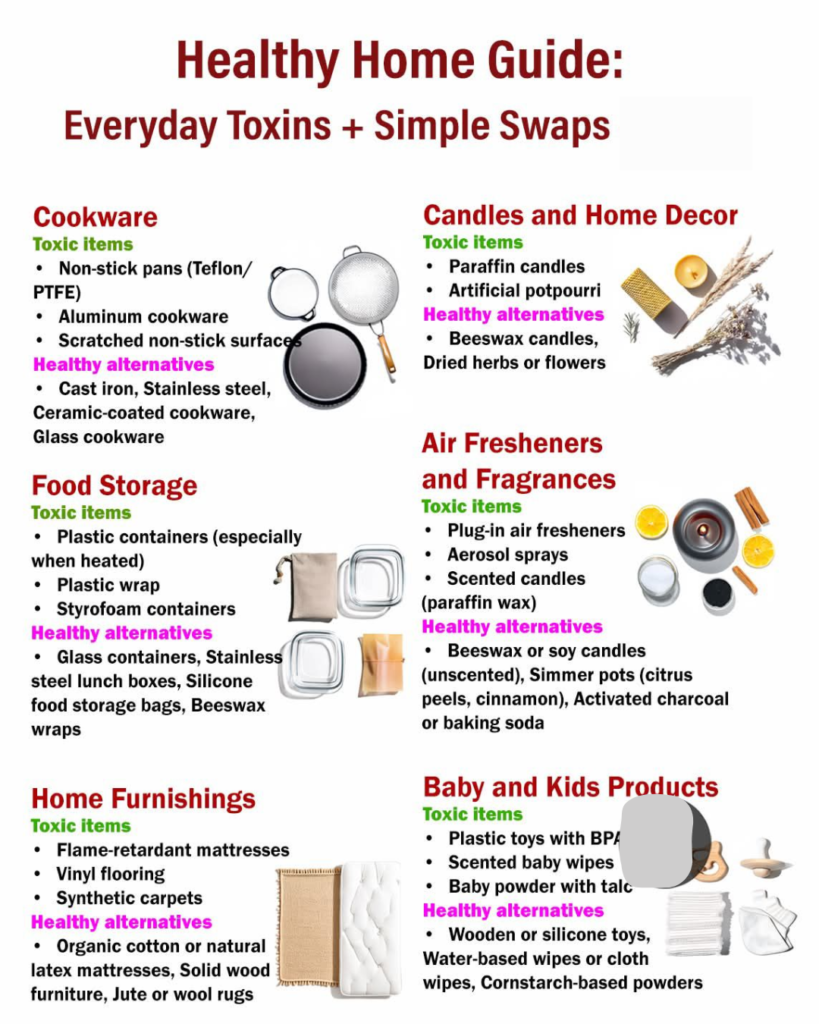
Instead of using aerosol sprays or plug-in fresheners, reach for the power of nature. Open your windows for 10 minutes every morning to flush out stale air. For a pleasant scent, use a high-quality essential oil diffuser or simmer a pot of water on the stove with cinnamon sticks and orange peels.
2. Simplify Your Cleaning Caddy
You can clean almost 90% of your home with three basic items: white vinegar, baking soda, and castile soap.
- Glass Cleaner: Mix 50/50 water and white vinegar in a spray bottle.
- Scrubbing Paste: Mix baking soda with a little water to tackle tub grime.
- All-Purpose: Dilute castile soap in water for counters and floors.
3. Transition Your Kitchenware
As your old non-stick pans wear out, replace them with cast iron, stainless steel, or 100% ceramic options. These materials are durable and don’t off-gas at high temperatures. Similarly, swap plastic food storage for glass or stainless steel to prevent chemicals from leaching into your leftovers.
4. Upgrade Your Laundry Routine
Traditional dryer sheets are often coated in heavy fragrances. A simple, cost-saving swap is using wool dryer balls. They reduce static, soften clothes naturally, and can even shorten drying time, saving you money on your energy bill!
Advanced Strategies: Pro Tips for a Deep Detox
Once you have mastered the basic swaps, you can dive into expert-level insights to further refine your healthy home. This is where you can truly customize your approach to suit your lifestyle and regional environment.
Harness the Power of “Living Air Purifiers”
Certain indoor plants are legendary for their ability to filter toxins like formaldehyde and benzene from the air. Consider adding a Snake Plant or a Peace Lily to your bedroom. These botanical beauties don’t just look great; they act as a 24/7 ecosystem benefit for your indoor air quality.
Understand “Greenwashing”
As you shop, you will see many labels claiming to be “natural” or “eco-friendly.” A pro tip is to use apps like Think Dirty or EWG’s Healthy Living. These allow you to scan barcodes and see a safety rating immediately. Being an informed consumer is the ultimate way to unlock a truly non-toxic lifestyle.
H3: Water Filtration Variations
- Countertop Filters: Great for renters who want to remove chlorine and heavy metals.
- Shower Filters: Essential for protecting your skin and hair from absorbing harsh chemicals during your morning routine.
- Whole-House Systems: A long-term investment for those looking for the highest level of purity at every tap.
Troubleshooting: Overcoming Common Challenges
Change isn’t always linear, and you might run into a few obstacles as you implement this Healthy Home Guide. Don’t be discouraged! Here is how to handle frequent setbacks.
- “The vinegar smell is too strong!” If you aren’t a fan of the “salad” scent, infuse your vinegar with lemon or grapefruit peels for two weeks before using it. This adds a citrus punch and extra grease-cutting power.
- “My natural laundry soap isn’t removing stains.” Natural options sometimes need a little help. Use a boost of oxygen bleach (sodium percarbonate) or a pre-treat rub of castile soap on tough spots.
- “I feel overwhelmed by the cost of replacing everything.” This is a common concern. Use the “Wait and Replace” strategy: only buy the non-toxic version once your current product is completely empty. This makes the financial impact much smaller over time.
Preventive Measures
To keep your home healthy in the long term, implement a “no-shoe” policy. Most of the toxins, pesticides, and lead dust in our homes are tracked in on the soles of our shoes. A simple rug at the door and a basket for shoes can prevent a huge amount of pollution from entering your sanctuary.
Maximizing Results: Building a Long-Term Sanctuary
How do you take your success to the next level? Consistency and maintenance are key to ensuring your home stays a wellness haven.
Seasonal Deep Cleans
Twice a year, focus on areas that trap dust and toxins, such as heavy curtains, carpets, and air vents. Using a HEPA-filter vacuum can significantly reduce the allergen load in your home. This maintenance ensures your gradual progress remains steady.
Complementary Strategies
A healthy home works best when paired with healthy habits. Consider exploring natural deodorant recipes or a diet for fatty liver disease to reduce your body’s internal toxic load while you optimize your external environment. When your home and your body are in harmony, your energy levels will soar.
Conclusion: You Are the Architect of Your Environment
Transforming your living space into a healthy sanctuary is a deeply rewarding journey. Through this Healthy Home Guide: Everyday Toxins + Simple Swaps, you’ve learned that you don’t need a massive budget to make a massive difference. By swapping out synthetic fragrances, simplifying your cleaners, and being mindful of your kitchenware, you are creating a foundation for long-term vitality.
Remember, every small swap is a victory. You have the capability to succeed, and your home is the perfect place to start. Embrace these changes with enthusiasm, and enjoy the peace of mind that comes with knowing your space is truly safe. Your journey to a vibrant, non-toxic life starts with the very next item you replace!