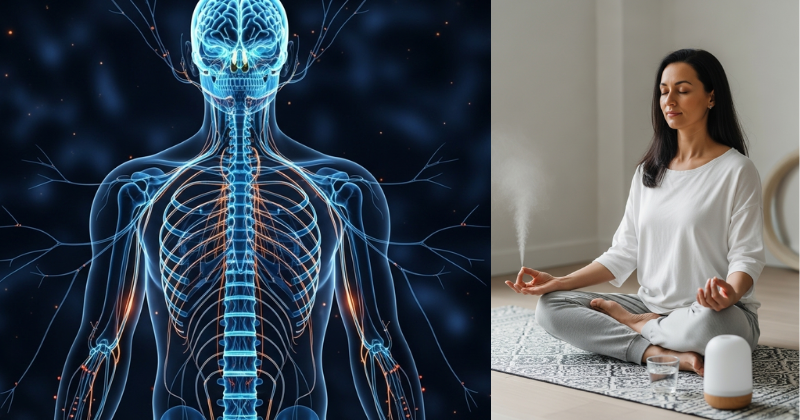
Discover effective reset routines for an overstimulated nervous system. Learn how to calm your mind and body with simple, science-backed wellness strategies.
Have you ever finished a long day feeling “wired but tired,” where your heart is racing even though you’re sitting on the couch? In our fast-paced world of endless notifications, blue light, and high-pressure schedules, it is incredibly easy to fall into a state of chronic fight-or-flight. If you feel irritable, overwhelmed by loud noises, or unable to focus, you are not alone—your body is simply asking for a break. You are about to discover powerful reset routines for an overstimulated nervous system that will help you reclaim your sense of peace and balance.
By implementing these gentle, sustainable practices, you will unlock a greater capacity for joy and resilience. We aren’t just talking about a quick fix; we are looking at a total transformation of how you experience your daily life. This guide is designed to be your supportive companion on the journey to self-regulation. You have the power to soothe your body, and I am here to show you exactly how to achieve that calm, grounded state you’ve been craving.
Important Disclaimer: This article is for informational purposes only and should not replace professional advice. For health-related topics, consult healthcare providers. For safety procedures, verify current best practices and local regulations. Individual results may vary, and personal circumstances should always be considered when implementing any suggestions.
Section 1: Understanding Your Nervous System Foundation
Before we jump into the routines, let’s build your confidence by understanding what is happening inside. Your nervous system is the command center of your body. It has two main modes: the Sympathetic (fight or flight) and the Parasympathetic (rest and digest). Overstimulation happens when the sympathetic side stays “on” for too long, leaving you feeling frazzled and exhausted.
Many people hesitate to start a wellness journey because they feel like they’ve “failed” at relaxing. But here is the truth: your nervous system is simply doing its job by trying to protect you. Reassurance is key here—you are not broken; you are just overstimulated. By learning basic self-regulation, you can guide your body back to safety.
H3: The Vagus Nerve Connection
The Vagus nerve is the “superhighway” of your parasympathetic system. When we stimulate this nerve, we send an immediate signal to the brain that it is safe to relax. Most effective reset routines for an overstimulated nervous system focus on activating this specific pathway.
H3: Recognizing the Signs of Overstimulation
Do you find yourself snapping at loved ones? Do you feel “brain fog” or a sudden sensitivity to bright lights? These are classic signs that your system is full. Acknowledging these symptoms is the first step toward healing. It’s much like how you might notice [You Are Not Tired, You Are Suffering from Poor Nutrition]—the body always provides clues if we listen.
Section 2: Core Reset Routines: A Step-by-Step Process
You don’t need a week-long retreat to find balance. You can start these manageable steps right now to begin your nervous system reset. These core methods are designed to be actionable and quick, fitting into even the busiest schedules.
Step 1: Physiological Sighs and Breathwork
This is one of the fastest ways to lower your heart rate.
- The Method: Inhale deeply through your nose, then take a second “sip” of air at the very top to fully inflate the lungs.
- The Action: Exhale very slowly through pursed lips, as if you are blowing through a straw. Repeat this 3-5 times. This physical action signals your brain to dump carbon dioxide and lower stress levels immediately.
Step 2: Temperature Regulation (Cold Plunge or Splash)
Cold water is a “reset button” for the vagus nerve.
- The Method: Splash ice-cold water on your face for 30 seconds, or hold an ice pack to your chest.
- The Action: The sudden cold triggers the “mammalian dive reflex,” which naturally slows the heart rate and shifts you out of a panic state.
Step 3: Grounding and Co-Regulation
Connecting with your environment helps pull you out of your head and back into your body.
- The Method: Use the 5-4-3-2-1 technique. Identify 5 things you see, 4 things you can touch, 3 things you hear, 2 things you can smell, and 1 thing you can taste.
- The Tip: If you have a pet, spend five minutes petting them. This act of “co-regulation” uses the animal’s calm state to help soothe your own.
Step 4: Digital Minimalism and Light Control
Our eyes are direct extensions of our brain.
- The Method: Switch your phone to “Grayscale” mode and dim the lights in your home after 7 PM.
- The Action: Reducing visual “noise” prevents the brain from being constantly spiked by dopamine and blue light, allowing your natural melatonin to rise.
Section 3: Pro Tips for Advanced Nervous System Regulation
Once you’ve mastered the basics, you can share in these expert-level insights to further customize your approach. These advanced strategies help you build long-term resilience so you don’t get overstimulated as easily in the future.
- Vocal Toning and Humming: The Vagus nerve passes right by your vocal cords. Humming, chanting, or even gargling water can physically vibrate the nerve, inducing a state of deep calm.
- Weight and Pressure: Use a weighted blanket or a heavy pillow on your lap. Deep pressure touch (DPT) helps the body feel physically “contained” and safe, which is a powerful tool for those with sensory processing sensitivities.
- Nature Immersion: This isn’t just about a walk; it’s about “forest bathing.” Much like the peace found when learning [How to Regrow Green Onions in Water] or tending to a garden, being around greenery lowers cortisol levels and resets your circadian rhythm.
- The “Flow State” Hobby: Engage in a repetitive, low-stakes task. This could be knitting, coloring, or even [4 Easy Steps to Strengthen Weak Nails at Home 💅✨]. These “micro-tasks” allow your brain to enter an alpha-wave state, which is incredibly restorative.
Section 4: Troubleshooting Common Challenges
Healing is rarely a straight line. You might find that some days your reset routines for an overstimulated nervous system don’t seem to work as well as others. Don’t be discouraged!
| Challenge | Possible Reason | The Solution |
| “I feel more anxious when I try to breathe” | Air hunger or hyper-focus | Stop the breathwork. Switch to movement like gentle shaking or dancing. |
| “I don’t have time to reset” | High-pressure environment | Try “micro-resets”: One deep breath or 10 seconds of grounding between tasks. |
| “I feel guilty for resting” | Societal “hustle” conditioning | Reframe rest as “system maintenance.” You can’t pour from an empty cup! |
| “The environment is too loud” | Sensory overload | Use noise-canceling headphones or earplugs to give your ears a “break.” |
Preventive Measures
To avoid reaching a breaking point, schedule “buffer time” between meetings or errands. Even five minutes of silence can prevent the cumulative buildup of overstimulation. Think of it as a [Body Detox] for your mind.
Section 5: Maximizing Results for Long-Term Success
To truly achieve a balanced life, you must integrate these routines into a sustainable lifestyle. Consistency is your best friend when it comes to nervous system health.
- Morning Sunlight: Get outside for 10 minutes within an hour of waking up. This sets your internal clock and helps regulate your mood throughout the day.
- Gentle Movement: Avoid high-intensity workouts when you are already feeling frazzled. Opt for Yin Yoga, stretching, or a slow walk in nature to encourage “rest and digest.”
- Community Support: Humans are social creatures. Sometimes the best reset is a meaningful conversation with a friend who makes you feel seen and heard.
- Evening Wind-Down: Create a ritual. This could involve a warm bath, reading a physical book, or lighting a candle—perhaps one you made yourself after learning [How to Reuse Candle Wax to Make New Candles].
Conclusion
Embracing reset routines for an overstimulated nervous system is one of the most transformative acts of self-care you can perform. By understanding the foundation of your body’s stress response and implementing step-by-step methods like breathwork and grounding, you are taking back the reins of your life.
You have the capability to move from a state of “surviving” to “thriving.” Remember, every small moment of calm you create is a win. Summarize your progress by picking just one technique to try today. You are worth the effort, and your calm, centered self is waiting to be rediscovered.