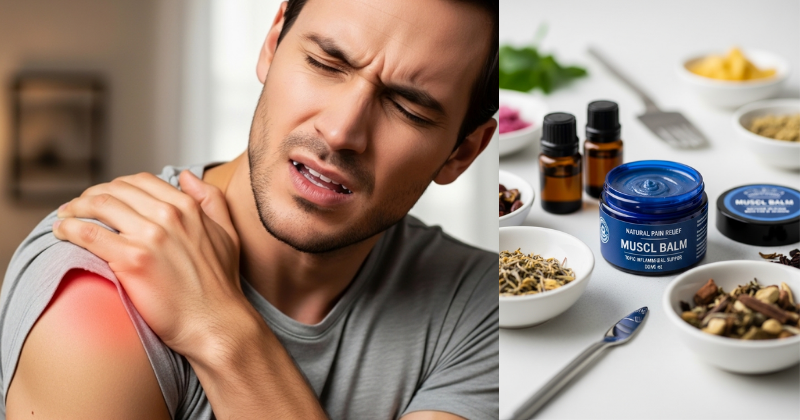
Sore muscles don’t have to derail your training, your workday, or your sleep. Deep Blue muscle balm — a proprietary blend of wintergreen, camphor, peppermint, blue tansy, blue chamomile, helichrysum, and osmanthus essential oils suspended in a nourishing base — represents one of the most scientifically interesting topical analgesic formulations available in the natural wellness space. Each constituent compound works through a distinct, well-characterized biochemical mechanism, and their combination produces synergistic effects on pain perception, inflammation, and tissue perfusion that no single ingredient achieves alone. Whether you’re recovering from intense athletic training, managing chronic muscular tension, or simply dealing with the postural strain of long desk hours, understanding how Deep Blue muscle balm works at the molecular level transforms it from a pleasant-smelling cream into a precisely deployable recovery tool.
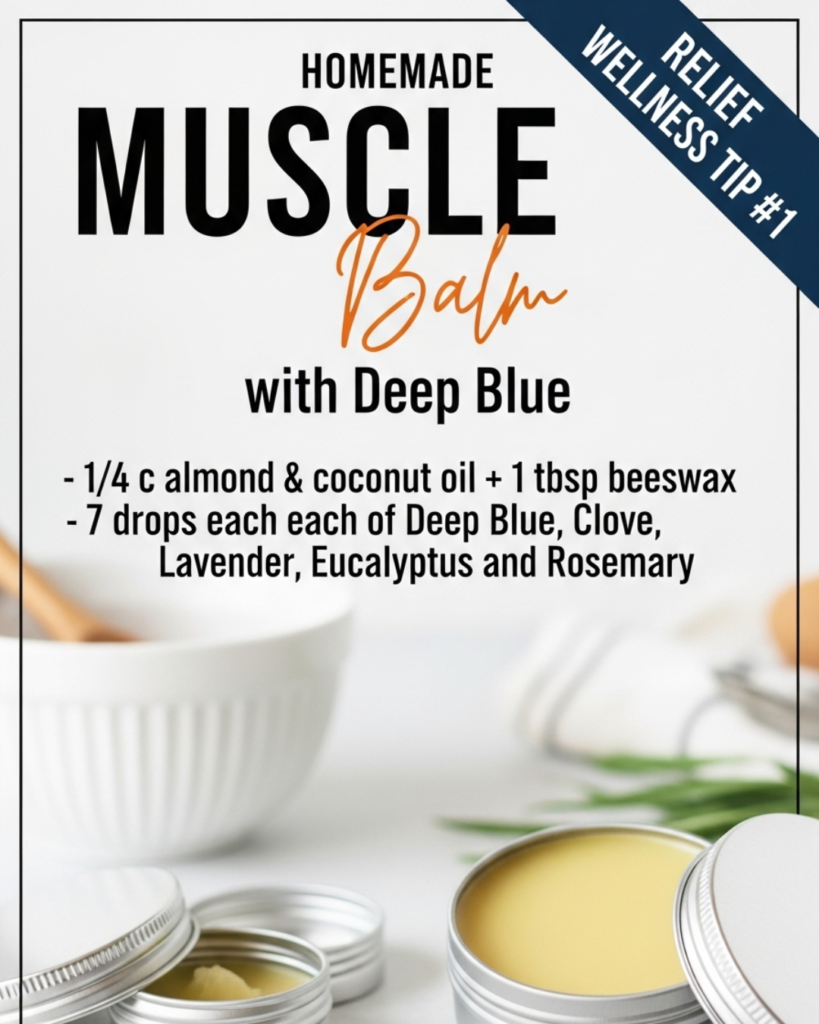
The Biochemistry Behind Deep Blue: Why This Blend Works
Before applying any topical analgesic intelligently, you need to understand what it’s actually doing to your tissues. Deep Blue muscle balm operates through four primary biochemical pathways simultaneously — a mechanistic complexity that distinguishes it from single-compound topical analgesics.
TRPV1 and TRPM8 Receptor Modulation
Two transient receptor potential (TRP) channels sit at the center of Deep Blue’s analgesic action. TRPV1 receptors — the same receptors that respond to capsaicin and genuine heat — are activated and subsequently desensitized by camphor and wintergreen’s methyl salicylate. Initial TRPV1 activation produces the characteristic warming sensation, but sustained activation triggers receptor internalization and functional desensitization, reducing the channel’s responsiveness to subsequent pain stimuli. This is the neurobiological mechanism underlying the counterirritant principle: activating one sensory pathway sufficiently suppresses another.
TRPM8 receptors, activated by temperatures below 25°C and by menthol from peppermint oil, produce the cooling counterpoint. Menthol’s TRPM8 agonism generates afferent signals that compete with nociceptive (pain) signals at the level of the dorsal horn interneurons, engaging gate control mechanisms first described by Melzack and Wall in 1965. The simultaneous activation of both warming and cooling TRP channels — TRPV1 and TRPM8 — creates a sensory competition environment that measurably reduces the central perception of musculoskeletal pain.
Anti-Inflammatory Mechanisms of Key Constituents
Methyl salicylate from wintergreen oil deserves particular attention because it operates through a mechanism nearly identical to aspirin’s. After transdermal absorption, methyl salicylate is hydrolyzed to salicylic acid, which inhibits cyclooxygenase (COX) enzymes — particularly COX-2 — reducing prostaglandin E2 synthesis at peripheral inflammation sites. Prostaglandins are primary sensitizers of nociceptors; reducing their local concentration directly lowers the pain signaling threshold. Wintergreen oil contains approximately 85-99% methyl salicylate by composition, making it one of nature’s most concentrated natural COX inhibitors.
Blue chamomile (Matricaria chamomilla) contributes alpha-bisabolol and chamazulene — compounds with well-documented anti-inflammatory activity through inhibition of 5-lipoxygenase (5-LOX), a key enzyme in the leukotriene synthesis pathway. Leukotrienes amplify inflammatory cascades and sensitize peripheral pain receptors; blocking their synthesis provides a complementary anti-inflammatory mechanism to COX inhibition, addressing the inflammatory process from two distinct enzymatic angles simultaneously.
Helichrysum italicum oil adds a third anti-inflammatory dimension through its arzanol and phloroglucinol derivatives, which inhibit both COX and 5-LOX while also suppressing NF-κB signaling — a transcription factor that upregulates pro-inflammatory cytokine gene expression. This multi-target anti-inflammatory action makes helichrysum a scientifically compelling addition to any analgesic formulation.
How to Apply Deep Blue Muscle Balm for Maximum Effect
Correct application technique is not a minor detail — it determines how much active compound reaches target tissues and how quickly relief develops. Topical analgesic efficacy is governed by Fick’s law of diffusion and the physicochemical properties of both the active compounds and the skin barrier they must traverse.
Step 1: Prepare the Target Area. Apply Deep Blue muscle balm to clean, slightly warm skin. Warmth increases skin permeability by dilating superficial blood vessels and increasing the fluidity of the stratum corneum’s lipid bilayers, accelerating transdermal flux of active compounds. Applying after a warm shower or following light exercise produces measurably faster absorption than application to cold, vasoconstricted skin. Remove any other topical products from the area that might create a barrier between the balm and the skin.
Step 2: Apply an Appropriate Quantity. A pea-to-marble sized amount covers approximately a 10cm × 10cm area adequately. More product does not proportionally increase efficacy — the stratum corneum has a finite absorption rate, and excess product sitting on the skin surface simply evaporates or transfers to clothing. For large muscle groups like the quadriceps or lower back, scale up proportionally, but avoid creating a thick unabsorbed layer.
Step 3: Massage With Purposeful Technique. Massage the balm in for 60-90 seconds using circular motions with moderate pressure. This serves multiple functions simultaneously: it generates frictional heat that further increases skin temperature and permeability; it mechanically disperses the product across a larger surface area for more uniform absorption; and the pressure itself stimulates A-beta mechanoreceptors, which further activate gate control inhibition of pain signaling. Use the pads of your fingers or the heel of your hand for large surface areas.
Step 4: Allow Absorption Time Before Covering. Wait 3-5 minutes before covering the area with clothing or bandaging. This allows the volatile carrier compounds to partially evaporate, concentrating the active constituents in the superficial skin layers where absorption into the microvascular network occurs most efficiently. Covering immediately traps evaporating compounds and reduces their concentration gradient driving absorption.
Step 5: Time Your Applications Strategically. For post-exercise recovery, apply within 30-60 minutes following training — the inflammatory cascade is most modifiable in its early phases, before prostaglandin and leukotriene synthesis peaks. For chronic tension or positional pain, morning application addresses overnight muscle stiffness when tissue is most contracted and perfusion is lowest.
Advanced Application Strategies and Professional-Level Optimization
Once you’ve mastered basic application, these evidence-informed refinements extract significantly more therapeutic value from each application.
Combining Deep Blue With Heat and Compression
Occlusion — covering the application area with plastic wrap or a compression bandage after absorption — creates a reservoir effect that increases transdermal flux by maintaining a consistently high concentration gradient at the skin surface. Research on occlusive drug delivery demonstrates 3-10 fold increases in transdermal absorption under occlusion compared to non-occluded application. A practical implementation: apply Deep Blue muscle balm to the target area, wait 5 minutes, then apply a compression wrap or knee sleeve. The warmth generated by compression further enhances absorption while the mechanical pressure reduces local edema.
Combining topical application with gentle heat (a warm compress applied over the balm after 5 minutes of open-air absorption) synergizes both the thermal permeability enhancement and the vasodilation needed to clear inflammatory mediators from the treatment area. This combination is particularly effective for chronic lower back tension and joint-adjacent muscle groups where circulation is often chronically reduced.
Layering With Complementary Essential Oils
Deep Blue’s existing formulation is sophisticated, but specific additions can target mechanisms the base formula doesn’t fully address. Frankincense (Boswellia serrata) oil — 1-2 drops blended into a single application of Deep Blue — adds boswellic acid activity through AKBA (3-O-acetyl-11-keto-β-boswellic acid), a compound that specifically inhibits 5-LOX without affecting COX, providing additional leukotriene suppression with a different structural mechanism than chamomile’s phloroglucinols. Lavender oil addition contributes linalool and linalyl acetate — compounds that modulate GABA-A receptor activity in peripheral sensory neurons, reducing neuronal excitability and complementing the TRP channel mechanisms of the base formula.
Timing Relative to Training Cycles
The optimal timing of Deep Blue muscle balm application relative to training phases reflects the biology of muscle adaptation. During the acute inflammatory phase (0-48 hours post-training), anti-inflammatory application should be conservative — some degree of inflammatory signaling is necessary for muscle protein synthesis adaptation. Applying Deep Blue liberally in the first 12 hours post-training may attenuate the inflammatory stimulus required for hypertrophic adaptation, similar to the concern with NSAIDs in the post-exercise window. Reserve aggressive application for the 48-72 hour window when pain is limiting mobility and function without serving productive adaptive signaling.
Troubleshooting Application Challenges
Even correctly formulated products encounter specific challenges in practical application. Anticipating these problems prevents discouragement and wasted product.
Managing Skin Sensitivity and Irritation
Wintergreen’s high methyl salicylate content makes Deep Blue muscle balm contraindicated for individuals with salicylate sensitivity — a condition that affects approximately 2-3% of the general population and is more prevalent in individuals with aspirin sensitivity or asthma. Signs of local irritation (persistent redness, urticaria, or burning that intensifies rather than diminishes after 5-10 minutes) indicate either salicylate sensitivity or an excessively high application concentration. Diluting by mixing the balm with an unscented carrier lotion at a 1:1 ratio reduces the effective concentration while preserving the multi-mechanism activity. Always perform a patch test on the inner forearm before applying to large body surface areas.
Keep Deep Blue muscle balm strictly away from mucous membranes, eyes, broken skin, and genitourinary areas. The camphor content, in particular, can cause serious neurological effects if ingested — ensure the product is stored securely away from children. Never apply to inflamed, sunburned, or compromised skin where the barrier function is reduced, as this dramatically increases systemic absorption beyond intended levels.
When Topical Application Provides Insufficient Relief
If Deep Blue muscle balm provides only partial relief for persistent or severe musculoskeletal pain, this indicates either that the pain source lies deeper than topical penetration can reach, or that the pain mechanism involves central sensitization rather than peripheral inflammation. Topical analgesics work best on superficial muscles, tendons, and joint capsules within approximately 1-2cm of the skin surface. Deep muscles (psoas, deep hip rotators, thoracic erectors) may be insufficiently reached by topical application alone.
In these cases, combining topical application with targeted manual therapy (foam rolling, massage, or professional physical therapy) addresses the deeper tissue component while Deep Blue manages the superficial inflammatory component. If pain persists beyond 2 weeks despite consistent application and complementary interventions, professional musculoskeletal assessment is warranted to rule out structural injury.
Maximizing Long-Term Results and Recovery Integration
Deep Blue muscle balm achieves its greatest value when integrated into a comprehensive recovery strategy rather than used as an isolated intervention.
Building a Recovery Protocol Around Topical Analgesia
The most effective athletes and active individuals treat topical analgesia as one layer in a recovery stack that addresses different physiological systems concurrently. Deep Blue addresses peripheral inflammation and pain signal modulation. Cold water immersion or contrast hydrotherapy reduces systemic inflammatory marker levels. Sleep optimization enables growth hormone secretion that drives tissue repair. Protein intake timing ensures substrate availability for muscle protein synthesis. Each layer operates through different mechanisms and their combination produces additive recovery outcomes that no single intervention achieves independently.
Apply Deep Blue as part of a defined post-training recovery routine — immediately after the cold shower, during the foam rolling session, or before the evening meal — rather than sporadically when pain becomes noticeable. Consistent, proactive application maintains lower baseline levels of accumulated tissue inflammation and reduces the severity of DOMS episodes over training weeks.
Long-Term Skin and Tissue Health Considerations
Frequent application of essential oil-based products to the same skin areas can occasionally produce sensitization over extended periods — a phenomenon where repeated low-level exposure gradually builds an immune response that manifests as contact dermatitis. Rotating application sites when multiple areas are sore, maintaining 8-12 hours between applications to the same area, and periodically taking 1-2 week breaks from consistent use prevents sensitization development. The carrier base in Deep Blue muscle balm typically contains emollient ingredients that maintain skin barrier integrity with regular use, but monitoring for any gradual changes in skin texture or reactivity at application sites enables early detection of any sensitization pattern.
Conclusion
Deep Blue muscle balm represents a scientifically coherent convergence of botanical analgesic compounds, each contributing distinct mechanisms — TRP channel modulation, COX and LOX inhibition, gate control activation — that together produce genuine, measurable musculoskeletal pain relief. Understanding the biochemistry behind each constituent transforms how you apply it, when you apply it, and how you combine it with complementary recovery strategies. Apply it correctly to warmed, clean skin with purposeful massage, time it strategically within your training cycle, and integrate it within a comprehensive recovery protocol. The result is not merely temporary symptomatic relief but a systematic reduction in the inflammatory burden that accumulates with consistent physical demand — giving your muscles the biochemical environment they need to recover fully and perform at their best.
Important Disclaimer: This article is for informational purposes only and should not replace professional advice. For health-related topics, consult healthcare providers. Individual results may vary, and personal circumstances should always be considered when implementing any suggestions. Do not apply to broken skin or near eyes and mucous membranes. Keep out of reach of children.