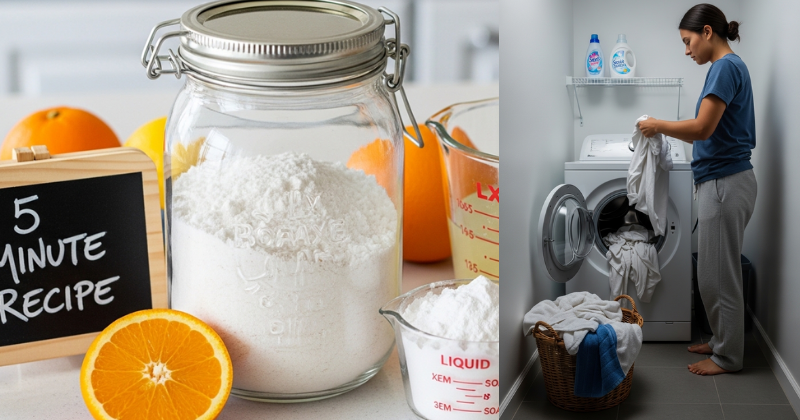
You’re standing in the laundry aisle staring at a $18 bottle of detergent that’ll last three weeks, and somewhere in the back of your mind you’re thinking there has to be a better way. There is. This quick DIY laundry detergent recipe takes exactly 5 minutes to make, costs a fraction of commercial alternatives, cleans clothes just as effectively, and uses ingredients you can find at any grocery or hardware store. Families across the country are discovering that homemade laundry detergent isn’t a compromise — it’s genuinely superior for sensitive skin, gentler on fabrics, and far kinder to your household budget. You’re about to unlock a simple, satisfying recipe that puts you back in control of what goes into your laundry and onto your family’s skin.
Understanding the Science: Why Homemade Detergent Works
Before mixing anything, it helps to understand why these simple ingredients actually clean clothes. Commercial detergents rely on surfactants, builders, and enzymes — but the core cleaning chemistry can be replicated effectively with a handful of natural mineral and soap compounds that have been cleaning clothes reliably for over a century.
The Three Core Cleaning Mechanisms
Every effective laundry detergent — commercial or homemade — must accomplish three things: lift soil from fabric fibers, suspend that soil in water so it doesn’t redeposit on the fabric, and soften hard water minerals that would otherwise interfere with cleaning. Your DIY recipe addresses all three through distinct ingredients working together in a elegantly simple system.
Soap or surfactant (provided by washing soda or castile soap) handles the lifting and suspension function. Surfactant molecules are bipolar — one end is attracted to water, the other to oils and dirt. They surround soil particles, pulling them away from fabric and holding them suspended in wash water until they rinse away. Washing soda (sodium carbonate) handles water softening and pH elevation, which increases surfactant effectiveness and helps break down protein-based stains. Borax or baking soda contributes odor neutralization, mild bleaching through peroxide chemistry, and additional water softening.
Why Homemade Outperforms Store-Bought in Key Areas
Commercial detergents contain optical brighteners — synthetic fluorescent compounds that make fabrics appear whiter under UV light but accumulate in fabric fibers over time and can trigger skin sensitivity reactions. They also contain synthetic fragrances that are frequent allergen sources, artificial preservatives extending shelf life, and fillers that add bulk without cleaning contribution. Your homemade DIY laundry detergent contains none of these additives — just active cleaning compounds at concentrations you control. For households with sensitive skin, eczema, or chemical sensitivities, this difference is transformative.
The 5-Minute DIY Laundry Detergent Recipe
This is the core recipe — everything you need, nothing you don’t. Gather your ingredients before starting and the entire process genuinely takes 5 minutes from start to finish.
What You Need:
- 1 cup washing soda (sodium carbonate — not baking soda, they’re different)
- 1 cup borax (found in the laundry aisle as “20 Mule Team Borax”)
- ½ cup baking soda
- 1 bar of pure soap (Fels-Naptha, Zote, or castile soap like Kirk’s or Dr. Bronner’s bar form)
- Optional: 20-30 drops essential oil for scent (lavender and lemon are popular choices)
- An airtight container for storage (a quart mason jar or repurposed detergent container works perfectly)
Step 1: Grate the Soap Bar (2 minutes). Use a box grater or food processor to grate your soap bar into fine shavings. Finer is better — coarser shavings may not dissolve fully in cold water wash cycles. If using a food processor, pulse in 10-second bursts until you have a fine, crumbly texture. Dedicate a grater to this purpose if you plan to make this regularly, as soap residue is difficult to remove completely from kitchen graters.
Step 2: Combine Dry Ingredients (1 minute). In a large bowl, combine the grated soap, washing soda, borax, and baking soda. The washing soda and borax are the workhorses of this recipe — don’t reduce their quantities, as they provide the alkalinity and water-softening capacity the recipe depends on.
Step 3: Mix Thoroughly (1 minute). Stir all ingredients together until completely uniform — no pockets of concentrated soap flakes remaining. Use a wooden spoon or wear gloves if you have sensitive skin, as washing soda is mildly alkaline and can cause dryness with prolonged contact.
Step 4: Add Essential Oils If Using (30 seconds). Drip your chosen essential oils directly onto the powder mixture and stir immediately to distribute evenly. The dry powder absorbs the oil and prevents clumping. Lavender provides antimicrobial properties alongside pleasant scent; lemon or orange oils add mild degreasing benefit; eucalyptus contributes natural antimicrobial activity particularly useful for sports or workout clothing.
Step 5: Transfer and Store (30 seconds). Spoon the finished DIY laundry detergent into your storage container, seal tightly, and label with the date. Store in a cool, dry location away from humidity — moisture causes clumping and reduces shelf effectiveness.
How Much to Use: 2 tablespoons per regular load in standard machines. 1 tablespoon for HE (high-efficiency) machines. Double for heavily soiled loads or large loads.
Advanced Variations and Pro-Level Customizations
Once you’ve made the basic recipe successfully, these variations let you tailor your DIY laundry detergent to specific household needs and preferences.
The Liquid Version for Cold Water Performance
Powder detergents can sometimes leave residue in very cold water wash cycles because soap flakes don’t fully dissolve. The liquid version solves this completely. Bring 4 cups of water to a simmer in a large pot, add your grated soap, and stir until fully dissolved. Remove from heat, add the washing soda and borax, stir until completely dissolved, then add 1 gallon of cold water and stir thoroughly. Pour into a large sealed container. The mixture gels as it cools — shake well before each use. Use ½ cup per regular load. This liquid DIY laundry detergent performs identically in both hot and cold water cycles.
The Sensitive Skin Formula
For households dealing with eczema, psoriasis, or chemical sensitivities, eliminate the borax entirely and replace it with an additional ½ cup of baking soda. Use fragrance-free castile soap (Dr. Bronner’s unscented is excellent) and skip essential oils entirely. This produces a gentler formula that still cleans effectively but removes the alkalinity and potential sensitizers that trigger reactions in reactive skin types. Washing soda remains in this formula — it’s essential for cleaning effectiveness — but its mildly alkaline pH (11.4) is thoroughly rinsed from clothing during the wash cycle.
The Heavy-Duty Formula for Work Clothes
Add ½ cup of OxiClean (sodium percarbonate — an oxygen bleach) to the basic recipe for a heavy-duty version that tackles agricultural soil, automotive grease, and sports stains more aggressively. Sodium percarbonate releases hydrogen peroxide in water, providing oxidative stain breakdown that complements the surfactant action of the base formula. Use 3 tablespoons per heavily soiled load and pre-soak extremely soiled items for 30 minutes before running the wash cycle. This combination handles work clothing that would challenge most commercial detergents.
Scent Combinations Worth Trying
The essential oil addition provides genuine customization that commercial products can’t match. Effective scent combinations include: lavender and eucalyptus (antimicrobial and clean-smelling), lemon and rosemary (bright and herbaceous), peppermint and tea tree (fresh with antimicrobial boost), and orange and cedarwood (warm and grounding). Start with 20 drops total and adjust upward to your preference — the scent in the finished laundry is subtle because washing rinses most fragrance away, so don’t be surprised if the result is much milder than the powder itself smells.
Troubleshooting Common DIY Detergent Challenges
A few specific issues arise consistently with homemade laundry detergent — here’s how to address each one before it becomes a problem.
Soap Residue on Dark Clothes
White streaks or powdery residue on dark clothing after washing indicates the soap flakes aren’t fully dissolving before the rinse cycle. Three solutions work reliably. First, grate your soap more finely — ideally to a powder-like consistency using a food processor. Second, dissolve your measured detergent amount in a cup of hot water before adding it to the machine, rather than putting powder directly into the drum. Third, switch to the liquid version described above, which eliminates undissolved soap as a possibility entirely.
Clothes Not Smelling Fresh After Washing
If clean clothes emerge from the wash without a fresh scent, this is actually the recipe working as intended — no synthetic fragrance masking underlying odors. However, if clothes genuinely smell musty or unclean, the issue is typically insufficient detergent quantity for load size or water hardness. Add an extra tablespoon of detergent per load and run an extra rinse cycle. For persistent musty smells (often caused by mold in the fabric fibers themselves), add ½ cup of white vinegar to the rinse cycle — it neutralizes odor-causing compounds without leaving its own scent on dry clothing.
Powder Clumping in Storage
Clumping results from moisture exposure during storage — washing soda is hygroscopic and absorbs atmospheric humidity readily. Store your DIY laundry detergent in a truly airtight container, add a food-grade silica desiccant packet if you live in a humid climate, and avoid storing near the washing machine itself (which generates steam during operation). If clumping occurs, break it up with a fork — effectiveness is not reduced, only texture is affected.
HE Machine Compatibility Concerns
This recipe is compatible with HE machines when used at the reduced dosage (1 tablespoon). The key concern with HE machines is excess sudsing — high foam production can damage the machine and reduce cleaning efficiency. This recipe produces very low suds because it relies on saponified soap rather than high-foam synthetic surfactants. If you want extra assurance, add ¼ teaspoon of vegetable glycerin to your liquid version, which further suppresses foam formation.
Maximizing Results and Building a Complete DIY Laundry System
Your homemade detergent delivers its best results as part of a complete thoughtful laundry approach rather than a simple swap for commercial products.
Pairing With DIY Fabric Softener and Stain Treatment
White vinegar — added to the fabric softener dispenser at ½ cup per load — neutralizes detergent alkalinity remaining in fabrics after washing, restoring their natural softness and reducing static electricity without synthetic softening agents. It sounds counterintuitive, but vinegar-rinsed laundry smells completely neutral when dry, not acidic. For pre-treatment of set stains, a paste of washing soda and water applied directly to the stain and left for 30 minutes before washing handles most protein and oil-based stains effectively.
Cost Analysis and Long-Term Savings
The financial case for DIY laundry detergent is straightforward and significant. A batch using the basic recipe costs approximately $0.50-0.75 in ingredients and yields enough detergent for 30-40 regular loads — roughly $0.02 per load. Premium commercial detergents cost $0.25-0.50 per load. For a family doing 8-10 loads weekly, this represents annual savings of $80-150 from this single recipe alone. Over five years, that compounds to meaningful household budget impact from a recipe that takes 5 minutes to make once a month.
Scaling Production for Large Households
Once you’re confident in the recipe, scaling up saves even more time. Multiply the recipe by 4-5 and make a large batch monthly rather than weekly. Large-batch production is simply more efficient — the grating and mixing steps take only marginally longer at 5x volume, but you reduce your total time investment by 80%. Store bulk batches in a 5-gallon food-grade bucket with a tight-fitting lid, dispensing into a smaller jar for daily use. This system suits large families, homesteads, or households doing frequent laundry particularly well.
Conclusion
Making your own DIY laundry detergent in 5 minutes isn’t just a money-saving trick — it’s a genuine upgrade in what touches your family’s clothes and skin every day. You’ve now got the complete recipe, the science behind why it works, customizations for every household situation, and solutions for every challenge that might arise. Start with the basic powder recipe this weekend using ingredients that cost less than a single commercial bottle, and experience firsthand the satisfaction of clean, fresh laundry made entirely on your terms. Your budget, your skin, and your washer will all thank you for making the switch.