Cortisol — the glucocorticoid hormone synthesized in the adrenal cortex in response to hypothalamic-pituitary-adrenal axis activation — is simultaneously essential for survival and, when chronically elevated, one of the most physiologically damaging compounds the body can produce endogenously. Cortisol’s acute functions are genuinely adaptive: it mobilizes glucose from hepatic glycogen stores, enhances cardiovascular output, suppresses non-urgent immune and reproductive functions, and sharpens attentional focus. The problem emerges when modern chronic psychosocial stressors maintain HPA axis activation beyond the brief windows for which this system was evolutionarily calibrated — generating sustained cortisol elevation that progressively damages hippocampal neurons, impairs prefrontal cortical function, dysregulates immune surveillance, promotes visceral adiposity through cortisol-stimulated lipogenesis, and accelerates telomere attrition. The encouraging scientific reality is that multiple well-characterized physiological interventions can meaningfully reduce cortisol through mechanisms as rigorously documented as pharmaceutical approaches — without the side effect profiles accompanying synthetic glucocorticoid suppression.
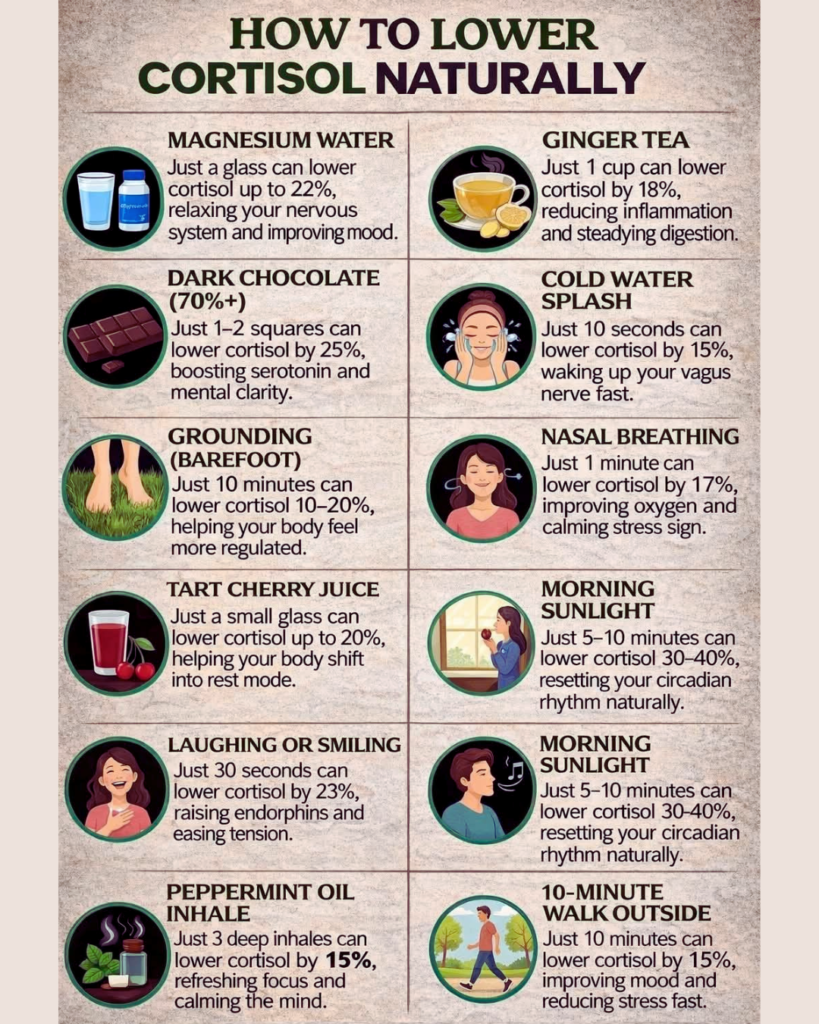
The Cortisol Regulatory System: What You’re Actually Targeting
Effective cortisol reduction requires understanding the feedback architecture that governs HPA axis activity — the same understanding that allows you to identify where different interventions exert their effects.
HPA Axis Negative Feedback and Its Disruption
The HPA axis operates through a classic negative feedback loop: psychological or physiological stressors activate the paraventricular nucleus of the hypothalamus to secrete corticotropin-releasing hormone (CRH), which stimulates pituitary corticotrophs to release adrenocorticotropic hormone (ACTH), which drives cortisol synthesis in the adrenal cortex. Cortisol then circulates back to the hypothalamus and pituitary where glucocorticoid receptors (GRs) detect its concentration and suppress further CRH and ACTH secretion — the negative feedback mechanism that normally terminates the stress response.
Chronic stress progressively impairs this feedback through two mechanisms. First, sustained cortisol exposure causes glucocorticoid receptor downregulation — the cell surface reduces GR expression as a protective measure against overstimulation, but this reduces the sensitivity of the feedback system itself, requiring higher cortisol concentrations to achieve the same suppressive signal. Second, chronic stress-induced structural changes in the hippocampus — a region dense with GRs that provides tonic inhibitory control over the hypothalamus — impair the hippocampus’s contribution to HPA axis regulation. The natural interventions that most powerfully reduce cortisol therefore work either by directly reducing stress-signal input into the hypothalamus, by restoring GR sensitivity, or by supporting hippocampal structural and functional integrity.
Circadian Cortisol Rhythms and Why Timing Matters
Cortisol secretion follows a pronounced circadian pattern governed by the suprachiasmatic nucleus (SCN) of the hypothalamus — the brain’s master circadian clock. Healthy cortisol dynamics involve a sharp cortisol awakening response (CAR) — a 50-100% rise in cortisol in the first 30-45 minutes after waking — followed by progressive decline across the day, reaching its nadir around midnight. This rhythm serves critical biological functions: the morning surge promotes alertness, immune activation, and metabolic mobilization for the day’s demands; the evening decline enables the neurological quieting that facilitates sleep and the growth hormone secretion that drives tissue repair.
Chronic stress flattens this rhythm — attenuating the morning peak while elevating the evening nadir. This flattened cortisol curve is more damaging than absolute cortisol elevation because it disrupts the temporal patterning that coordinates immune, metabolic, and neurological functions. Several natural interventions work specifically by restoring this circadian rhythmicity rather than simply reducing overall output — a more nuanced and ultimately more beneficial therapeutic target.
Tier One Interventions: Strongest Evidence for Cortisol Reduction
Controlled Breathing and Autonomic Modulation
Slow, diaphragmatic breathing at frequencies of approximately 4-7 breaths per minute activates parasympathetic nervous system pathways through vagal afferent stimulation, directly counteracting the sympathetic activation that drives HPA axis signaling. The physiological mechanism operates through respiratory sinus arrhythmia — the cyclical heart rate variation that accompanies breathing — which at slow breathing rates maximizes heart rate variability (HRV) and vagal tone. Research from the Cleveland Clinic and multiple European institutions documents cortisol reductions of 15-25% following 20-minute sessions of resonance frequency breathing, with effects sustained several hours post-practice through continued elevated vagal tone.
The most evidence-supported specific technique is the extended exhalation protocol: inhale through the nose for 4 counts, exhale through pursed lips for 6-8 counts. This asymmetric ratio maximizes the exhalation phase during which heart rate decreases and vagal tone peaks. Practicing 10-20 minutes daily, ideally in the late morning or early afternoon when cortisol is naturally declining, establishes the parasympathetic tone that moderates the cortisol response to subsequent stressors.
Aerobic Exercise at Moderate Intensity
Exercise represents one of the most paradoxical cortisol interventions: acute vigorous exercise transiently increases cortisol (by 10-50% depending on intensity and duration), yet chronic moderate exercise training produces sustained reductions in resting cortisol and attenuated cortisol responses to subsequent stressors. This seeming contradiction resolves when the dose-response relationship is understood — it is specifically moderate-intensity aerobic exercise (60-70% VO2max, 30-45 minutes, 3-5 sessions weekly) that produces the beneficial chronic effect, while very high-intensity or very high-volume training without adequate recovery can chronically elevate cortisol through overtraining-induced HPA axis sensitization.
The mechanisms underlying exercise-induced cortisol attenuation include: upregulation of hippocampal glucocorticoid receptor density (restoring feedback sensitivity), increased brain-derived neurotrophic factor (BDNF) production that supports hippocampal neurogenesis and structural integrity, reduced baseline inflammatory cytokine production that would otherwise drive HPA activation, and improved sleep quality that allows the restorative overnight cortisol nadir to fully occur. A meta-analysis of exercise interventions on cortisol published in Psychoneuroendocrinology confirmed significant baseline cortisol reductions of 15-20% in chronically stressed populations following 8-12 weeks of consistent moderate aerobic training.
Sleep Architecture Optimization
The relationship between sleep and cortisol is bidirectional and clinically significant: elevated cortisol impairs sleep by increasing arousal during the nighttime period when cortisol should be at its nadir, while sleep disruption impairs the overnight cortisol clearance and pituitary recovery that enables normal daytime cortisol rhythmicity. Interrupting this cycle requires targeted sleep optimization that operates on both sides of the relationship simultaneously.
Critical evidence-based modifications include maintaining consistent sleep-wake timing (±30 minutes daily, including weekends) to reinforce SCN circadian signaling that governs the cortisol rhythm, achieving total darkness during sleep (light exposure during sleep hours activates the SCN and prematurely triggers the morning cortisol rise), maintaining sleeping environment temperature at 18-20°C (core body temperature drop is required for the sleep-associated growth hormone surge that partially suppresses overnight cortisol), and eliminating screens 60-90 minutes before bed (blue light at 480nm suppresses melatonin synthesis, delaying sleep onset and reducing early-night slow-wave sleep during which cortisol nadir is maintained).
Research in the journal Sleep documented that even partial sleep restriction (6 hours versus 8 hours nightly) for one week produced morning cortisol elevations of 30-40% above baseline — demonstrating the magnitude of cortisol impact from modest chronic sleep reduction and the corresponding benefit available through sleep normalization.
Tier Two Interventions: Nutritional and Botanical Approaches
Adaptogenic Herbs With Clinical Evidence
The adaptogenic herbs — botanical preparations that modulate the body’s stress response through HPA axis and sympathoadrenal system effects — represent the most evidence-supported nutritional category for cortisol reduction. “Adaptogen” is a functional classification describing herbs that reduce excessive stress reactivity without significantly impairing the stress response when it is genuinely needed.
Ashwagandha (Withania somnifera) is the most extensively clinically validated adaptogen for cortisol reduction. Its primary bioactive withanolides act on GABA-A receptors (producing anxiolytic effects) while modulating cortisol synthesis through still-incompletely characterized mechanisms involving signal transduction in adrenocortical cells. A double-blind randomized controlled trial published in the Journal of the International Society of Sports Nutrition documented 27.9% reductions in morning serum cortisol in the ashwagandha group versus 7.9% in placebo after 8 weeks at 600mg KSM-66 extract daily. Multiple subsequent trials confirm these findings with effect sizes in the moderate to large range.
Phosphatidylserine is a phospholipid naturally concentrated in neural cell membranes that demonstrates particular efficacy for blunting exercise-induced cortisol elevation. Research published in the Journal of the International Society of Sports Nutrition documented significant cortisol attenuation following 750mg daily phosphatidylserine supplementation, with effects attributed to modulation of pituitary ACTH release. Its mechanism is distinct from ashwagandha’s, making them potentially synergistic when combined.
Rhodiola rosea exerts adaptogenic effects primarily through rosavin and salidroside — compounds that inhibit monoamine oxidase (MAO) activity and influence serotonin and dopamine metabolism in stress-responsive brain regions. Research documents reduced cortisol responses to acute stressors and improved fatigue ratings with 200-600mg daily of standardized extract.
Dietary Patterns That Modulate Cortisol
Several specific dietary components influence cortisol through mechanisms that are increasingly well-characterized. Dietary glycemic load directly affects cortisol through two pathways: high glycemic meals generate rapid blood glucose rises that trigger insulin surges, followed by glucose dips that activate counter-regulatory cortisol secretion; and chronic high sugar intake promotes low-grade inflammation through advanced glycation end products (AGEs) and oxidative stress that independently activates the HPA axis. Reducing refined carbohydrate consumption while maintaining adequate complex carbohydrate intake (which supports serotonin synthesis through tryptophan availability) produces measurable reductions in diurnal cortisol variability.
Omega-3 fatty acids — particularly EPA and DHA from marine sources — reduce cortisol through anti-inflammatory mechanisms (lowering the inflammatory cytokine burden that drives HPA activation) and through direct modulation of glucocorticoid receptor sensitivity. Research published in Biological Psychiatry documented significant cortisol reductions in medical students who received omega-3 supplementation during examination periods — a stress-challenge model that captures real-world HPA reactivity.
Caffeine represents a critically important dietary variable that many cortisol-reduction strategies overlook. Caffeine directly stimulates ACTH release and consequently increases cortisol by 30-40% for 2-4 hours following consumption. In individuals with normal cortisol rhythms, morning coffee (consumed 90-120 minutes after waking, after the cortisol awakening response peaks) produces cortisol elevation during a period of natural decline — moderately extending the morning peak. But in chronically stressed individuals with already-elevated baseline cortisol, caffeine consumption contributes meaningfully to sustained excessive cortisol throughout the day. Strategic caffeine reduction — not necessarily elimination, but timing caffeine to 90-120 minutes post-waking and eliminating consumption after 2 PM — produces meaningful cortisol reductions in chronically stressed individuals without requiring complete abstinence.
Advanced Cortisol Management Strategies
Mindfulness-Based Stress Reduction: Mechanistic Specificity
Mindfulness meditation’s effects on cortisol are among the best-documented in psychoneuroendocrinology, but the specific practice characteristics that produce cortisol reduction are more nuanced than popular accounts suggest. It is not meditation per se but specifically the decentered awareness practice — learning to observe thoughts and sensations without automatic reactivity — that produces the neural changes underlying cortisol attenuation. This practice, systematized in Jon Kabat-Zinn’s Mindfulness-Based Stress Reduction (MBSR) protocol, produces measurable structural changes in the prefrontal cortex and anterior cingulate cortex that enhance top-down regulation of amygdala threat responses, thereby reducing the frequency and intensity of HPA axis activation by psychosocial stressors.
A meta-analysis encompassing 200 randomized trials of mindfulness interventions documented statistically significant cortisol reductions averaging 19% compared to control conditions, with effects more pronounced in individuals with higher baseline cortisol — the population with most to gain and therefore most responsive to the intervention. Consistent daily practice for 8 weeks produces the structural brain changes responsible for sustained effects; sporadic practice produces only acute effects that don’t persist.
Social Connection and Oxytocin-Mediated Cortisol Suppression
Social baseline theory — developed by James Coan at the University of Virginia — proposes that the human brain evolved to process threats within social contexts, with proximity to trusted others literally reducing the metabolic cost of threat vigilance. The neurobiological mechanism involves oxytocin — released during positive social contact, physical affection, and secure attachment interactions — which directly suppresses CRH secretion in the hypothalamus through inhibitory projections from the paraventricular nucleus. Research demonstrates that brief periods of positive social contact (conversations, physical affection, shared activities with trusted individuals) produce oxytocin releases that measurably reduce cortisol within minutes.
This mechanism explains why social isolation is one of the most potent chronic stressors documented in epidemiological research and why rebuilding or maintaining secure social connections should be considered a primary cortisol management strategy rather than a secondary lifestyle recommendation.
Overcoming Common Barriers to Sustainable Cortisol Reduction
The “Too Busy to De-Stress” Paradox
The most universal obstacle to implementing cortisol reduction strategies is the perception that they require substantial time investment that chronically stressed individuals don’t have — creating a situation where those most needing intervention have the greatest perceived barriers to implementation. The resolution involves minimum effective dose thinking: 10 minutes of resonance frequency breathing produces clinically meaningful cortisol effects; 30 minutes of moderate walking does the same; 7-8 hours of consistent sleep timing requires no additional time investment, only behavioral restructuring of existing time use. Building these minimum-dose practices into existing daily routines — attached to habitual anchors like morning coffee, commute, or lunch — reduces implementation friction to near zero.
Managing the Cortisol-Anxiety Reinforcement Loop
Chronically elevated cortisol produces anxiety symptoms that generate additional stress reactivity that further elevates cortisol — a self-reinforcing cycle that makes initial intervention challenging. The biological explanation is that cortisol increases amygdala sensitivity while simultaneously impairing prefrontal regulation of amygdala reactivity, meaning every cortisol elevation makes you more reactive to the next stressor. Breaking this loop requires simultaneous intervention at multiple levels: physiological (breathing, exercise, sleep) to directly reduce cortisol from the bottom up, and cognitive-behavioral (mindfulness, cognitive restructuring) to reduce the psychological stress inputs driving HPA activation from the top down. Neither approach alone is as effective as both together — the bidirectional nature of the problem requires bidirectional intervention.
Building a Long-Term Cortisol Management Protocol
Sustainable cortisol reduction isn’t achieved through any single intervention maintained indefinitely — it requires building an integrated protocol that addresses the multiple physiological systems contributing to chronic HPA activation. The most resilient approach layers daily practices that provide cumulative benefit across timescales: consistent sleep timing and sleep hygiene (operating over days to weeks), daily moderate exercise (weeks to months for structural neurological changes), daily breathing practice (immediate effects that compound into sustained autonomic tone shifts), dietary optimization (ongoing metabolic foundation), and social connection (continuous oxytocin-mediated cortisol buffering).
Periodic assessment of progress through objective measures — morning resting heart rate variability (which inversely tracks cortisol), sleep quality metrics, and subjective wellbeing ratings — provides feedback that guides protocol adjustment and reinforces the behavioral changes driving improvement. Formal cortisol testing through 4-point salivary cortisol profiles (measuring cortisol at waking, 30 minutes post-waking, early afternoon, and bedtime) provides the most clinically informative picture of diurnal cortisol rhythm restoration — the ultimate goal that transcends any single biomarker.
Conclusion
Lowering cortisol naturally operates through documented neurobiological mechanisms that are as specific and measurable as pharmaceutical interventions — the difference lies in their gentler, more physiologically integrated action profiles and the lifestyle changes required to implement them consistently. Controlled breathing modulates vagal tone within minutes; moderate exercise reshapes hippocampal structure over weeks; sleep optimization restores circadian cortisol rhythmicity over days; adaptogenic botanicals modulate HPA axis sensitivity over weeks to months. Implementing even two or three of these interventions consistently produces measurable, meaningful cortisol reductions that progressively transform how your nervous system, immune system, metabolism, and cognitive function operate. Begin today with the breathing protocol — it requires no equipment, no scheduled time, and produces immediate physiological change — and build the rest of the protocol from that foundation.
Important Disclaimer: This article is for informational purposes only and should not replace professional advice. For health-related topics, consult healthcare providers. Individual results may vary, and personal circumstances should always be considered when implementing any suggestions.