Discover the best foods for mental health to boost your mood and sharpen your focus. Learn how simple dietary changes can transform your emotional well-being today!
Have you ever noticed how a heavy, greasy meal leaves you feeling sluggish and irritable, while a fresh, colorful salad seems to give you a second wind? It is no coincidence. We often think of food only in terms of physical fitness or weight management, but the connection between your plate and your mind is incredibly powerful. Your brain is an energy-intensive organ, consuming about 20% of your daily calories. When you provide it with high-quality fuel, it rewards you with better focus, emotional stability, and a brighter outlook on life. If you have been searching for ways to manage stress or lift a persistent “brain fog,” exploring the best foods for mental health is a fantastic place to start.
In this comprehensive guide, you will discover the science behind nutritional psychiatry and learn how to feed your brain for optimal performance. We are going to move beyond restrictive dieting and focus on adding delicious, life-giving ingredients to your routine. By the end of this article, you will feel empowered to take control of your mood through the grocery aisle. You have the capability to transform your mental landscape, and it all begins with your very next bite!
Important Disclaimer: This article is for informational purposes only and should not replace professional advice. For health-related topics, consult healthcare providers. For financial or legal matters, seek qualified professional guidance. For safety procedures, verify current best practices and local regulations. Individual results may vary, and personal circumstances should always be considered when implementing any suggestions.
Section 1: The Foundation – The Gut-Brain Connection (H2)
To build your confidence in this journey, it is essential to understand why the best foods for mental health work so effectively. Scientists often refer to the gut as the “second brain.” This is because of the vagus nerve, a two-way superhighway that connects your digestive system directly to your emotional centers. In fact, about 95% of your serotonin—the hormone that regulates sleep, appetite, and mood—is produced in your gastrointestinal tract.
Many beginners hesitate, wondering if food can really make a difference compared to traditional therapy or lifestyle changes. While nutrition is just one piece of the puzzle, it provides the raw materials your brain needs to repair itself and produce neurotransmitters. Reassure yourself that every small swap you make is a win for your mental clarity. You are not just eating; you are providing your nervous system with the tools it needs to achieve balance.
H3: The Role of Inflammation
Chronic inflammation is often a hidden culprit behind low mood and anxiety. High-sugar, highly processed diets can trigger inflammatory responses in the body that eventually reach the brain. By choosing anti-inflammatory foods, you are essentially “cooling down” your system and allowing your mind to function without interference.
H3: Essential Micronutrients
Your brain requires specific vitamins and minerals to stay sharp. Key players include B vitamins (for energy production), Vitamin D (for mood regulation), and Magnesium (for relaxation). Finding the best foods for mental health means looking for ingredients that are naturally dense in these specific components.
Section 2: Step-by-Step – Building Your Mood-Boosting Plate (H2)
Ready to transform your kitchen into a wellness sanctuary? You don’t have to change everything overnight. Instead, use this clear, actionable process to gradually integrate the core components of a brain-healthy diet.
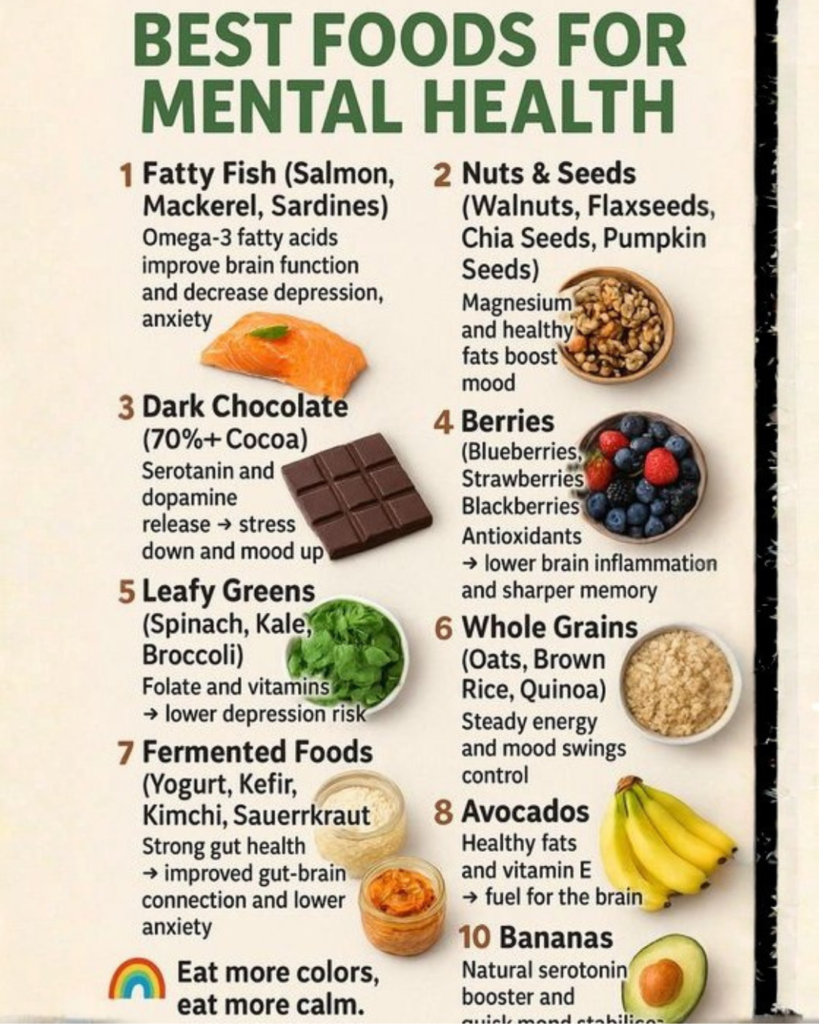
Step 1: Prioritize Omega-3 Fatty Acids
Your brain is about 60% fat, and Omega-3s are the building blocks of healthy brain cells.
- Action: Incorporate fatty fish like salmon or sardines twice a week.
- Plant-Based Option: If you don’t eat fish, add two tablespoons of chia seeds or walnuts to your morning oatmeal. These fats help reduce symptoms of depression and keep cell membranes fluid.
Step 2: Add a Daily Dose of Leafy Greens
Doctors and nutritionists consistently rank greens like spinach, kale, and Swiss chard among the best foods for mental health.
- Action: Aim for at least one cup of dark leafy greens daily. These are packed with folate, which helps your brain produce dopamine—the “motivation” molecule.
Step 3: Fuel Your Microbiome with Fermented Foods
To support that “second brain” in your gut, you need healthy bacteria.
- Action: Try adding a serving of yogurt with live cultures, kefir, sauerkraut, or kimchi to your meals. A healthy gut microbiome is directly linked to lower levels of cortisol, the body’s primary stress hormone.
Step 4: Choose Complex Carbohydrates
The brain runs on glucose, but “spiky” energy from white sugar leads to crashes.
- Action: Swap white bread and sugary cereals for oats, quinoa, and sweet potatoes. These provide a steady, slow-release stream of energy that prevents irritability and “hangry” mood swings.
Section 3: Advanced Strategies – The “Smart” Snacking Pro Tips (H2)
Once you have mastered the basics of the best foods for mental health, you can share expert-level insights by fine-tuning your snacks and beverages. These creative solutions help you maintain mental focus even during high-pressure workdays.
- The Dark Chocolate Secret: High-quality dark chocolate (at least 70% cocoa) contains flavonoids and caffeine that can enhance blood flow to the brain and improve memory. Plus, it stimulates the release of endorphins!
- Berry Power: Blueberries and strawberries are rich in antioxidants called anthocyanins. These compounds protect the brain from oxidative stress and have been shown to delay brain aging.
- The Hydration Factor: Even mild dehydration can lead to fatigue, headaches, and decreased concentration. Try infusing your water with mint or cucumber to make staying hydrated a refreshing habit rather than a chore.
H3: Herbal Support for Anxiety
While not “foods” in the traditional sense, herbal infusions like Chamomile or Ashwagandha tea can be powerful allies. They help regulate the HPA axis, which is your body’s central stress response system, helping you achieve a state of calm focus.
Section 4: Troubleshooting – Overcoming Dietary Obstacles (H2)
Changing habits is rarely a straight line. If you encounter setbacks, don’t be discouraged! Addressing these frequent obstacles with simple solutions will help you stay consistent on your path to [Sustainable Wellness].
- Problem: “Healthy food is too expensive.”
- Solution: Focus on frozen vegetables and canned beans. Frozen spinach and blueberries often have just as many nutrients as fresh versions but at a fraction of the cost. Buy grains like rice and quinoa in bulk to save even more.
- Problem: “I don’t have time to cook.”
- Solution: Embrace “batch prepping.” Roast a large tray of vegetables and cook a pot of quinoa on Sunday. You can mix and match these throughout the week for quick, brain-boosting bowls.
- Problem: “I crave sugar when I’m stressed.”
- Solution: This is a biological signal that your brain needs quick energy. Instead of reaching for candy, try a piece of fruit with a few almonds. The fiber and protein will stabilize your blood sugar and stop the craving in its tracks.
Preventive Measures
The best way to avoid a “junk food spiral” is to never let yourself get too hungry. Keep a bag of walnuts or an apple in your car or desk. Having the best foods for mental health within arm’s reach makes the right choice the easiest choice.
Section 5: Maximizing Results – Next Level Lifestyle Integration (H2)
To build upon your dietary success, look at how nutrition fits into your larger [Holistic Mental Health Plan]. When you combine the right foods with other self-care strategies, the results are exponential.
- Mindful Eating: Avoid eating while scrolling through your phone or working. When you focus on your food, you improve digestion and become more in tune with your body’s hunger and fullness signals.
- The 80/20 Rule: Don’t aim for perfection. If you eat brain-healthy foods 80% of the time, your body can easily handle the occasional treat. This sustainable approach prevents the stress of “dieting” from ruining your mental health.
- Complementary Habits: Combine your new diet with regular movement. Exercise increases BDNF (Brain-Derived Neurotrophic Factor), a protein that acts like “Miracle-Gro” for your brain cells.
- Community Connection: Eating is a social act. Sharing a healthy, home-cooked meal with friends or family can boost oxytocin levels, further improving your emotional well-being.
Conclusion (H2)
You have now discovered the incredible potential of the best foods for mental health. By choosing to nourish your body with Omega-3s, leafy greens, and fermented foods, you are doing more than just “eating right”—you are actively investing in your happiness and resilience. This transformation is entirely achievable, and you have the capability to feel better one meal at a time.
Summarize your takeaways: support your gut-brain axis, focus on anti-inflammatory ingredients, and give yourself grace as you learn. You are worth the effort it takes to eat well. Go ahead—unlock your mental clarity and achieve the vibrant, balanced life you deserve. You’ve got this!