Commercial toilet bowl cleaners are among the most chemically aggressive products sold for household use — and they need to be, because the toilet environment involves simultaneous challenges of mineral deposits, organic waste, and bacterial biofilms that no single compound addresses adequately. The good news is that DIY toilet bowl cleaning using common household ingredients delivers results equivalent to commercial products through the same fundamental chemistry — acid-base reactions, oxidation, and surfactant action — without the synthetic fragrances, dyes, and corrosive additives that complicate safe handling and disposal. This guide covers multiple proven methods for tackling every toilet cleaning challenge from routine maintenance to stubborn stains, explains the chemistry behind each approach so you understand why each ingredient works, and gives you the practical protocols for achieving genuinely clean, fresh-smelling results without spending money on products containing compounds you can’t pronounce.
Understanding Toilet Bowl Stains: What You’re Actually Removing
Effective DIY toilet bowl cleaning requires recognizing that different stain types have different chemical compositions requiring different removal approaches — identifying your specific stain type before selecting your cleaning method saves time and delivers better results.
Mineral Deposits: The Hard Water Problem
The brownish-orange or gray rings appearing at the waterline and accumulating under the rim are typically mineral deposits — calcium carbonate (limescale), magnesium carbonate, and iron compounds precipitated from hard water. These mineral scales form when hard water containing dissolved calcium and magnesium evaporates or when pH changes cause the minerals to fall out of solution. The deposits bond tenaciously to porcelain surfaces through ionic interactions and crystalline interlocking, creating the rough texture that subsequently traps organic matter and bacteria.
Mineral deposits require acid treatment for removal. Acids (whether acetic acid in vinegar, citric acid in lemon juice, or hydrochloric acid in commercial cleaners) dissolve calcium carbonate through the chemical reaction: CaCO₃ + 2H⁺ → Ca²⁺ + H₂O + CO₂. The fizzing you observe when applying acidic solutions to limescale is carbon dioxide gas being released as the chemical reaction proceeds. Understanding this helps you recognize when you’re using the right approach — if you see fizzing, the acid is working.
Organic Stains and Bacterial Biofilms
The pink or reddish staining that appears most commonly under the rim or at the waterline is typically Serratia marcescens — an airborne bacterium that thrives in the moist toilet environment and produces a characteristic pink pigment. Black staining under the rim or in the trap often represents mold, mildew, or manganese-oxidizing bacteria. These biological stains require antimicrobial treatment rather than acid — bleach, hydrogen peroxide, or other oxidizing agents that kill the organisms producing the pigment and break down the organic compounds comprising the stain.
Yellow or Brown Urine Stains
Persistent yellow-brown staining, particularly on the bowl sides and under the seat hinges, comes from uric acid crystals and organic compounds in urine. These respond well to combined acid-oxidizer treatment — the acid dissolves the uric acid crystals while oxidizers break down the organic pigments. Simple cleaning without addressing the crystalline uric acid component often produces disappointing results because the crystals reform quickly.
The Core DIY Toilet Bowl Cleaning Methods
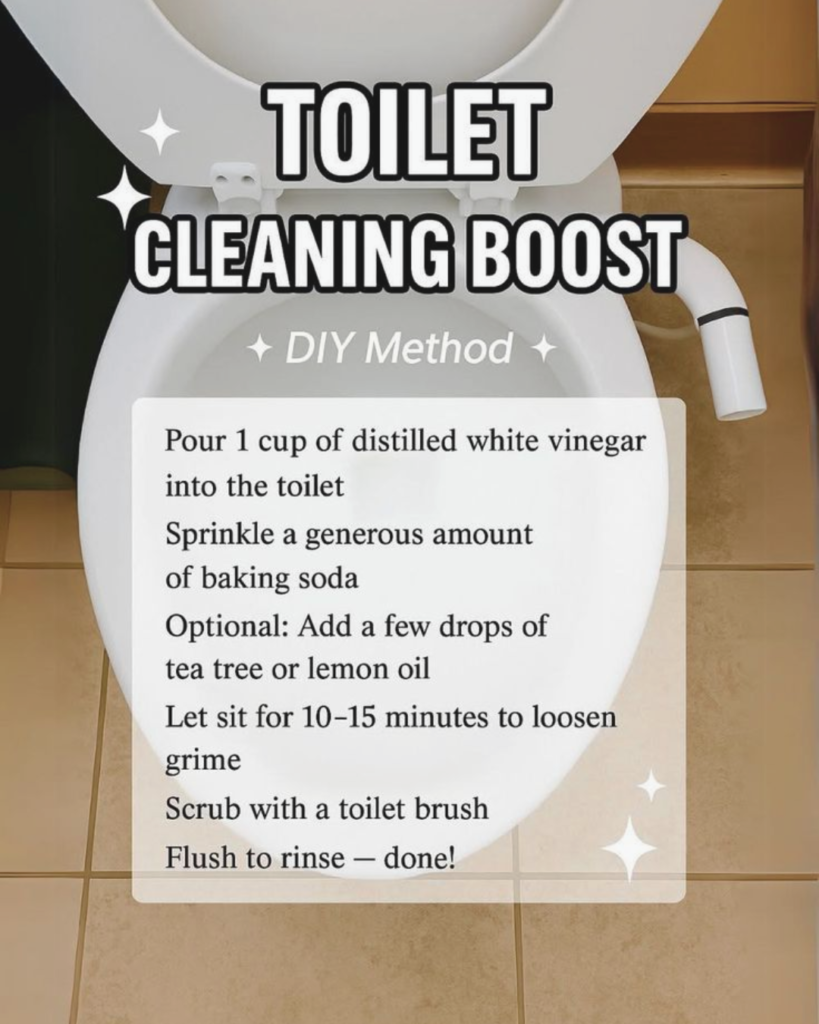
Method 1: The Baking Soda and Vinegar Power Combo
This is the most accessible DIY toilet bowl cleaning method — using two ingredients you likely already own — and it addresses both mineral deposits and moderate organic staining through complementary mechanisms.
What you need:
- 1 cup baking soda (sodium bicarbonate)
- 1-2 cups white vinegar (5% acetic acid)
- Toilet brush
- Optional: 10 drops tea tree or eucalyptus essential oil for additional antimicrobial activity
Step-by-step protocol:
Step 1: Flush the toilet to wet all surfaces, then sprinkle the baking soda liberally around the entire bowl interior, paying special attention to the waterline, under-rim areas, and visible stains. The slight abrasive quality of baking soda provides mechanical scrubbing action while its mild alkalinity begins breaking down organic matter.
Step 2: Pour the vinegar around the bowl, ensuring it contacts all the baking soda. The dramatic fizzing reaction you observe is the acid-base neutralization producing sodium acetate, water, and carbon dioxide gas. While this reaction itself doesn’t provide extraordinary cleaning power, the mechanical agitation from the fizzing helps dislodge surface deposits, and the acetic acid in the vinegar that doesn’t immediately neutralize continues working on mineral deposits.
Step 3: Allow the mixture to sit for 10-20 minutes. For heavily stained toilets, extend this to 30 minutes. During this contact time, the acetic acid dissolves mineral deposits and the antimicrobial properties of vinegar begin killing surface bacteria.
Step 4: Scrub thoroughly with your toilet brush, focusing on stained areas and under the rim where deposits accumulate invisibly. The loosened deposits and killed biofilm come away readily with mechanical action.
Step 5: Flush to rinse. For toilets with significant mineral buildup, repeat the entire process for enhanced results.
Cost analysis: Approximately $0.25-0.30 per cleaning versus $1-3 for a commercial toilet bowl cleaner application — a 10-fold cost savings for equivalent everyday cleaning performance.
Method 2: The Borax and Lemon Juice Attack on Stubborn Stains
For toilet bowls with significant staining that the vinegar-baking soda method doesn’t fully address, borax (sodium borate) combined with lemon juice provides more aggressive cleaning through enhanced alkalinity and citric acid’s superior chelating properties compared to acetic acid.
What you need:
- 1/4 cup borax powder
- Juice of 2-3 lemons (or 1/4 cup bottled lemon juice)
- Toilet brush
- Pumice stone (optional, for extremely stubborn mineral deposits)
Application protocol:
Sprinkle the borax around the bowl and under the rim. Pour the lemon juice over the borax, creating a paste in areas where they meet. Allow 2-3 hours of contact time — or overnight for maximum effect on severe stains. The extended contact time allows the citric acid to thoroughly dissolve mineral deposits while borax’s mild alkalinity and water-softening properties prevent the redeposition of dissolved minerals. Scrub vigorously with the toilet brush. For mineral deposits that remain after scrubbing, use a wet pumice stone with gentle pressure — pumice is abrasive enough to mechanically remove mineral scale but soft enough not to scratch porcelain when used correctly (always keep the pumice wet during use to prevent scratching).
Method 3: The Hydrogen Peroxide Deep Clean for Biological Stains
When pink bacterial staining, black mold under the rim, or general biological discoloration is the primary concern, hydrogen peroxide provides powerful oxidative antimicrobial action without the harsh fumes or environmental concerns of chlorine bleach.
What you need:
- 1-2 cups 3% hydrogen peroxide (standard drugstore concentration)
- 1/4 cup baking soda
- Toilet brush
Pour the hydrogen peroxide around the bowl, ensuring complete coverage including under-rim areas. Sprinkle baking soda over the hydrogen peroxide — the combination creates enhanced oxidative cleaning through a synergistic reaction. Allow 20-30 minutes contact time. The hydrogen peroxide penetrates biofilms and kills bacteria, mold, and mildew through oxygen radical production that disrupts microbial cell membranes and DNA. Scrub and flush. This method is particularly effective for toilets that develop recurring pink staining.
Advanced DIY Toilet Bowl Cleaning Strategies
The Overnight Vinegar Soak for Heavy Mineral Buildup
For toilets with severe limescale accumulation that resists shorter treatments, an overnight vinegar soak provides extended acid contact time that progressively dissolves even thick mineral deposits.
The technique: Before bed, pour 3-4 cups of white vinegar into the toilet bowl and an additional 1-2 cups into the overflow tube (the vertical tube in the center of the tank) so vinegar flows into the under-rim jet holes where mineral deposits commonly block water flow. Do not flush. Allow the vinegar to sit overnight (6-8 hours minimum). In the morning, scrub thoroughly and flush. The extended acid exposure dissolves mineral scale that brief treatments cannot address, and the vinegar reaching the jet holes restores proper flushing flow by clearing mineral blockages.
The Denture Tablet Trick for Effortless Cleaning
Denture cleaning tablets contain a combination of citric acid (for mineral dissolution), sodium bicarbonate (for fizzing action and mild abrasion), and sodium perborate or other oxygen-releasing compounds (for antimicrobial oxidation) — essentially a pre-formulated toilet cleaning system in tablet form.
Drop 2-3 denture tablets into the toilet bowl, allow them to fizz and dissolve completely (15-20 minutes), then scrub and flush. This method is remarkably effective for routine maintenance cleaning and particularly convenient for quick cleaning before guests arrive — the tablets do the chemical work while you attend to other tasks.
The Coca-Cola Method: Surprising But Effective
The phosphoric acid in Coca-Cola (approximately 0.05% concentration) dissolves mineral deposits through the same chemistry as citric or acetic acid, while the carbonic acid and sugar content help lift organic stains. Pour 1-2 liters of Coca-Cola around the bowl, ensuring coverage of stained areas, and allow to sit for 1-2 hours. Scrub and flush. While less concentrated than vinegar or lemon juice, Coca-Cola’s unique combination of acids, sugars, and carbonation makes it surprisingly effective for moderate mineral staining. This method works well in circumstances where you have Coca-Cola available but lack other cleaning supplies.
Troubleshooting Persistent Toilet Bowl Cleaning Challenges
When Stains Won’t Budge Despite Repeated Cleaning
If stains persist after multiple aggressive cleaning attempts with different methods, three possibilities warrant investigation. First, the stains may be permanent — prolonged contact with minerals or organic matter can cause irreversible porcelain discoloration that no cleaning method removes. Second, the stains may be beneath the porcelain glaze rather than on the surface — cracks in older toilets allow staining compounds to penetrate beneath the glazed surface where they’re inaccessible to cleaning agents. Third, the “stains” may actually be damage to the porcelain glaze itself — abrasive cleaners used over years can wear through the glaze, creating rough areas that trap stains and appear perpetually dirty.
For permanently stained or damaged toilets, the only solution is replacement — no cleaning method restores damaged porcelain. For surface stains that resist chemical treatment, the pumice stone method described earlier often provides the mechanical removal that chemical methods alone cannot achieve.
Preventing the Toilet Ring at the Waterline
The ring forming at the waterline combines minerals deposited as water evaporates with organic matter and bacteria at the air-water interface. Prevention is significantly easier than removal. Weekly preventive cleaning with any of the methods described prevents the accumulation that requires intensive treatment. Additionally, reducing toilet bowl water evaporation by ensuring the bathroom has adequate ventilation (reducing humidity) and keeping the toilet lid closed (reducing evaporation surface area) measurably reduces ring formation rate.
For hard water areas where mineral deposition is rapid, weekly overnight vinegar treatments maintain mineral-free surfaces without the intensive scrubbing required to remove established deposits.
Dealing With Odor That Persists After Cleaning
If toilet odor persists after thorough bowl cleaning, the source likely lies beyond the visible bowl surface. The most common culprits are bacterial accumulation in the trap (the water-filled curve at the bowl bottom), under the rim where jet holes release water, or on the underside of the seat and hinges. Address this by pouring 1-2 cups of hydrogen peroxide or vinegar into the bowl and allowing it to sit long enough to fill the trap completely (15-20 minutes). Clean under the rim using a curved toilet brush or old toothbrush that reaches into the jet holes. Remove the toilet seat (most lift off easily from the hinges) and clean the underside and hinge hardware thoroughly with dilute bleach or hydrogen peroxide.
Building a Sustainable Toilet Cleaning Routine
The Weekly Maintenance Protocol
Consistent weekly cleaning prevents the stubborn buildup that requires intensive methods. A 5-minute weekly routine using the baking soda and vinegar method maintains a genuinely clean toilet indefinitely with minimal effort. Schedule it for a specific day and time — Saturday morning, Sunday evening, or whatever fits your routine — so it becomes an automatic habit rather than a task you remember only when the toilet looks visibly dirty.
Creating Your DIY Cleaning Supply Kit
Assemble a dedicated toilet cleaning kit containing the core supplies in quantities sufficient for several cleanings: a box of baking soda, a gallon of white vinegar, a box of borax, a bottle of hydrogen peroxide, a container of denture tablets, essential oils for fragrance, and a dedicated toilet brush. Keeping these items together in a caddy under the sink reduces the friction of gathering supplies that causes cleaning procrastination. The entire kit costs approximately $15-20 and provides supplies for dozens of cleanings.
Environmental and Health Advantages of DIY Cleaning
Beyond cost savings, DIY toilet bowl cleaning with household ingredients eliminates exposure to the respiratory irritants, corrosive compounds, and endocrine-disrupting chemicals present in many commercial cleaners. The Environmental Working Group consistently rates conventional toilet bowl cleaners among the highest-concern household products for chemical exposure. Switching to vinegar, baking soda, borax, and hydrogen peroxide — all compounds with well-characterized safety profiles and complete ingredient transparency — meaningfully reduces household chemical burden while achieving equivalent cleaning results.
Conclusion
DIY toilet bowl cleaning delivers professional results through the same fundamental chemistry that commercial products employ — acid-base reactions, oxidation, and mechanical abrasion — using ingredients that are safer, dramatically less expensive, and completely transparent in their composition. The baking soda and vinegar combination handles routine cleaning and moderate staining. Borax and lemon juice address stubborn mineral deposits. Hydrogen peroxide tackles biological staining. Overnight vinegar soaks dissolve heavy limescale buildup. Choose your method based on your specific toilet condition, follow the protocols consistently, and commit to weekly maintenance that prevents the stubborn accumulation requiring intensive intervention. Your toilet can be as clean as those in professional establishments — the chemistry is the same, just the marketing and price tags differ.