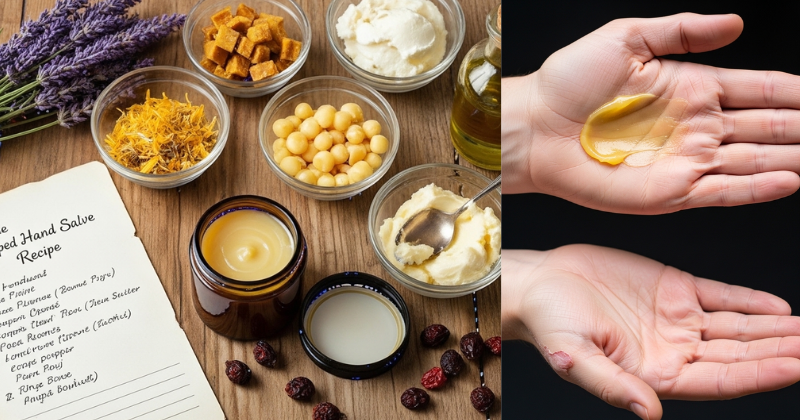
Discover how to make a potent extreme chapped hand salve recipe to heal dry, cracked skin. Transform your skincare with natural ingredients and achieve soft hands today.
Have you ever looked down at your hands during the height of winter or after a long day of gardening only to see painful cracks, redness, and rough patches that just won’t heal? It is a common frustration to feel like standard lotions simply “sit” on top of the skin without providing deep relief. Whether you are a healthcare worker washing your hands constantly, an outdoor enthusiast, or someone struggling with seasonal dryness, your skin deserves more than a temporary fix. You need a targeted, heavy-duty solution that locks in moisture and supports the skin’s natural barrier.
In this guide, you will learn exactly how to create a professional-grade treatment using our extreme chapped hand salve recipe. This isn’t just another moisturizer; it is a concentrated blend of botanical fats and waxes designed to repair the most stubborn damage. We are going to explore the science of skin occlusion, the healing power of herbal infusions, and the step-by-step methods to craft this at home. You have the capability to transform your skin health and unlock a level of comfort you thought was gone for the season. Let’s get started on your journey to radiant, resilient hands!
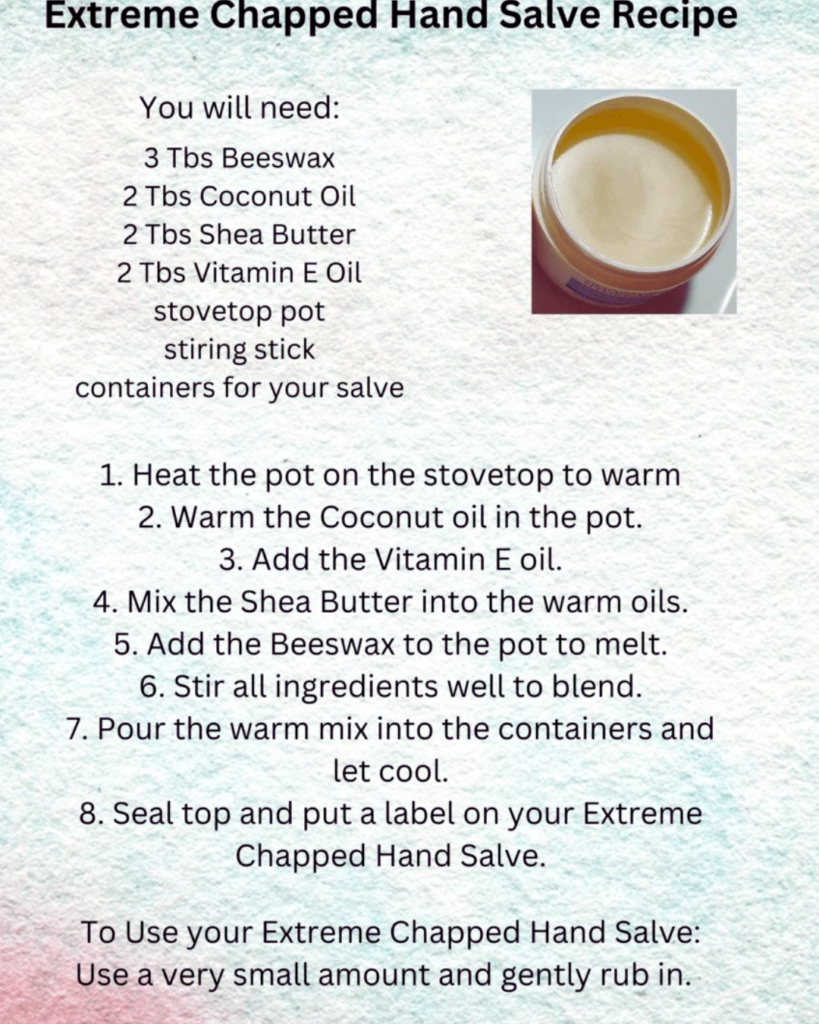
Important Disclaimer: This article is for informational purposes only and should not replace professional advice. For health-related topics, consult healthcare providers. For financial or legal matters, seek qualified professional guidance. For safety procedures, verify current best practices and local regulations. Individual results may vary, and personal circumstances should always be considered when implementing any suggestions.
Foundation: Understanding the Anatomy of Chapped Skin (H2)
To build a remedy that truly works, we must first build confidence in the “why” behind the ingredients. Chapped hands occur when the stratum corneum—the outermost layer of your skin—loses its fatty oils and moisture. This creates microscopic “tears” that allow irritants in and more moisture out. Traditional lotions are often 70-80% water; while they feel hydrating initially, that water evaporates quickly, sometimes leaving the skin even drier.
The extreme chapped hand salve recipe focuses on anhydrous (waterless) formulation. By using only oils, butters, and waxes, we provide a thick, protective shield that mimics the skin’s natural sebum. This is a supportive, non-judgmental way to approach skin health—acknowledging that sometimes your body just needs a little extra help to seal the gaps. For beginners, the process might seem technical, but it is essentially just “melting and pouring.” Once you master the basics of [Carrier Oil Selection] and wax ratios, you will feel empowered to treat your skin with authority.
H3: The Role of Beeswax
Beeswax is the backbone of any great salve. It acts as a humectant, drawing moisture into the skin, and an occlusive, forming a physical barrier against harsh winds and chemicals. It also gives the salve its “staying power” so it doesn’t rub off on your clothes immediately.
H3: Why Herbal Infusions Change the Game
By infusing your oils with plants like Calendula or Comfrey, you are adding anti-inflammatory properties directly into your base. This elevates a simple balm into a therapeutic [Herbal Skin Treatment] that actively works to reduce redness and speed up tissue repair.
Step-by-Step: Crafting Your Extreme Repair Salve (H2)
This process is designed to be achievable and satisfying. You don’t need a laboratory; your kitchen stove will work perfectly. Follow these manageable steps to create your first batch of “liquid gold” for your hands.
1. Gather Your High-Potency Ingredients
- The Base: 1/2 cup Olive Oil or Jojoba Oil (ideally infused with Calendula).
- The Butters: 1/4 cup Shea Butter or Cocoa Butter (for deep fatty acid replenishment).
- The Sealant: 2 tablespoons Beeswax pellets.
- The Boosters: 1 teaspoon Vitamin E oil and 10 drops of Lavender or Frankincense essential oil.
2. The Double Boiler Method
Never melt your ingredients directly over a flame, as high heat can destroy the healing properties of the oils. Place a glass bowl over a pot of simmering water. Add the beeswax and carrier oil first, stirring gently until the wax is completely liquid.
3. Adding the Nourishing Butters
Once the wax is melted, add your shea or cocoa butter. We add these last because they are sensitive to heat and can become “grainy” if cooked too long. Stir until just melted, then remove the bowl from the heat.
4. Essential Oil Integration
Wait about two minutes for the mixture to cool slightly before adding your Vitamin E and essential oils. This ensures the volatile aromatic compounds don’t evaporate instantly.
5. The Final Pour
Carefully pour the liquid into clean tins or glass jars. Let them sit undisturbed for 2-3 hours until they are completely solid. Pro Tip: If your salve has a “sinkhole” in the middle as it cools, you can use a hair dryer on low heat to gently melt the top layer for a smooth, professional finish.
Advanced Strategies: Customizing for Specific Needs (H2)
Once you have mastered the basic extreme chapped hand salve recipe, you can share expert-level insights by tweaking the formula for different scenarios. These variations allow you to customize your approach to [Metabolic Skin Support].
- The “Worker’s Hand” Blend: If you have deep, painful cracks (often called “fissures”), add 5 drops of Myrrh essential oil. Myrrh has been used for centuries to support the sealing of skin openings.
- The Non-Greasy Daytime Version: Swap half of the olive oil for Grapeseed oil. Grapeseed is a “dry” oil that absorbs much faster, making it better for when you need to use your phone or computer shortly after application.
- The Vegan Alternative: Use Candelilla wax instead of beeswax. Since Candelilla is harder, use only half the amount (1 tablespoon) to achieve the same consistency.
How often should you apply hand salve for extreme dryness? (H3)
For the best results, you should apply the salve at least three times a day. However, the most “transformative” application happens at night. Apply a thick layer right before bed and wear cotton gloves. This creates a “mini-sauna” for your hands, forcing the oils deep into the dermal layers while you sleep. Most people see a 50% improvement in skin texture after just one night of this intensive treatment.
Troubleshooting: Common Challenges and Solutions (H2)
Even with a simple recipe, things don’t always go perfectly. Address these frequent obstacles with solutions to stay motivated on your DIY journey.
- Obstacle: “My salve is too hard and difficult to scoop.”
- Solution: You likely used a bit too much beeswax. You don’t have to throw it away! Simply melt it down again and add 1-2 tablespoons more of your liquid carrier oil.
- Obstacle: “The shea butter feels gritty or sandy on my skin.”
- Solution: This happens when shea butter cools too slowly. To fix it, melt the salve again and, after pouring, place the tins in the refrigerator. Rapid cooling prevents the fat crystals from clumping together, ensuring a “butter-smooth” finish.
- Obstacle: “I don’t like the smell of the oils.”
- Solution: You can leave the essential oils out entirely! The base oils and beeswax have a lovely, natural “honey and nut” scent that is very soothing on its own.
Maximizing Results: Next Level Hand Care (H2)
To truly build upon your success, your extreme chapped hand salve recipe should be part of a larger [Sustainable Wellness Routine]. Supporting your skin is about both what you put on it and how you treat it.
- Avoid Harsh Surfactants: Many hand soaps use SLS (Sodium Lauryl Sulfate), which strips away the very oils your salve is trying to replace. Switch to a moisturizing, oil-based soap to prevent further damage.
- The “Damp Skin” Hack: Always apply your salve to slightly damp skin. This locks in the water molecules already on your skin, doubling the hydrating power of the balm.
- Internal Hydration: Healthy skin starts from the inside. Ensure you are consuming enough Omega-3 fatty acids (found in flaxseeds or walnuts) to support your skin’s lipid barrier from the bottom up.
- Environmental Protection: Treat your salve like a “liquid glove.” Apply it before you go out into the cold or start chores. This prevents the damage from happening in the first place, rather than just treating it after.
Conclusion
You have now discovered that healing your skin doesn’t require expensive, chemical-laden products. By using this extreme chapped hand salve recipe, you are taking an empowering step toward self-sufficiency and health. You have the capability to transform even the most damaged, cracked skin into a soft, resilient barrier that can handle whatever life throws at it. This journey of natural skincare is one of gradual progress and profound satisfaction.
Remember the key takeaways: use the double boiler, prioritize occlusive waxes, and always apply before bed for maximum impact. You deserve to live without the pain of chapped hands. Go ahead—melt your first batch, feel the soothing relief, and achieve the healthy hands you’ve been working for. You’ve got this!