Purple foods protect the brain through powerful bioactive compounds that reduce oxidative stress, support circulation, and modulate inflammation. Emerging research reveals how these richly pigmented plants influence cognition, memory, and long-term neurological resilience.
The deep violet hue of blueberries, blackberries, eggplants, purple cabbage, and grapes is more than a visual curiosity. It reflects a complex phytochemical architecture shaped by evolutionary pressures and environmental stress. In humans, those same compounds interact with neuronal pathways, vascular integrity, and cellular defense systems. Understanding why purple foods protect the brain requires a journey through nutritional biochemistry, neurophysiology, and the rapidly expanding field of nutritional neuroscience.
What Are Purple Foods and Which Compounds Give Them Their Color?
Purple foods derive their color primarily from anthocyanins, a subclass of flavonoids belonging to the larger polyphenol family. These water-soluble pigments accumulate in plant vacuoles and vary in structure depending on pH, temperature, and plant species. The most studied anthocyanins include cyanidin, delphinidin, malvidin, peonidin, and petunidin.
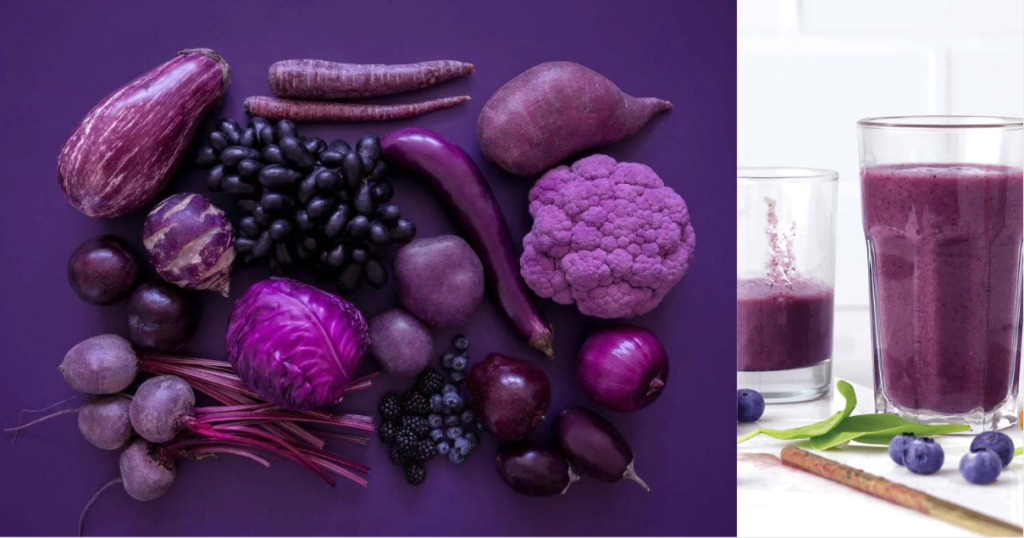
Common purple foods rich in anthocyanins include:
- Blueberries
- Blackberries
- Purple grapes
- Purple cabbage
- Purple sweet potatoes
- Eggplant (particularly the skin)
- Black rice
Anthocyanins function in plants as protective molecules against ultraviolet radiation and oxidative stress. When consumed by humans, they exhibit antioxidant, anti-inflammatory, and vasodilatory effects. Importantly, these compounds are not isolated actors. Purple foods also contain vitamin C, vitamin K, manganese, fiber, and other flavonoids that work synergistically.
The protective potential of purple foods lies in this biochemical complexity rather than in a single “miracle” compound.
How Does Oxidative Stress Affect the Brain?
The brain is metabolically demanding. Though it accounts for only about 2% of body weight, it consumes roughly 20% of total oxygen. This high oxygen flux, combined with abundant polyunsaturated fatty acids in neuronal membranes, makes brain tissue particularly vulnerable to oxidative damage.
Oxidative stress occurs when reactive oxygen species (ROS) exceed the capacity of endogenous antioxidant systems such as glutathione, superoxide dismutase, and catalase. Over time, excess ROS can:
- Damage lipid membranes (lipid peroxidation)
- Alter protein structure
- Impair mitochondrial function
- Disrupt DNA integrity
These processes are implicated in cognitive aging and neurodegenerative disorders. While the body possesses intrinsic defense systems, dietary antioxidants provide complementary support.
Anthocyanins and related polyphenols from purple foods can neutralize free radicals directly and indirectly by activating transcription factors such as Nrf2, which regulates genes involved in cellular antioxidant defense. Thus, purple foods help reinforce the brain’s resilience against oxidative injury.
How Do Anthocyanins Cross the Blood–Brain Barrier?
A critical question in nutritional neuroscience is bioavailability: do these compounds actually reach brain tissue?
Studies indicate that anthocyanins, or their metabolites, can cross the blood–brain barrier in small but biologically meaningful concentrations. Although absorption in the intestine is limited, gut microbiota metabolize anthocyanins into smaller phenolic acids, which may exert systemic effects.
Once in circulation, these compounds influence:
- Cerebral blood flow
- Neuronal signaling pathways
- Neuroinflammatory cascades
Functional imaging studies have demonstrated increased cerebral perfusion after blueberry supplementation in older adults. Enhanced blood flow supports oxygen delivery, glucose metabolism, and synaptic activity—key determinants of cognitive performance.
The brain-protective effects of purple foods are therefore not hypothetical; they are supported by measurable physiological changes.
Which Brain Functions Benefit Most from Purple Foods?
Research suggests that purple foods particularly benefit memory, executive function, and processing speed.
In both animal models and human trials, diets enriched with blueberries or grape extracts have been associated with improvements in:
- Spatial memory
- Verbal recall
- Attention
- Task switching
Anthocyanins appear to modulate signaling pathways involved in synaptic plasticity, including brain-derived neurotrophic factor (BDNF). BDNF plays a central role in learning and memory by promoting neuronal growth and strengthening synaptic connections.
Furthermore, polyphenols may reduce neuroinflammation by downregulating pro-inflammatory cytokines such as TNF-alpha and IL-6. Chronic neuroinflammation is increasingly recognized as a contributor to cognitive decline.
Thus, the cognitive enhancement observed with purple food intake likely results from combined vascular, anti-inflammatory, and neurotrophic mechanisms.
How Do Purple Foods Support Healthy Brain Aging?
Aging is accompanied by gradual declines in mitochondrial efficiency, increased oxidative stress, and reduced synaptic plasticity. Purple foods intervene at multiple points along this trajectory.
Longitudinal dietary studies suggest that higher flavonoid intake correlates with slower rates of cognitive decline. While causality is complex, mechanistic studies offer plausible explanations:
- Improved endothelial function enhances cerebral circulation.
- Antioxidant activity protects neuronal membranes.
- Anti-inflammatory properties mitigate microglial overactivation.
- Polyphenols influence gene expression linked to longevity pathways.
Purple sweet potatoes and black rice, for instance, contain both anthocyanins and resistant starch, which supports gut microbiota diversity. Emerging evidence highlights the gut–brain axis as a mediator of cognitive health. By shaping microbial composition, purple foods may indirectly influence neurotransmitter production and immune signaling.
Brain aging is multifactorial. Purple foods do not halt aging, but they appear to slow some of its molecular drivers.
What Role Does the Gut–Brain Axis Play in This Process?
The gut microbiome metabolizes anthocyanins into bioactive compounds that may exert neuroprotective effects. These metabolites influence systemic inflammation, intestinal barrier integrity, and even vagal nerve signaling.
A diverse microbiota enhances short-chain fatty acid production, particularly butyrate, which supports:
- Blood–brain barrier integrity
- Anti-inflammatory pathways
- Mitochondrial efficiency
Dietary fiber in purple cabbage, berries, and black rice feeds beneficial microbes. The synergy between fiber and polyphenols amplifies the systemic impact of these foods.
In this way, purple foods protect the brain not only directly through antioxidant effects but also indirectly through microbial modulation.
Which Purple Foods Are Most Evidence-Based for Brain Health?
While many purple foods contain beneficial compounds, certain options are particularly well studied:
Blueberries
Often described as a “brain berry,” blueberries have been extensively examined in clinical trials. They are rich in malvidin and delphinidin derivatives and show consistent associations with improved memory in older adults.
Purple Grapes
Grapes contain anthocyanins and resveratrol. Although resveratrol is more abundant in red grapes, the combined polyphenol profile supports vascular health and cerebral blood flow.
Black Rice
Sometimes called “forbidden rice,” black rice provides anthocyanins alongside iron and fiber. Its antioxidant capacity is among the highest of commonly consumed grains.
Purple Sweet Potatoes
These tubers combine anthocyanins with complex carbohydrates, providing steady glucose supply to the brain while delivering antioxidant support.
Diversity remains essential. Rotating multiple purple foods ensures a broader spectrum of phytochemicals.
How Much Is Needed and What Are Practical Ways to Include Them?
There is no universally established “optimal” dose of anthocyanins for brain health. However, observational studies often associate benefits with daily flavonoid intake in the range of 200–500 mg, achievable through regular consumption of berries and colorful vegetables.
Practical strategies include:
- Adding blueberries or blackberries to breakfast
- Incorporating purple cabbage into salads
- Choosing black rice instead of refined white rice
- Roasting purple sweet potatoes as a side dish
- Including eggplant in Mediterranean-style meals
Whole foods are preferable to isolated supplements, as the matrix of fiber, vitamins, and coexisting polyphenols enhances biological activity.
Consistency matters more than occasional high intake. Brain-supportive nutrition is cumulative, unfolding over years rather than days.
Which Factors Influence the Effectiveness of Purple Foods?
Several variables determine how effectively purple foods protect the brain:
- Individual gut microbiota composition
- Overall dietary pattern
- Metabolic health
- Age
- Genetic predispositions
A diet high in refined sugars and ultra-processed foods may counteract some benefits by increasing systemic inflammation. Conversely, a Mediterranean-style pattern rich in vegetables, legumes, whole grains, and healthy fats appears to amplify the protective potential of polyphenol-rich foods.
Preparation methods also matter. Prolonged high-heat cooking may degrade some anthocyanins, whereas steaming or light sautéing preserves more bioactivity.
Nutrition does not operate in isolation. Sleep, physical activity, stress management, and social engagement also shape cognitive trajectories.
Conclusion
The science behind why purple foods protect the brain is grounded in biochemistry, vascular physiology, and systems biology. Anthocyanins and related polyphenols counter oxidative stress, enhance cerebral blood flow, modulate inflammation, and influence gene expression linked to neuronal resilience.
These effects converge to support memory, executive function, and healthy brain aging. Through direct antioxidant activity and indirect modulation of the gut–brain axis, purple foods contribute to a dietary pattern that fosters cognitive longevity.
Incorporating blueberries, purple cabbage, black rice, grapes, and purple sweet potatoes into daily meals represents a practical, evidence-informed strategy for supporting neurological health. While no single food guarantees protection against cognitive decline, a consistent intake of richly pigmented plant foods aligns with the broader scientific understanding of brain-supportive nutrition.
In the interplay between color and chemistry, purple stands out—not as a trend, but as a testament to the profound relationship between plants and human physiology.