Unlock the hidden potential of your laundry room! Try these fabric softener hacks to transform your home into a fresh, static-free sanctuary today.
Have you ever looked at that bottle of liquid downy or snuggle and wondered if it could do more than just soften your towels? You aren’t alone! Most of us view fabric softener as a one-trick pony, reserved exclusively for the rinse cycle. However, this fragrant liquid is actually a powerhouse of versatility. Because it is designed to coat fibers and reduce static electricity, it can be repurposed for everything from cleaning windows to removing stubborn wallpaper.
In this comprehensive guide, you will discover how to stretch your household budget and simplify your cleaning routine. We are going to explore innovative ways to use this common product that go far beyond the washing machine. By the time you finish reading, you’ll have a toolkit of DIY secrets that make your home smell incredible and look spotless. Let’s dive into these game-changing fabric softener hacks and see just how much you can achieve with one simple bottle!
The Foundation: Understanding Why These Hacks Work
Before we get into the “how-to,” it is important to understand the “why.” Fabric softeners contain surfactants and lubricating ingredients. These components are designed to neutralize static charge and smooth out rough surfaces. When you apply this logic to other areas of your home, you unlock a world of possibilities.
The Science of Static and Dust
Dust is naturally attracted to surfaces with a static charge. By using diluted fabric softener on baseboards or electronic screens, you effectively neutralize that charge. This means dust won’t settle as quickly, keeping your home cleaner for longer. It’s a simple concept that yields professional-grade results.
Breaking Down Surface Tension
Fabric softener is excellent at breaking the surface tension of water. This makes it a secret weapon for tasks like cleaning glass or removing old adhesives. When you add a splash to your cleaning water, the solution glides over surfaces, leaving fewer streaks and a protective, repellent coating.
Fragrance Longevity
Unlike standard air fresheners that dissipate quickly, the fragrance in fabric softener is engineered to “cling” to fibers. This makes it an ideal base for DIY room sprays and linen refreshers. You can customize the strength to suit your preferences, ensuring your home always has that “just-laundered” scent.
Step-by-Step Process: Core Hacks for Every Room
Ready to put these ideas into action? Here are the most effective fabric softener hacks broken down into manageable steps. Most of these require nothing more than a spray bottle and some tap water.
1. The Ultimate Dust Repellent Spray
Stop dusting every other day! This mixture creates a barrier that keeps surfaces sleek.
- The Mix: Combine 1 part fabric softener with 4 parts water in a spray bottle.
- The Method: Lightly spray a microfiber cloth—not the furniture directly—and wipe down baseboards, glass tables, and shutters.
- The Result: A lint-free shine that actively repels pet hair and dust.
2. DIY Wrinkle Releaser
If you hate ironing, this hack will be a total lifesaver. It’s perfect for refreshing clothes that have been sitting in a drawer.
- The Mix: Mix 1 tablespoon of fabric softener and 1 tablespoon of rubbing alcohol with a cup of distilled water.
- The Method: Hang your garment, spray lightly from about 6 inches away, and gently tug the fabric smooth.
- The Result: Wrinkles disappear as the fibers relax, leaving your clothes looking pressed and smelling fresh.
3. Cleaning Window Glass and Mirrors
Professional cleaners often use a drop of softener to get that streak-free finish.
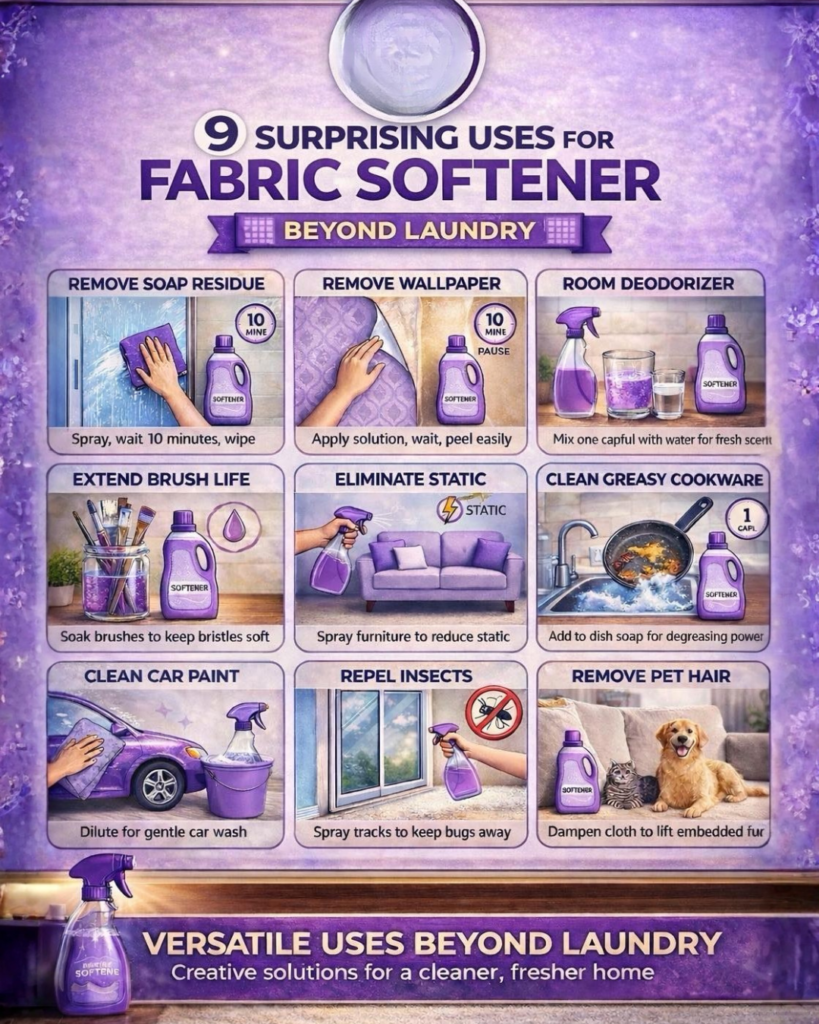
- The Method: Add a small capful of softener to a bucket of warm water. Use a sponge to wash the glass, then buff it dry with a clean cloth.
- The Timing: Do this on a cloudy day so the solution doesn’t dry too quickly, which can cause spotting.
Advanced Strategies: Expert Level DIY Secrets
Once you’ve mastered the basics, you can start using these fabric softener hacks for more complex home maintenance tasks. These tips save you money on expensive specialty cleaners.
Removing Old Wallpaper Like a Pro
Removing wallpaper is notoriously difficult, but the chemicals in softener help dissolve the paste. Score the wallpaper first with a scoring tool. Then, mix equal parts hot water and fabric softener. Apply the solution with a sponge or spray bottle and let it sit for 20 minutes. The paper will peel away in large sheets, saving you hours of scraping!
Refreshing Stiff Paintbrushes
Don’t throw away those crusty brushes! If you’ve been working with water-based paints, a fabric softener soak can restore the bristles. Add a drop of softener to a jar of warm water and swirl the brush. The lubricants help the paint slide off the fibers, leaving the brush soft and ready for your next project.
Eliminating Static in Carpets
During the winter, walking across a carpet can lead to an annoying zap. You can fix this by lightly misting your carpet with a very diluted softener solution (1 part softener to 10 parts water). It’s an easy way to make your living room more comfortable without buying expensive anti-static sprays.
Troubleshooting: Common Challenges and Solutions
Even with the best hacks, things don’t always go perfectly. Here is how to avoid common pitfalls and ensure safety.
- Avoid Oversaturating Surfaces: When using softener on wood or floors, less is more. If you use too much, it can leave a waxy buildup or make floors dangerously slippery. Always test a small, hidden area first.
- Keep it Away from High-Tech Screens: While great for the plastic casing of TVs, don’t spray softener solutions directly onto the delicate glass of high-end monitors or tablets, as it can interfere with anti-glare coatings.
- Allergy Considerations: If anyone in your home has sensitive skin or asthma, opt for “Free and Clear” versions of fabric softener. You still get the lubricating benefits without the heavy perfumes that can trigger reactions.
Safety Note: Always keep your DIY spray bottles labeled and stored out of reach of children and pets. Even though it smells like flowers, fabric softener should never be ingested!
Maximizing Results: Next Level Home Maintenance
To truly get the most out of these fabric softener hacks, think about how they can complement your existing cleaning routine.
The Simmer Pot Method Want your whole house to smell like a spa? Add a capful of fabric softener to a pot of simmering water on the stove (or a small slow cooker). The steam will carry the scent into every corner of your home. Just be sure to never leave a simmering pot unattended!
Vacuum Refresher Dampen a cotton ball with a little liquid softener and drop it into your vacuum bag or canister. As you clean, the exhaust will release a subtle, pleasant aroma, neutralizing that “musty vacuum” smell.
Car Interior Detailer You can use your diluted dust-repellent spray on your car’s dashboard and plastic door panels. It prevents dust buildup and gives the interior a “new car” scent that lasts much longer than those cardboard hanging trees. This is a great way to maintain your vehicle’s value and keep it looking sharp for years.
Conclusion
Embracing these fabric softener hacks is about more than just cleaning—it’s about being resourceful and creative with the items you already own. From relaxing the wrinkles in your favorite shirt to making your baseboards shine, these simple tips empower you to take control of your home environment.
You’ve discovered how a single bottle can replace a dozen expensive specialty products. By implementing just one or two of these ideas this weekend, you’ll achieve a cleaner, fresher, and more inviting home. You have the capability to transform your space with minimal effort and cost. So, grab that bottle from the laundry room and start experimenting!