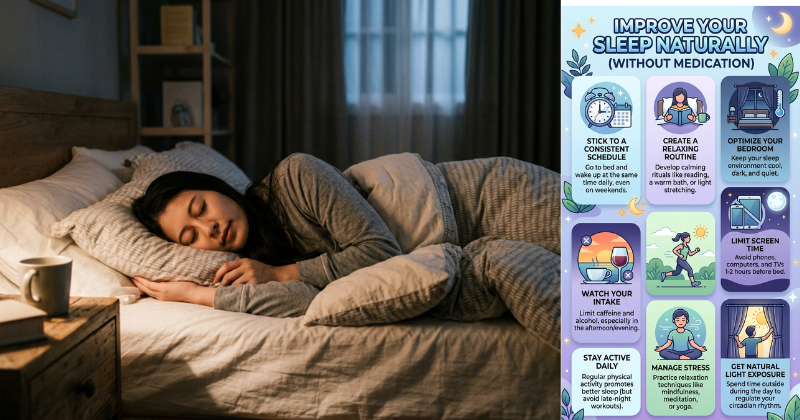
Struggling to fall asleep or waking up tired? Discover natural ways to improve sleep and enhance sleep quality without medication using simple, science-backed habits.
You go to bed on time. You put your phone down. Yet your mind keeps racing, or you wake up feeling like you barely slept. If this sounds familiar, you’re not alone. Millions of people deal with poor sleep quality — not because they’re lazy or undisciplined, but because their daily habits quietly sabotage their nights.
The good news? You can improve sleep naturally without medication. Small, consistent lifestyle shifts can transform how deeply and peacefully you rest. In this guide, you’ll learn practical, research-backed natural ways to improve sleep that are easy to apply starting tonight.
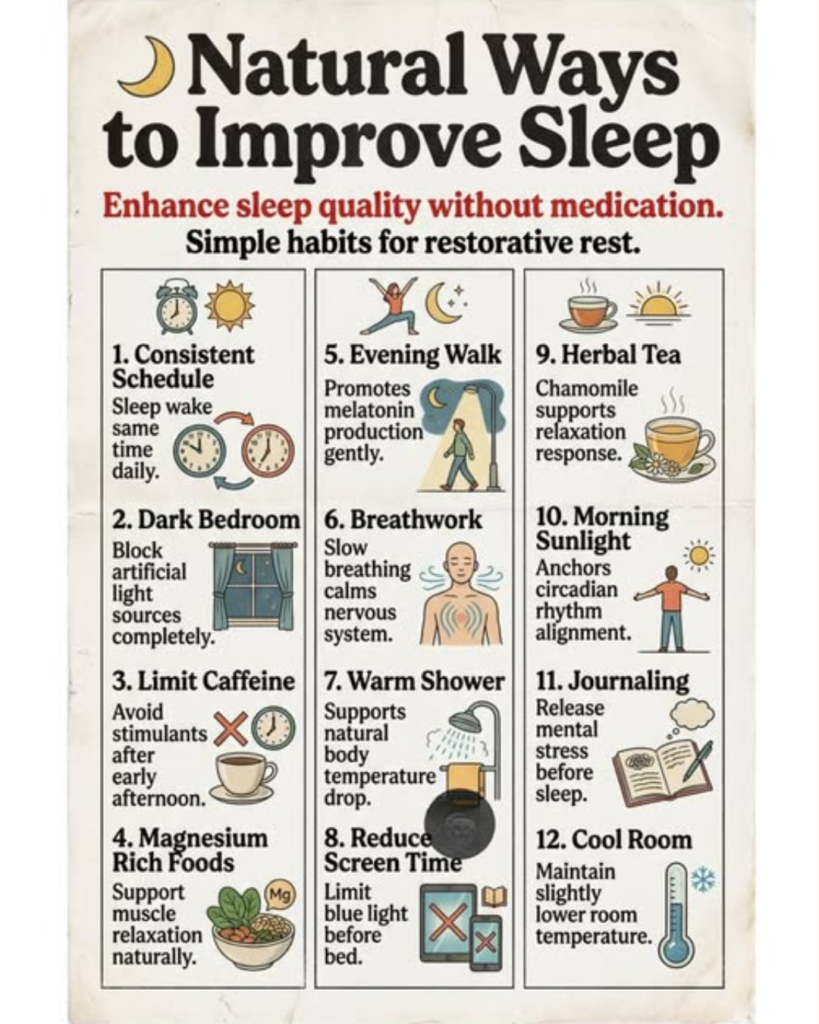
Why Your Sleep Quality Matters More Than You Think
Sleep isn’t just about hours. It’s about quality.
When you sleep well:
- Your brain consolidates memories
- Your body repairs tissues
- Hormones regulate properly
- Stress levels decrease
According to sleep research from organizations like the National Sleep Foundation, adults generally need 7–9 hours of sleep per night. But even 8 hours can feel exhausting if your sleep cycles are constantly disrupted.
H3: Signs You’re Not Getting Quality Sleep
- Waking up multiple times at night
- Feeling groggy in the morning
- Afternoon energy crashes
- Irritability or brain fog
- Relying heavily on caffeine
If you recognize yourself here, don’t panic. Sleep is highly trainable.
Build a Strong Sleep Foundation (Start Here First)
Before trying advanced tricks, focus on the basics. These foundational habits have the biggest impact on enhancing sleep quality without medication.
H3: Set a Consistent Sleep Schedule
Your body runs on a circadian rhythm — an internal clock regulated by light and routine. Going to bed and waking up at different times every day confuses it.
Try this:
- Pick a realistic bedtime
- Wake up at the same time (even on weekends)
- Give it at least 10–14 days of consistency
This is one of the most effective natural ways to improve sleep long-term.
H3: Create a Wind-Down Routine
Your brain needs transition time. You can’t go from scrolling social media to deep sleep instantly.
Instead:
- Dim lights 60 minutes before bed
- Take a warm shower
- Read a physical book
- Practice light stretching
This signals your nervous system that it’s safe to relax.
Optimize Your Sleep Environment for Deep Rest
Sometimes the problem isn’t you — it’s your room.
H3: Control Light Exposure
Light suppresses melatonin, your sleep hormone.
- Keep your bedroom dark
- Use blackout curtains if needed
- Avoid bright screens at least 30–60 minutes before bed
Even small LED lights can affect sensitive sleepers.
H3: Adjust Room Temperature
Research shows that cooler temperatures (around 60–67°F / 15–19°C) often support deeper sleep. Your body temperature naturally drops at night, so a cool room helps that process.
H3: Reduce Noise Disruptions
If you live in a noisy area:
- Try white noise
- Use a fan
- Consider soft earplugs
Small environmental tweaks can dramatically enhance sleep quality without medication.
Natural Sleep Boosters That Actually Work
Now let’s explore specific natural remedies and habits.
H3: Magnesium-Rich Foods
Magnesium helps relax muscles and calm the nervous system. Low levels are linked to sleep issues.
Add:
- Spinach
- Almonds
- Pumpkin seeds
- Dark chocolate (in moderation)
Some people also benefit from magnesium supplements, but always consult a professional first.
H3: Herbal Teas for Relaxation
Caffeine-free teas can become part of your nightly ritual.
Popular options:
- Chamomile
- Lemon balm
- Lavender
These herbs are traditionally used to support relaxation and reduce mild stress.
H3: Gentle Evening Movement
Intense workouts right before bed can energize you. Instead, try:
- Light yoga
- Slow stretching
- A 10-minute evening walk
Movement reduces stress hormones that interfere with sleep.
Common Sleep Mistakes You Might Be Making
Even with good intentions, certain habits can quietly disrupt your sleep.
H3: Doom-Scrolling Before Bed
Blue light + emotional stimulation = alert brain.
If you’ve ever said “just five more minutes” and ended up scrolling for 45, you know the impact.
Solution:
Charge your phone outside your bed area.
H3: Late-Night Caffeine
Caffeine can stay in your system for 6–8 hours — sometimes longer.
If you struggle with sleep:
- Avoid caffeine after 2 PM
- Watch hidden sources like chocolate and soda
H3: Overthinking in Bed
Your bed should be associated with sleep, not stress.
If you can’t fall asleep after 20–30 minutes:
- Get up
- Sit in dim light
- Read something calming
- Return when sleepy
This retrains your brain.
Advanced Strategies to Enhance Sleep Quality Naturally
Once your basics are strong, you can go further.
H3: Morning Sunlight Exposure
Getting 10–20 minutes of sunlight within an hour of waking helps anchor your circadian rhythm. This makes falling asleep at night easier.
H3: Limit Long Daytime Naps
If you nap:
- Keep it under 30 minutes
- Avoid late afternoon naps
Long naps reduce sleep pressure at night.
H3: Stress Regulation Practices
Chronic stress is one of the biggest sleep disruptors.
Try:
- Journaling before bed
- Deep breathing exercises
- Guided meditation
Since mental overload often shows up at night, calming your nervous system is essential.
How Long Does It Take to Improve Sleep Naturally?
This is a common question.
Most people notice improvement within 1–3 weeks of consistent changes. However, deeper sleep pattern resets may take longer depending on stress levels, lifestyle, and health factors.
The key is consistency — not perfection.
When Should You Seek Professional Help?
If you experience:
- Loud snoring with choking sounds
- Severe insomnia lasting months
- Extreme daytime sleepiness
- Leg discomfort at night
It may be time to consult a healthcare provider to rule out sleep disorders.
Conclusion: Small Changes, Powerful Results
Improving sleep naturally isn’t about doing everything at once. It’s about choosing one or two changes and committing to them.
Start with a consistent schedule. Dim your lights earlier. Get morning sunlight. Reduce caffeine. These simple, natural ways to improve sleep can enhance sleep quality without medication — safely and sustainably.
Your body already knows how to sleep. You just need to support it.
Tonight is a good place to start.
Important Disclaimer: This article is for informational purposes only and should not replace professional advice. For health-related topics, consult healthcare providers. Individual results may vary, and personal circumstances should always be considered when implementing any suggestions.