
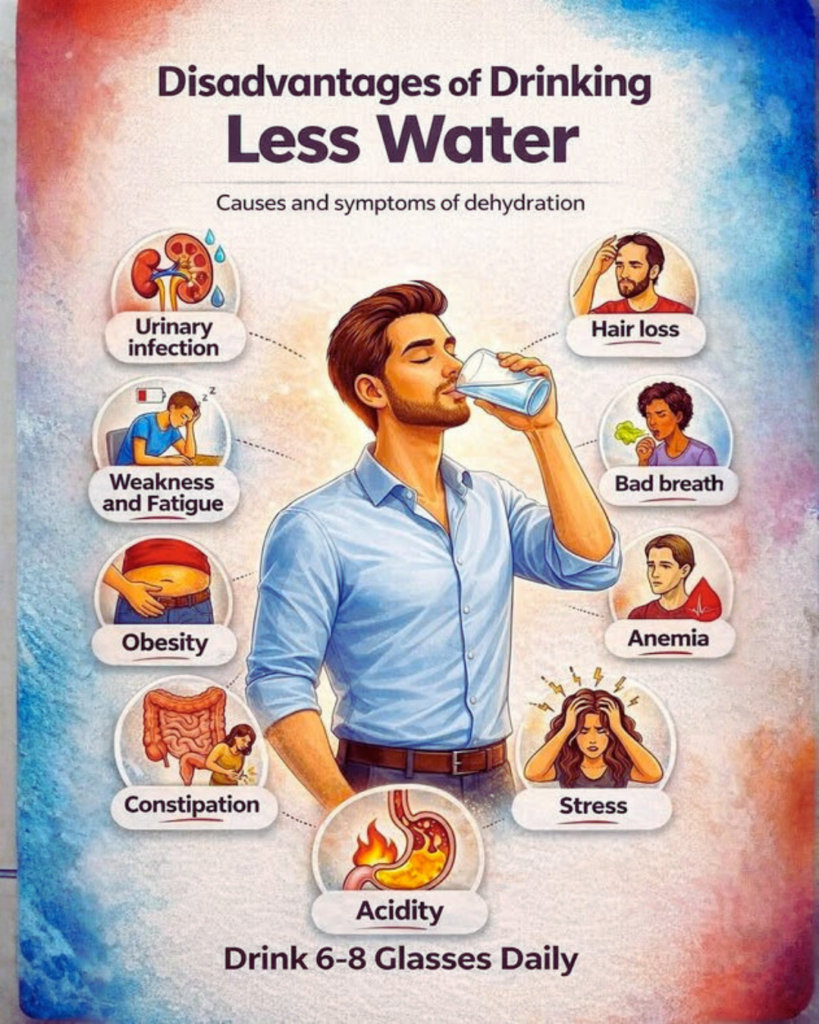
Most people underestimate the power of water. Drinking less water can lead to fatigue, bad breath, constipation, acidity, and even frequent infections. Your body speaks — you just need to listen.
Water is life. Literally. Every cell, tissue, and organ in your body relies on proper hydration to function. Yet, many of us go through our days barely sipping enough. The consequences aren’t always obvious at first, but over time, dehydration can silently affect your energy, digestion, skin, and immune system.
The good news? Drinking enough water is one of the simplest, most effective ways to boost overall health. This guide will show you why hydration matters, how to recognize signs of dehydration, and practical strategies to keep your body fully nourished with water.
Why Water Is Essential for Your Body
Your body is about 60% water, and it’s involved in nearly every physiological process:
- Regulating body temperature
- Supporting digestion and nutrient absorption
- Flushing out toxins via kidneys
- Lubricating joints
- Supporting brain function and mood
Even mild dehydration can lead to fatigue, irritability, headaches, and concentration issues. Chronic dehydration can contribute to constipation, kidney stones, and weakened immunity.
H3: Common Signs You’re Not Drinking Enough
- Dark yellow urine
- Dry mouth or bad breath
- Constipation
- Feeling unusually tired or foggy
- Acid reflux or bloating
- Frequent urinary tract infections
Your body gives signals — learning to listen is the first step in transforming your health.
How Much Water Do You Really Need?
While the “8 glasses a day” rule is popular, water needs vary based on:
- Body size and weight
- Activity level
- Climate and temperature
- Diet (high-sodium, protein, or fiber intake)
A general guideline is about 2–3 liters per day for adults, including fluids from food. Signs that you’re meeting your needs include pale yellow urine and consistent energy throughout the day.
Hydration Tips for Busy People
Even if you’re not naturally thirsty, you can take steps to stay hydrated:
H3: Set Small Goals
- Start with a glass of water when you wake up
- Carry a reusable water bottle
- Take sips between meals
H3: Add Flavor Naturally
- Lemon, cucumber, or mint can make water more appealing
- Herbal teas (caffeine-free) count toward hydration
H3: Include Water-Rich Foods
- Fruits like watermelon, oranges, and berries
- Vegetables like cucumber, celery, and lettuce
- Soups or broths for extra fluid intake
H3: Monitor Your Body’s Feedback
- Energy dips, headaches, or dry skin? Drink more
- Urine color too dark? Increase intake gradually
How Hydration Impacts Overall Health
Proper hydration affects more than just thirst. It can:
- Boost metabolism and energy levels
- Improve digestion and reduce constipation
- Support kidney function and reduce urinary infections
- Promote healthy skin and reduce dryness
- Aid in regulating body temperature during workouts or heat
Drinking water isn’t just a habit — it’s a foundational health strategy.
Common Mistakes That Sabotage Hydration
H3: Relying Only on Coffee or Tea
Caffeine has mild diuretic effects; it shouldn’t replace water.
H3: Ignoring Mild Thirst
Thirst is a signal — don’t wait until you feel parched.
H3: Chugging Water All at Once
Slow, consistent intake is more effective than large amounts sporadically.
Long-Term Benefits of Staying Hydrated
By committing to adequate daily hydration:
- Fatigue decreases
- Digestive health improves
- Skin looks plumper and more radiant
- Risk of urinary and kidney issues lowers
- Mood and cognitive function enhance
Hydration is a simple habit with powerful, cumulative effects.
Conclusion: Listen to Your Body
Water is your body’s most vital nutrient — yet it’s the easiest to overlook. Fatigue, constipation, bad breath, acidity, and frequent infections are signals that your body needs more. By drinking consistently, listening to your signals, and including water-rich foods, you can support energy, immunity, digestion, and overall wellness.
Start today. Your body is asking — it’s time to answer.
Important Disclaimer: This article is for informational purposes only and should not replace professional advice. For health-related topics, consult healthcare providers. Individual results may vary, and personal circumstances should always be considered when implementing any suggestions.