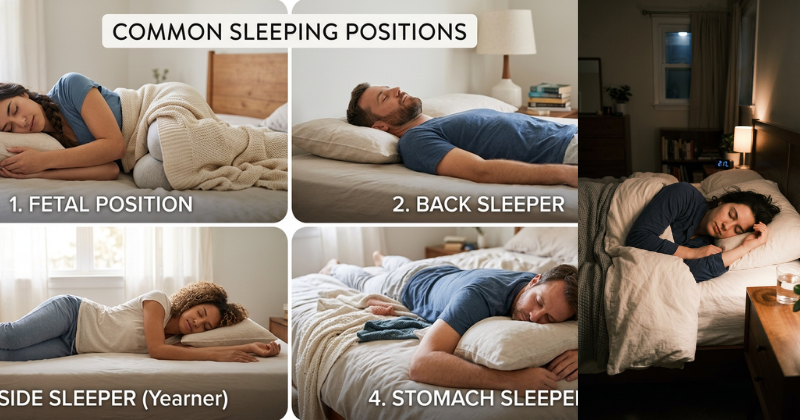
Sleep plays a vital role in how the body recovers and functions each day. While many people focus on how many hours they sleep, sleep position can also affect comfort, pain levels, and overall health.
The way you position your body during sleep may influence the spine, breathing, digestion, and pressure on muscles and joints. Choosing a supportive sleep position can sometimes help reduce discomfort and improve sleep quality.
Why Sleep Position Matters
During sleep, the body spends several hours in the same posture. If the position does not support natural alignment, it may create strain on muscles and joints.
A proper sleep position can help:
- Maintain healthy spinal alignment
- Reduce pressure on joints
- Improve breathing during sleep
- Support muscle relaxation
- Reduce morning stiffness
Different sleep positions can affect the body in different ways.
Sleeping on Your Back
Sleeping on your back is often considered a neutral position because it allows the spine to rest in a natural alignment.
Potential benefits:
- Even distribution of body weight
- Reduced pressure on joints
- Support for neck and spine alignment
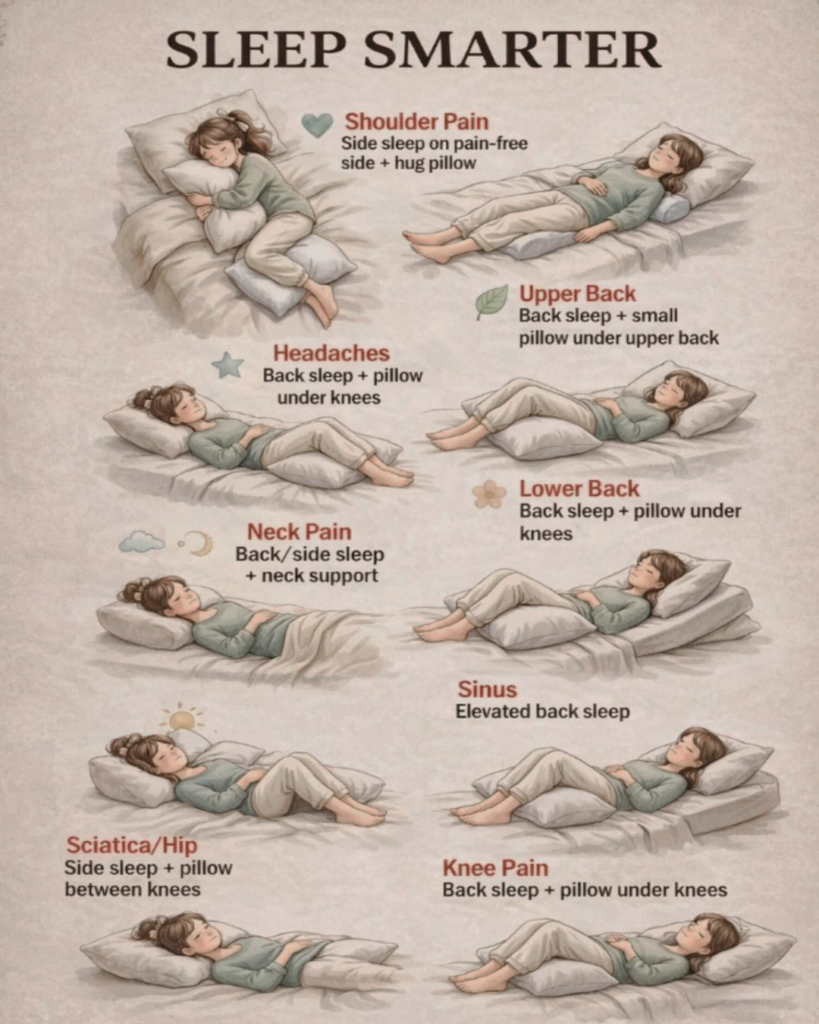
Placing a pillow under the knees may help maintain the natural curve of the lower back.
However, some people may find that sleeping on the back can worsen snoring or breathing issues.
Sleeping on Your Side
Side sleeping is one of the most common sleep positions.
Possible benefits:
- May reduce snoring
- Can support comfortable breathing
- Helps maintain spinal alignment with the right pillow
Placing a pillow between the knees may help keep the hips aligned and reduce lower back strain.
Some people also prefer this position for overall comfort.
Sleeping on Your Stomach
Sleeping on the stomach may feel comfortable for some people, but it can sometimes place pressure on the neck and lower back.
Possible concerns:
- Neck may remain turned for long periods
- Extra pressure on the spine
- Potential muscle tension in the morning
Using a thin pillow or no pillow may reduce neck strain for stomach sleepers.
Tips for Better Sleep Alignment
Small adjustments can improve sleep comfort regardless of position.
Helpful tips include:
- Use a pillow that supports the neck
- Keep the spine in a neutral position
- Avoid overly high or flat pillows
- Choose a mattress that supports your body evenly
- Try placing supportive pillows under knees or between legs
These adjustments can help reduce pressure on the body during sleep.
Listening to Your Body
Everyone’s body is different, and the most comfortable sleep position can vary from person to person. The key is finding a position that allows your body to relax while maintaining proper alignment.
Paying attention to how your body feels in the morning—such as stiffness or soreness—can help you adjust your sleeping habits.
Conclusion
Sleep position is an often overlooked factor in overall sleep quality. Positions that support spinal alignment and reduce pressure on joints may help improve comfort during the night.
By making small adjustments with pillows and posture, many people can create a sleep environment that supports better rest and overall well-being.