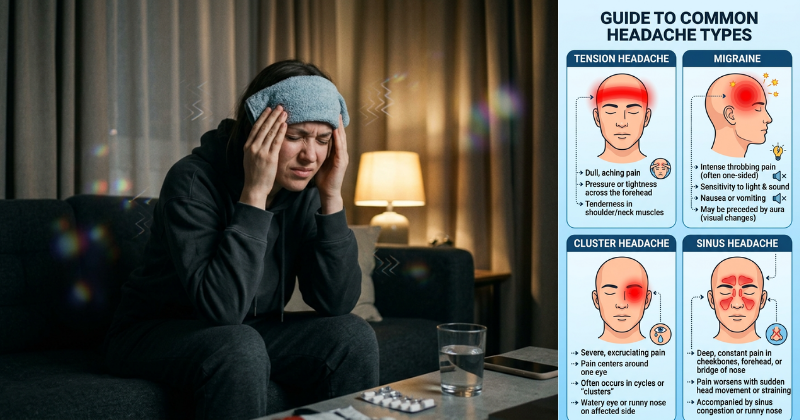
Headaches are one of the most common health complaints worldwide. They can vary in intensity, location, and cause. Understanding the different types of headaches may help people recognize patterns and manage discomfort more effectively.
Headaches are generally grouped based on their symptoms and underlying triggers.
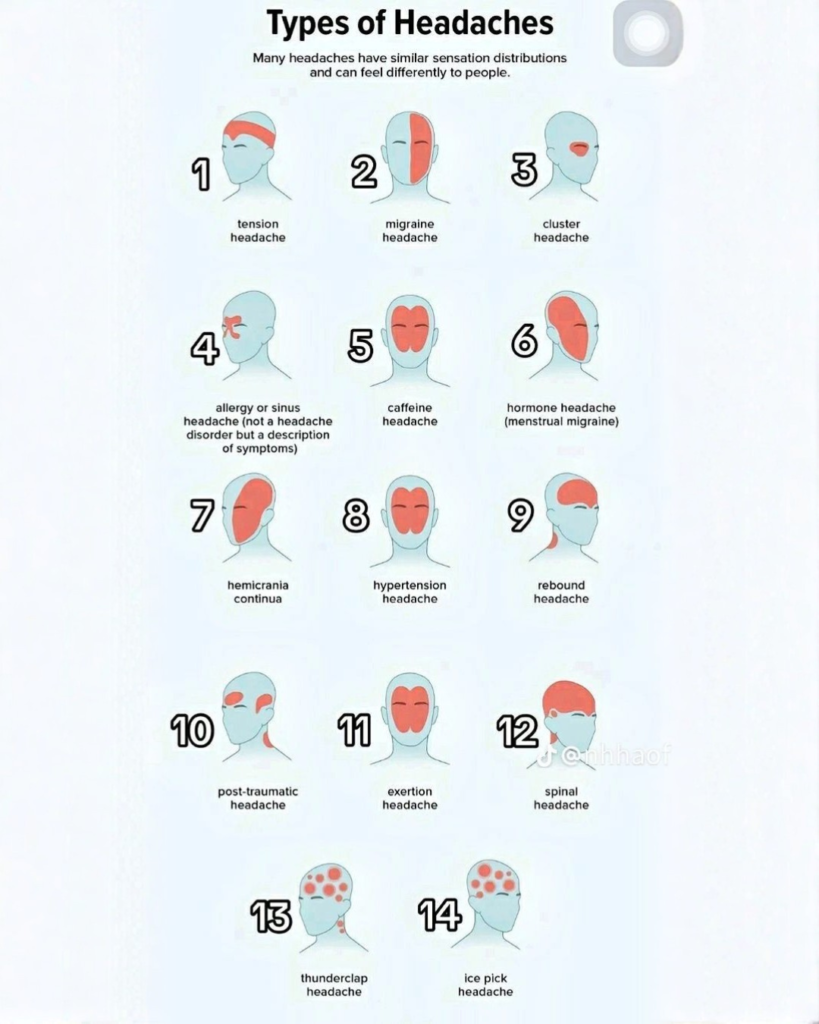
Tension Headaches
Tension Headache is the most common type of headache.
Common characteristics:
- Dull or aching pain
- Pressure around the forehead or temples
- Tight feeling around the head or neck
These headaches are often linked to stress, fatigue, or long periods of screen use.
Migraines
Migraine is a neurological condition that causes more intense headaches.
Common symptoms:
- Throbbing pain on one side of the head
- Sensitivity to light or sound
- Nausea or dizziness
- Visual disturbances in some cases
Migraines can last several hours or even days.
Cluster Headaches
Cluster Headache is a rare but extremely painful type of headache.
Typical features:
- Severe pain around one eye
- Sudden onset
- Occurs in repeated cycles or “clusters”
Cluster headaches tend to appear at the same time each day during a cluster period.
Sinus Headaches
Sinusitis can sometimes cause headaches due to pressure in the sinus cavities.
Symptoms may include:
- Pain around the forehead, cheeks, or nose
- Pressure that worsens when bending forward
- Nasal congestion
These headaches are often linked to sinus infections or inflammation.
Caffeine Withdrawal Headaches
When people who regularly consume caffeine suddenly reduce their intake, they may experience caffeine withdrawal headaches.
Possible symptoms:
- Dull pain across the head
- Fatigue
- Difficulty concentrating
These headaches usually improve once the body adjusts to lower caffeine intake.
Dehydration Headaches
A lack of adequate fluids can sometimes lead to headaches.
Common signs:
- Throbbing or dull head pain
- Dry mouth
- Fatigue or dizziness
Drinking water and maintaining hydration may help prevent these headaches.
When to Pay Attention to Headaches
Occasional headaches are common, but certain signs may require attention.
These include:
- Headaches that occur very frequently
- Sudden severe headaches
- Headaches with vision or speech problems
- Pain that worsens over time
Consulting a healthcare professional can help determine the cause and appropriate management.
Tips to Help Reduce Headaches
Simple lifestyle habits may help reduce the likelihood of headaches.
Helpful habits include:
- Staying hydrated
- Getting enough sleep
- Managing stress
- Limiting excessive screen time
- Maintaining regular meals
Tracking headache patterns can also help identify triggers.
Conclusion
Headaches can occur for many different reasons, and understanding the different types—such as tension headaches, migraines, cluster headaches, and sinus headaches—can help people recognize symptoms and possible triggers.
By paying attention to lifestyle habits and patterns, it may be easier to manage headaches and support overall well-being.