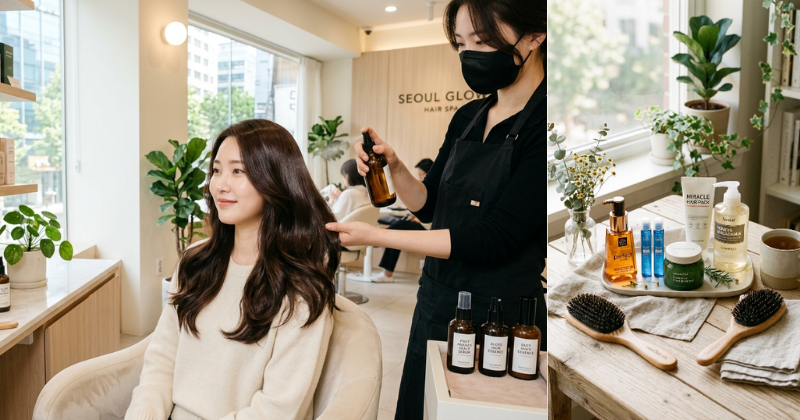
Winter can be one of the toughest seasons for hair. Cold air outside, dry indoor heating, and lower humidity levels often lead to dry, brittle hair, scalp irritation, and increased breakage. Many people notice their hair becoming dull, frizzy, or difficult to manage during the colder months.
In Korea, seasonal hair care is taken seriously. Korean beauty culture emphasizes gentle care, scalp health, and moisture balance, especially during winter when hair and scalp are more vulnerable.
Instead of relying on heavy styling or harsh treatments, Korean hair care routines focus on hydration, nourishment, and protective habits that help maintain healthy hair throughout the season.
In this guide, we’ll explore some popular Korean hair care winter secrets, the science behind them, and practical tips you can incorporate into your routine.
Why Hair Becomes Dry in Winter
To understand Korean winter hair care strategies, it helps to know why winter affects hair so strongly.
Several environmental factors contribute to seasonal hair problems:
Low Humidity
Winter air contains less moisture. As humidity drops, hair strands lose water more easily, which can make hair feel dry and rough.
Indoor Heating
Heaters reduce indoor humidity levels even further. This dry environment can affect both hair and scalp, leading to itchiness and flaking.
Static Electricity
Dry air increases static buildup in hair, which causes flyaways and makes hair harder to style.
Frequent Hot Showers
While hot showers feel comforting in winter, very hot water can strip natural oils from the scalp and hair.
The Korean Approach to Winter Hair Care
Korean hair care often follows a scalp-first philosophy. Instead of only focusing on hair strands, the routine emphasizes maintaining a balanced scalp environment.
Healthy hair typically begins with a healthy scalp, which supports stronger and more resilient hair growth.
Secret #1: Scalp Hydration Is a Priority
One key Korean hair care practice is treating the scalp like facial skin.
Just like facial skin can become dry in winter, the scalp can also lose moisture.
Popular Korean scalp care steps include:
- Using hydrating scalp tonics
- Applying lightweight scalp essences
- Massaging the scalp to improve circulation
Hydrated scalp skin helps reduce dryness and supports a balanced environment for hair growth.
Secret #2: Gentle Cleansing Instead of Harsh Washing
Many Korean hair routines avoid overly aggressive shampoos, especially during winter.
Instead, they focus on gentle cleansing formulas that remove buildup without stripping natural oils.
Helpful winter hair washing tips include:
- Choosing mild, sulfate-free shampoos
- Washing hair with lukewarm water instead of hot water
- Avoiding daily shampooing if the scalp becomes too dry
This helps preserve natural oils that protect hair.
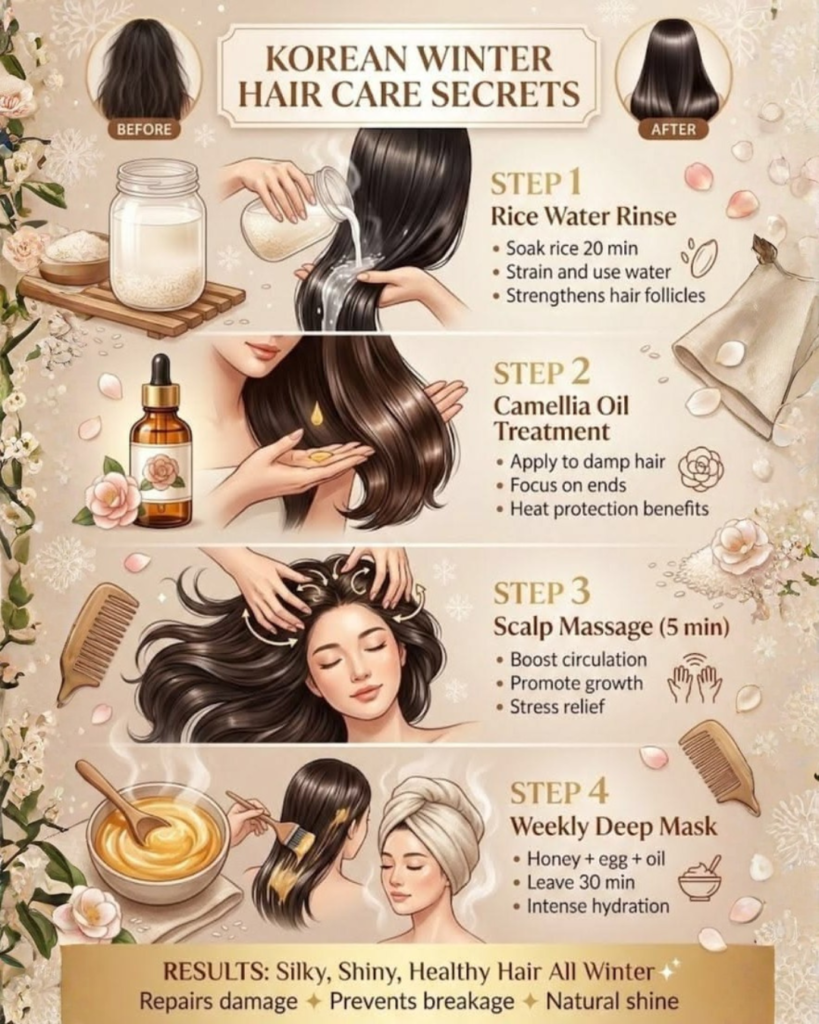
Secret #3: Weekly Hair Masks
Deep conditioning treatments are a common part of Korean winter hair care.
Hair masks provide intense hydration and nourishment to hair strands.
Common ingredients used in Korean hair masks include:
- Argan oil
- Camellia oil
- Keratin
- Rice protein
- Fermented plant extracts
Applying a mask once or twice per week can help improve hair softness and elasticity.
Secret #4: Hair Oils for Moisture Protection
Hair oils are often used to seal moisture into the hair shaft.
Popular oils in Korean hair routines include:
- Camellia oil
- Argan oil
- Jojoba oil
Only a small amount is needed. The oil is typically applied to the mid-lengths and ends, not directly on the scalp.
This helps reduce dryness and protect hair from winter damage.
Secret #5: Towel-Drying Techniques
Rough towel drying can damage wet hair, which is more fragile than dry hair.
In many Korean routines, people prefer:
- Microfiber towels
- Cotton T-shirts
These materials are gentler on hair and help reduce friction and breakage.
Hair is usually gently pressed instead of rubbed.
Secret #6: Limiting Heat Styling
Heat styling tools such as curling irons and flat irons can increase dryness in winter.
Korean hair care routines often encourage:
- Air drying when possible
- Using heat protectant products
- Reducing frequent heat styling
This helps maintain moisture within the hair shaft.
Secret #7: Scalp Massage
Scalp massage is a simple but common practice in Korean beauty routines.
Massaging the scalp can help:
- Improve blood circulation
- Relax scalp muscles
- Support healthy hair growth conditions
Many people perform scalp massage while applying hair oils or scalp treatments.
Secret #8: Nutrition and Hydration
Korean beauty philosophy often emphasizes beauty from within.
Healthy hair is supported by balanced nutrition and proper hydration.
Nutrients commonly associated with hair health include:
- Protein
- Biotin
- Zinc
- Iron
- Omega-3 fatty acids
Drinking enough water also helps maintain skin and scalp hydration.
DIY Korean-Inspired Hair Mask
If you enjoy simple home treatments, this gentle mask is inspired by ingredients often used in Korean hair care.
Ingredients
- 1 tablespoon honey
- 1 tablespoon coconut oil
- 1 tablespoon yogurt
Preparation
- Mix all ingredients in a small bowl.
- Stir until the mixture becomes smooth.
Application
- Apply the mask to damp hair, focusing on mid-lengths and ends.
- Leave it on for 20–30 minutes.
- Rinse thoroughly and shampoo gently.
This mask may help provide temporary softness and hydration.
Common Winter Hair Care Mistakes
Avoiding certain habits can help maintain healthier hair during winter.
Washing Hair With Very Hot Water
Hot water removes natural oils that protect hair.
Skipping Conditioner
Conditioner helps smooth the hair cuticle and retain moisture.
Ignoring the Scalp
Dry scalp can lead to discomfort and visible flakes.
Overusing Styling Products
Too many styling products may cause buildup and make hair feel heavy or dull.
Conclusion
Winter conditions can be challenging for hair, but Korean hair care routines offer practical strategies to maintain hydration and protect hair health.
By focusing on scalp care, gentle cleansing, regular conditioning, and moisture protection, it is possible to reduce dryness and maintain softer, more manageable hair during colder months.
Simple habits like using lukewarm water, applying hair oils, and limiting heat styling can make a noticeable difference.
Healthy hair care is not about complicated routines—it’s about consistent care and maintaining balance between moisture, protection, and scalp health.