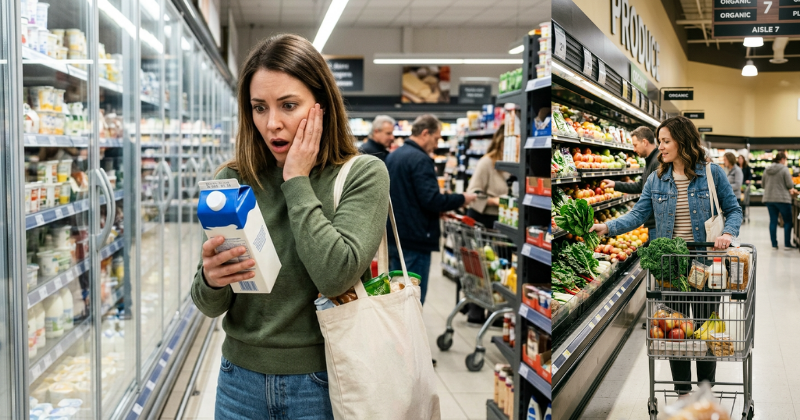
Ever come home from the grocery store only to realize the expiration date on something you just bought is only a few days away? Many people immediately assume the food will soon become unsafe and throw it away. But in reality, most expiration labels are not strict safety deadlines. In many cases, they are simply guidelines for peak quality.
Understanding how expiration dates actually work can help you reduce food waste, save money, and make smarter decisions in the kitchen. Many foods remain perfectly safe to eat beyond the printed date if they are stored properly and show no signs of spoilage.
In this guide, we’ll explain what different food date labels mean, why they exist, and how to safely evaluate food freshness at home.
Why Expiration Dates Exist
Food date labels were originally introduced to help retailers manage inventory and ensure products are sold while they are still fresh. However, many people assume these dates indicate when food becomes unsafe to eat.
In reality, most date labels indicate quality rather than safety.
Manufacturers estimate when a product will taste its best based on factors such as:
- Flavor
- Texture
- Nutritional value
- Appearance
After that date, the food may gradually lose quality, but it often remains safe to consume for some time when stored properly.
Understanding Common Food Date Labels
One reason people misunderstand expiration dates is that several different types of labels exist. Each one means something different.
Best Before
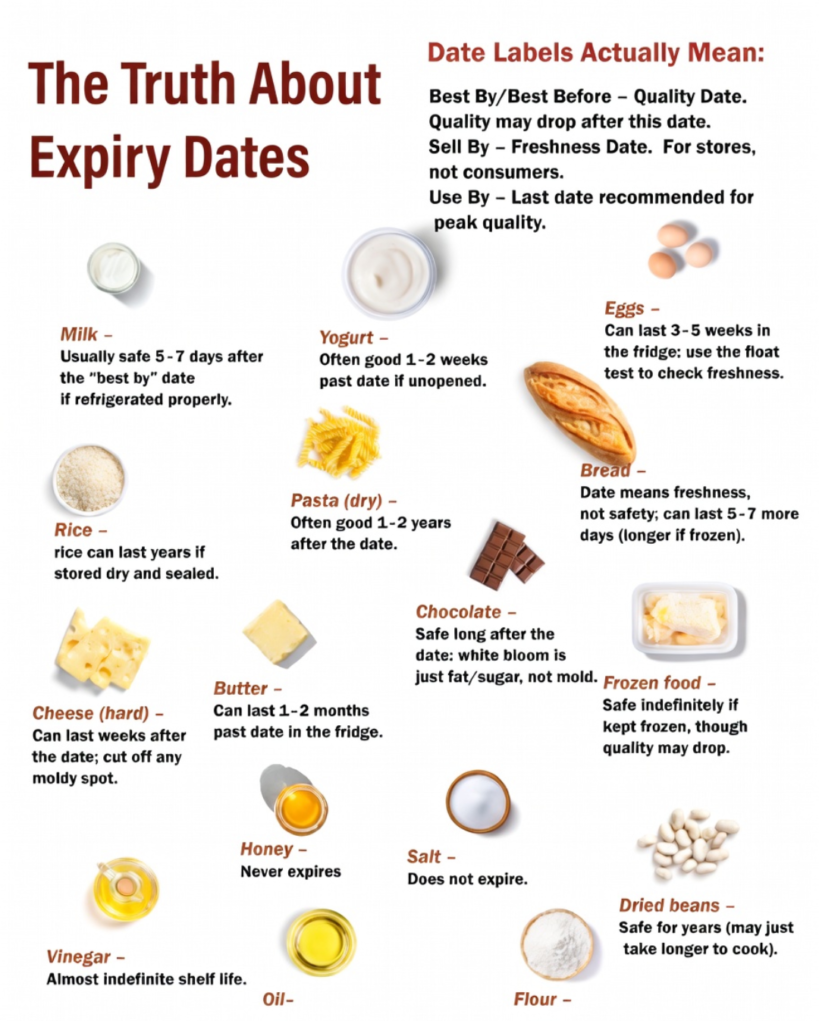
“Best before” indicates when a product is expected to be at peak flavor and texture.
It does not mean the food suddenly becomes unsafe after that date. Many shelf-stable foods can still be used days or weeks later.
Sell By
“Sell by” dates are mainly intended for store management. They help retailers know how long to display products on shelves.
Consumers can often safely use these foods after the sell-by date if they have been stored correctly.
Use By
“Use by” dates are usually the most important label because they are sometimes related to food safety, particularly for perishable foods like dairy or prepared meals.
Even then, food may remain safe slightly beyond the date if it has been refrigerated properly, though caution is recommended.
Freeze By
This label indicates when food should be frozen to maintain optimal quality.
Freezing slows bacterial growth and can significantly extend food storage time.
Why Food Can Last Longer Than the Date
Several factors determine how long food remains usable beyond the printed date.
Storage Conditions
Temperature plays a major role in food preservation. Refrigeration slows bacterial growth and extends the life of many foods.
For example:
- Milk stored consistently in the coldest part of the fridge often lasts longer.
- Vegetables stored in humidity-controlled drawers remain fresher.
Packaging
Sealed packaging helps protect food from air, moisture, and bacteria.
Once packaging is opened, food may spoil faster regardless of the printed date.
Food Type
Different foods spoil at different rates.
For example:
- Dry foods like rice or pasta can last years if kept dry.
- Fresh produce spoils faster due to higher water content.
Foods That Often Last Longer Than Expected
Many everyday foods remain usable well beyond their printed dates when stored properly.
Dry Goods
Dry foods often have extremely long shelf lives.
Examples include:
- Rice
- Pasta
- Flour
- Oats
- Dried beans
If kept in airtight containers in a cool, dry place, these foods can last months or even years.
Canned Foods
Canned goods are designed for long-term storage.
As long as the can remains sealed and undamaged, the contents may stay safe long after the printed date.
However, cans should be discarded if they show signs of:
- Bulging
- Rust
- Leaking
Dairy Products
Some dairy products remain usable beyond the printed date if they are stored properly and smell normal.
Examples include:
- Yogurt
- Hard cheese
- Butter
Always check for signs of spoilage such as unusual odor or mold.
Eggs
Eggs can often remain fresh beyond the carton date if refrigerated properly.
A simple freshness test involves placing an egg in water:
- Fresh eggs sink.
- Older eggs may float due to air buildup inside the shell.
How to Tell If Food Has Spoiled
Instead of relying only on printed dates, many experts recommend using your senses to evaluate food quality.
Signs of spoilage may include:
- Sour or unusual smell
- Mold growth
- Slimy or sticky texture
- Unusual color changes
If any of these signs appear, the food should be discarded.
Tips to Reduce Food Waste at Home
Learning how to manage food storage can significantly reduce waste.
Store Food Properly
Different foods require different storage conditions.
Examples:
- Keep dairy products cold
- Store dry foods in airtight containers
- Refrigerate leftovers promptly
Organize Your Fridge
Place foods that expire soon toward the front of the refrigerator so they are used first.
This simple habit helps prevent items from being forgotten.
Freeze Extra Food
Freezing is one of the most effective ways to extend shelf life.
Many foods freeze well, including:
- Bread
- Cooked meals
- Meat
- Vegetables
Plan Meals
Planning meals for the week can help you buy only what you need and use food before it spoils.
Why Reducing Food Waste Matters
Food waste is not just a household issue. It also has environmental and economic impacts.
Wasted food represents:
- Wasted water
- Wasted energy used in production
- Increased landfill waste
By understanding expiration labels and using food more efficiently, individuals can contribute to reducing overall food waste.
Conclusion
Expiration dates are often misunderstood. In many cases, they indicate when food quality may decline rather than when it becomes unsafe.
Learning the meaning behind labels like best before, sell by, and use by can help you make better decisions about the food in your kitchen.
By storing food properly, checking for signs of spoilage, and organizing your refrigerator, you can safely extend the life of many foods and reduce unnecessary waste.
Small changes in how we interpret food labels can make a meaningful difference in both household budgets and environmental sustainability.