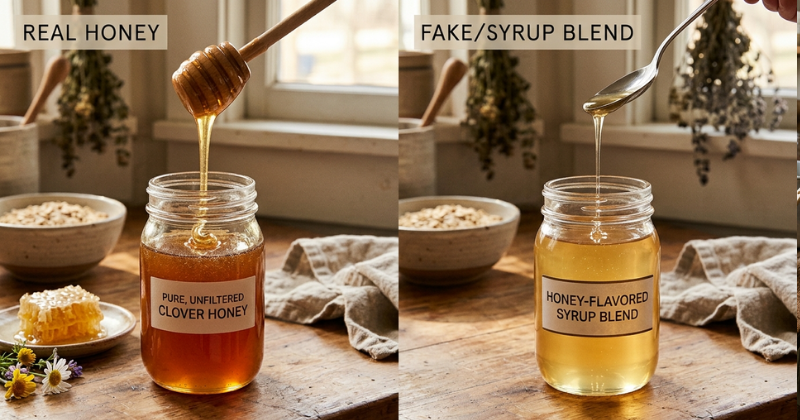
Honey is one of the most valued natural foods, known for its sweetness, nutrients, and antibacterial properties. However, many commercial honey products may be diluted with sugar syrups or heavily processed, making it difficult for consumers to know whether the honey they buy is truly pure.
While laboratory testing is the only completely reliable method, several simple household tests can help you get an idea of whether honey is likely pure or possibly adulterated. Understanding these signs can help you make better choices when buying honey.
Why Some Honey Is Adulterated
Honey may be altered or diluted for economic reasons. Some producers mix honey with cheaper sweeteners such as:
- Sugar syrup
- Corn syrup
- Rice syrup
- Artificial sweeteners
These additives increase volume and reduce production costs, but they also reduce the nutritional value and natural benefits of real honey.
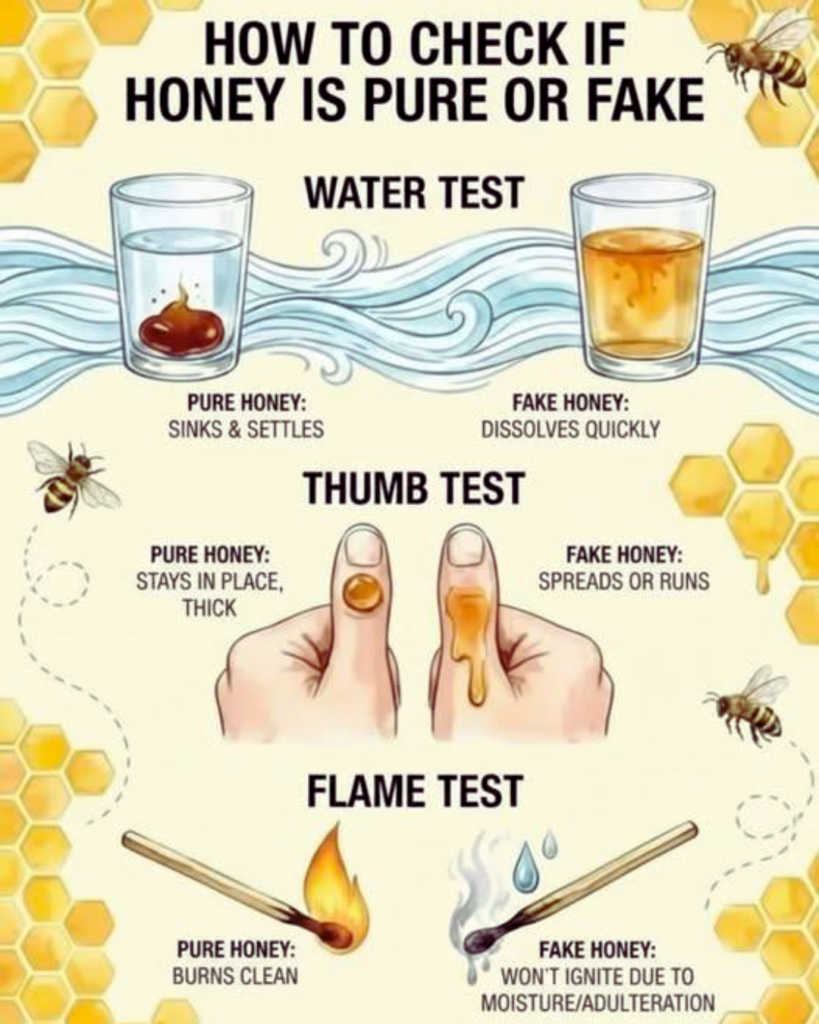
1. The Water Test
One of the easiest ways to check honey at home is the water test.
How to do it
- Fill a glass with water.
- Add one spoonful of honey into the water.
- Watch how it behaves.
What to look for
- Pure honey: tends to settle at the bottom and does not dissolve quickly.
- Fake or diluted honey: dissolves quickly or spreads easily in the water.
Pure honey is thicker and denser, which is why it sinks before slowly mixing.
2. The Thumb Test
This is a quick test that can reveal honey’s thickness.
How to do it
- Place a small drop of honey on your thumb.
- Observe how it spreads.
What to look for
- Pure honey: stays in place and remains thick.
- Fake honey: spreads quickly or feels watery.
Real honey has a naturally viscous texture that prevents it from spreading easily.
3. The Paper Towel Test
Pure honey contains very little moisture.
How to do it
- Put a drop of honey on a paper towel or napkin.
Results
- Pure honey: remains intact and does not soak into the paper easily.
- Fake honey: may be absorbed quickly due to higher water content.
4. The Flame Test
This test checks the moisture content in honey.
How to do it
- Dip the tip of a cotton wick or matchstick into honey.
- Try lighting it with a flame.
What to expect
- Pure honey: may allow the wick to burn because it has low moisture.
- Fake honey: may not ignite easily if diluted with water.
⚠️ Always perform this test carefully and safely.
5. Crystallization Test
Many people think crystallized honey is spoiled, but the opposite is often true.
What happens
Pure honey naturally crystallizes over time, especially if it contains pollen and natural sugars.
What to look for
- Pure honey: may become thicker or form crystals after months of storage.
- Highly processed honey: may stay perfectly liquid for long periods.
Crystallization is actually a sign that honey is natural and minimally processed.
Signs of Good Quality Honey
When choosing honey, look for these characteristics:
- Thick, slow flow
- Rich aroma
- Natural color variation
- Possible crystallization over time
Local or raw honey often retains more natural enzymes and beneficial compounds.
Why Pure Honey Matters
Real honey contains beneficial compounds such as:
- Antioxidants
- Natural enzymes
- Trace minerals
- Antibacterial properties
Adulterated honey may lose many of these natural benefits.
Conclusion
While home tests cannot guarantee absolute authenticity, they can help identify obvious signs of diluted or fake honey. Observing texture, thickness, crystallization, and behavior in water can provide useful clues.
When possible, buying raw or locally produced honey from trusted sources is one of the best ways to ensure you are getting genuine honey.