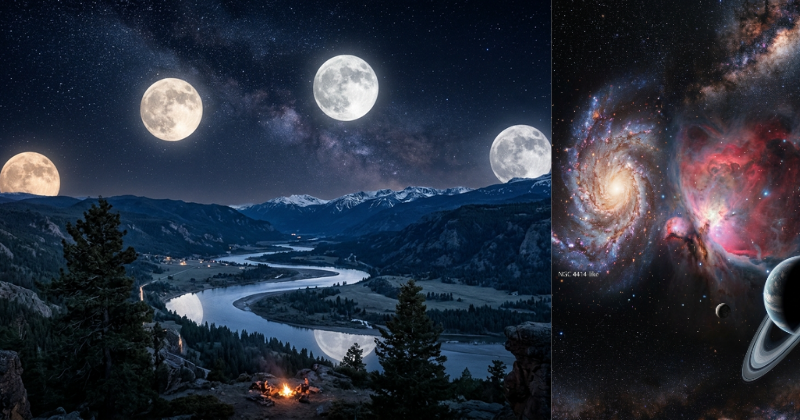
Every full moon throughout the year carries a traditional name. From the Wolf Moon in January to the Cold Moon in December, these names come from ancient seasonal traditions connected to nature, agriculture, and the changing environment.
Long before modern calendars were common, people relied on the moon to track time. Communities observed the sky and gave each full moon a name that reflected weather patterns, animal behavior, or seasonal activities.
These names are still widely used today by astronomers, farmers, and sky watchers.
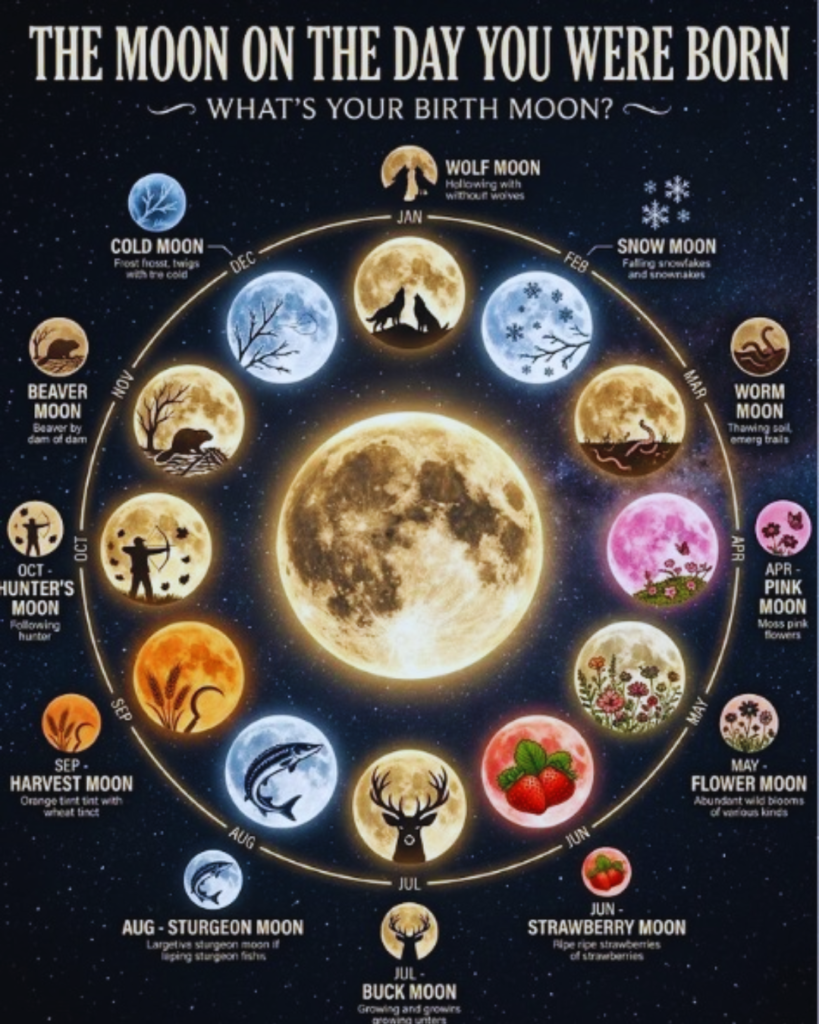
The Full Moon Names Through the Year
January — Wolf Moon
The January full moon is called the Wolf Moon. It is traditionally associated with the time of year when wolves were believed to howl more often during the cold winter nights.
February — Snow Moon
February often brings heavy snowfall in many regions of the Northern Hemisphere. Because of this, the February full moon became known as the Snow Moon.
March — Worm Moon
As temperatures begin to warm, earthworms start appearing in the soil again. The Worm Moon signals the transition from winter to early spring.
April — Pink Moon
Despite the name, the moon itself does not appear pink. The name comes from pink wildflowers, particularly moss phlox, that bloom in early spring.
May — Flower Moon
Spring is in full bloom during May, so the full moon is called the Flower Moon, representing the abundance of blossoms in nature.
June — Strawberry Moon
The Strawberry Moon is linked to the short strawberry harvesting season in parts of North America.
July — Buck Moon
In July, male deer begin regrowing their antlers. Because of this seasonal change, the July full moon became known as the Buck Moon.
August — Sturgeon Moon
The August full moon was named after the sturgeon fish, which were traditionally easier to catch during this time of year.
September — Harvest Moon
The Harvest Moon occurs closest to the autumn equinox. Its bright light historically helped farmers harvest crops late into the evening.
October — Hunter’s Moon
After crops were harvested, the bright October moon helped hunters track animals preparing for winter.
November — Beaver Moon
The Beaver Moon marks the time when beavers prepare their winter shelters and when trappers historically set traps before waters froze.
December — Cold Moon
December’s full moon reflects the arrival of colder temperatures and the beginning of winter in many regions.
Why These Moon Names Still Matter
Although modern calendars make it easier to track time, these traditional moon names remain part of cultural and astronomical traditions. They remind us how closely earlier societies observed nature and the rhythms of the seasons.
Today, skywatchers still use these names to mark each full moon and stay connected with the natural cycle of the year.