
The human body requires a balanced intake of vitamins to maintain normal physiological functions. Vitamins support immune activity, energy production, nerve signaling, cellular repair, and metabolic processes. When the body does not receive enough of certain nutrients, subtle symptoms may begin to appear. These signs can sometimes be mild or easily overlooked, yet they may indicate underlying nutritional imbalances.
Vitamin deficiencies can develop gradually over time due to diet, lifestyle habits, absorption issues, or increased nutritional needs. Understanding how these deficiencies manifest helps individuals recognize potential warning signs and seek appropriate nutritional support. This article explores the biological roles of vitamins, common symptoms associated with deficiencies, and the scientific mechanisms behind these signals.
What Are Vitamins and Why Are They Essential?
Vitamins are organic compounds required in small amounts to support vital biochemical reactions. Unlike macronutrients such as carbohydrates, fats, and proteins, vitamins do not directly provide energy. Instead, they act as cofactors and regulators that allow metabolic processes to function properly.
There are two main categories of vitamins:
Fat-soluble vitamins
- Vitamin A
- Vitamin D
- Vitamin E
- Vitamin K
These vitamins are stored in body tissues and absorbed along with dietary fats.
Water-soluble vitamins
- Vitamin C
- B-complex vitamins such as B1, B2, B6, B12, folate, and others
These vitamins dissolve in water and are not stored extensively in the body, meaning they must be consumed regularly.
Because each vitamin participates in different biological pathways, deficiencies can lead to a wide range of symptoms affecting multiple systems.
How Do Vitamin Deficiencies Develop?
Vitamin deficiencies may develop through several mechanisms.
Inadequate Dietary Intake
A diet lacking in fruits, vegetables, whole grains, and nutrient-dense foods may fail to provide sufficient vitamins. Highly processed foods may contain fewer micronutrients compared with fresh foods.
Absorption Problems
Certain digestive conditions can interfere with nutrient absorption. For example, disorders affecting the stomach or intestines may reduce the body’s ability to absorb vitamins from food.
Increased Nutritional Requirements
During certain life stages or conditions—such as pregnancy, illness, or intense physical activity—the body may require higher amounts of specific vitamins.
Medication Interactions
Some medications can interfere with vitamin metabolism or absorption, potentially increasing the risk of deficiency over time.
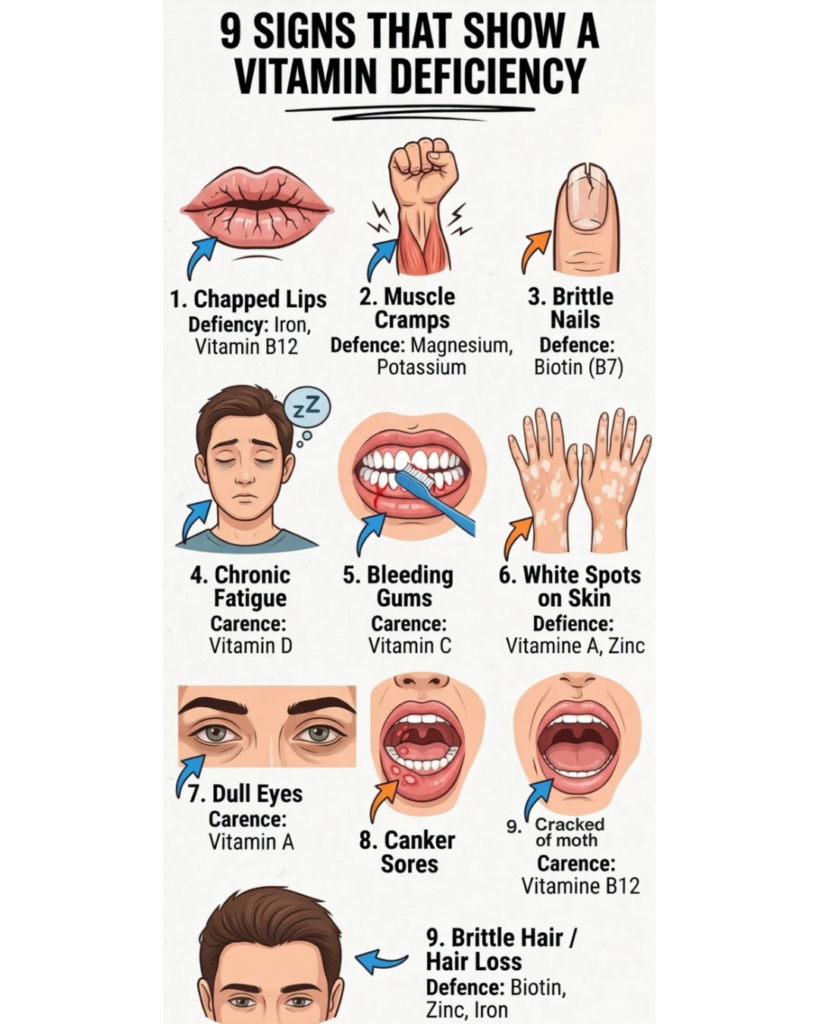
Which Physical Signs May Indicate Vitamin Deficiency?
The body often produces early signals when nutrient levels become insufficient. These symptoms can vary depending on which vitamin is lacking.
Fatigue and Low Energy
Persistent fatigue may be associated with deficiencies in B vitamins, particularly B12 and folate, which are involved in energy metabolism and red blood cell production.
Dry Skin and Hair Changes
Deficiencies in vitamins such as vitamin A, vitamin E, or certain B vitamins may contribute to skin dryness or changes in hair texture.
Frequent Illness
Vitamins such as vitamin C, vitamin D, and vitamin A play important roles in immune system regulation. Low levels may affect the body’s ability to respond to infections.
Muscle Weakness
Muscle weakness or discomfort may be associated with low levels of vitamin D, which supports muscle function and calcium balance.
Mouth or Tongue Changes
Cracks at the corners of the mouth or changes in tongue texture can sometimes be linked to deficiencies in certain B vitamins, including riboflavin or B12.
These symptoms can also occur for many other reasons, so proper medical evaluation is essential for accurate diagnosis.
What Biological Mechanisms Cause These Symptoms?
Vitamin deficiencies affect the body at the cellular level. Many vitamins serve as coenzymes that enable enzymes to catalyze biochemical reactions.
For example:
- B vitamins assist in converting food into usable energy.
- Vitamin D helps regulate calcium metabolism and bone structure.
- Vitamin C participates in collagen synthesis and antioxidant protection.
When these nutrients are insufficient, the metabolic pathways that rely on them may slow down or function less efficiently. This disruption can manifest as fatigue, tissue changes, immune dysfunction, or neurological symptoms.
Which Populations Are More Vulnerable to Vitamin Deficiencies?
Certain groups may be at higher risk of nutrient deficiencies due to physiological or lifestyle factors.
Examples include:
- Older adults with reduced nutrient absorption
- Individuals following restrictive diets
- People with digestive disorders
- Those experiencing prolonged stress or illness
- Individuals with limited access to diverse foods
Identifying these risk factors can help guide preventive nutritional strategies.
How Can Balanced Nutrition Help Prevent Deficiencies?
A varied diet remains one of the most effective ways to maintain adequate vitamin intake.
Key dietary strategies include:
Eating diverse whole foods
Fruits, vegetables, legumes, nuts, seeds, whole grains, and lean proteins provide a wide range of micronutrients.
Including healthy fats
Fat-soluble vitamins require dietary fats for proper absorption.
Limiting highly processed foods
Processed foods may contain fewer essential micronutrients compared with whole foods.
Maintaining hydration and digestive health
Healthy digestion supports proper nutrient absorption.
When Should Someone Seek Medical Advice?
While occasional fatigue or skin changes may not necessarily indicate a deficiency, persistent symptoms should be evaluated by a healthcare professional.
Medical evaluation may include:
- Blood tests to measure vitamin levels
- Nutritional assessment
- Review of diet and lifestyle factors
Proper diagnosis helps ensure that any deficiencies are addressed safely and effectively.
Conclusion
Vitamins play a critical role in maintaining cellular function, energy metabolism, immune defense, and tissue health. When the body lacks essential nutrients, subtle symptoms may emerge that signal underlying imbalances.
Listening to these signals and maintaining balanced nutrition can support long-term health. Scientific understanding of vitamin metabolism continues to evolve, emphasizing the importance of nutrient diversity and preventive healthcare.
Disclaimer
This article is intended for educational purposes and does not replace professional medical advice. Individuals experiencing persistent symptoms should consult a qualified healthcare professional for evaluation and guidance.