
Human emotions are influenced by a complex interaction between the brain, nervous system, hormones, and life experiences. Among the many chemical messengers that influence mood, four are often referred to as “happiness hormones” or mood-related neurotransmitters: dopamine, serotonin, oxytocin, and endorphins.
These molecules play different roles in motivation, emotional balance, bonding, and stress response. Understanding how they work can help explain why certain behaviors—like exercise, social connection, and healthy sleep—often lead to improved mood.
This article explores what happiness hormones are, how they work in the body, and practical lifestyle habits that may support their natural balance.
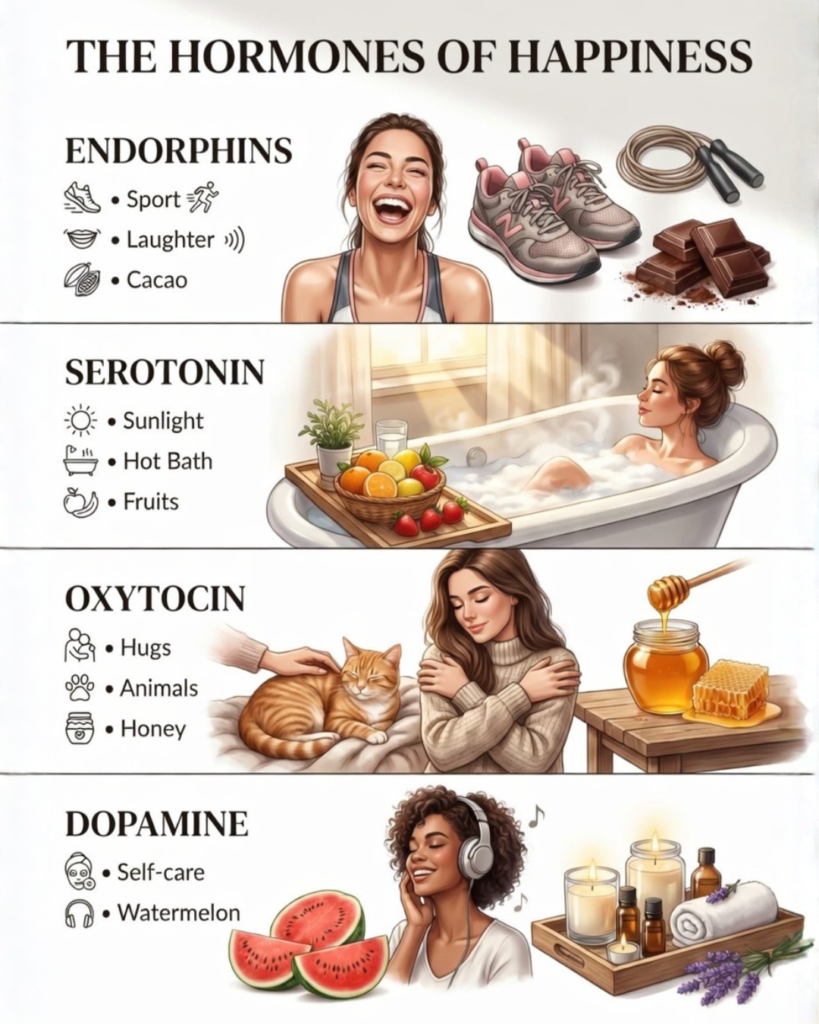
What Are Happiness Hormones?
The term “happiness hormones” is a popular way to describe chemical messengers in the body that contribute to positive emotional states.
Most of these molecules are actually neurotransmitters, which means they help transmit signals between nerve cells in the brain.
The four most commonly discussed mood-related chemicals are:
- Dopamine – associated with motivation and reward
- Serotonin – involved in mood stability and emotional balance
- Oxytocin – related to bonding and trust
- Endorphins – linked to pain relief and feelings of well-being
Each of these molecules influences emotional experience in a different way.
How Does Dopamine Influence Motivation and Reward?
Dopamine plays a key role in the brain’s reward system. It helps reinforce behaviors that are perceived as beneficial or enjoyable.
When a person achieves a goal or experiences something rewarding, dopamine pathways in the brain become active. This activity can create feelings of satisfaction and motivation.
Dopamine is commonly associated with:
- Goal achievement
- Learning and reinforcement
- Motivation
- Focus and attention
Healthy dopamine activity often depends on balanced habits such as regular sleep, structured routines, and meaningful activities.
How Does Serotonin Support Emotional Balance?
Serotonin is involved in regulating mood, sleep, appetite, and certain cognitive functions. It contributes to feelings of calm, stability, and emotional well-being.
Serotonin is produced from the amino acid tryptophan, which is found in many foods.
Factors that may influence serotonin levels include:
- Sunlight exposure
- Physical activity
- Sleep quality
- Nutritional balance
Because serotonin affects several body systems, it plays an important role in overall emotional regulation.
Why Oxytocin Is Known as the Bonding Hormone
Oxytocin is sometimes referred to as the “bonding hormone” or “social hormone.”
It is released during social interactions that involve trust, connection, or emotional closeness.
Examples of situations linked to oxytocin release include:
- Hugging or physical affection
- Positive social interaction
- Caring for others
- Parent–child bonding
Oxytocin is associated with feelings of trust, empathy, and social connection.
What Role Do Endorphins Play in Mood and Pain Relief?
Endorphins are chemicals produced by the nervous system that can help reduce the perception of pain and promote feelings of well-being.
They are often released during activities such as:
- Exercise
- Laughter
- Physical activity
- Certain forms of stress response
Endorphins interact with receptors in the brain that influence how pain signals are perceived.
The release of endorphins can sometimes produce a sense of temporary mood elevation, often referred to as a “runner’s high.”
Which Daily Habits Can Support Healthy Mood Chemistry?
Several everyday behaviors are associated with the natural regulation of mood-related neurotransmitters.
Regular Physical Activity
Exercise has been linked to increased endorphin activity and may support overall mood regulation.
Consistent Sleep
Healthy sleep patterns are essential for proper neurotransmitter function.
Social Connection
Positive social interaction may stimulate oxytocin pathways and support emotional well-being.
Balanced Nutrition
Foods containing protein, vitamins, and minerals contribute to the body’s ability to produce neurotransmitters.
Sunlight Exposure
Natural light exposure helps regulate circadian rhythms and may influence serotonin pathways.
How Lifestyle, Stress, and Environment Affect Mood Chemicals
Mood-related neurotransmitters do not work in isolation. Their activity is influenced by a variety of factors including:
- Stress levels
- Physical health
- Sleep patterns
- Social environment
- Hormonal balance
Chronic stress, for example, can influence several biological systems that affect emotional regulation.
Because of this complexity, maintaining overall well-being often requires a combination of healthy habits rather than a single solution.
Can You Naturally Support Happiness Hormones?
While it is not possible to control neurotransmitters directly through simple tricks, many healthy lifestyle practices are associated with balanced brain chemistry.
Examples include:
- Regular physical movement
- Time outdoors
- Strong social relationships
- Mindfulness or relaxation practices
- Consistent daily routines
These behaviors help support the biological systems that influence mood.
Conclusion
The concept of “happiness hormones” highlights the important role that brain chemistry plays in emotional experience. Dopamine, serotonin, oxytocin, and endorphins each contribute to different aspects of mood, motivation, bonding, and well-being.
Rather than acting alone, these neurotransmitters function as part of a complex network influenced by lifestyle, environment, and physical health. Supporting this system through balanced habits—such as exercise, sleep, social connection, and nutrition—can help promote overall emotional resilience and well-being.
Understanding how these chemicals work provides a clearer picture of the biological foundations of mood and happiness.