
Bedding plays a major role in sleep quality and personal hygiene, yet many people underestimate how quickly sheets and pillowcases can accumulate sweat, skin oils, dust, and microscopic particles. While a freshly made bed feels comfortable and inviting, bedding that goes too long without washing can collect substances that affect cleanliness and sleep comfort.
Understanding how often to wash bedding helps maintain a healthier sleeping environment and reduces the buildup of allergens and bacteria. The ideal schedule depends on several factors, including personal habits, climate, and whether pets share the bed.
This guide explains how frequently different bedding items should be washed, why regular washing matters, and practical tips for maintaining clean bedding.
Why Is It Important to Wash Bedding Regularly?
Every night, the human body releases substances that gradually accumulate in bedding materials.
These can include:
- Sweat
- Skin cells
- Natural body oils
- Dust particles
- Environmental allergens
Over time, this buildup can affect the freshness of bedding and may contribute to unpleasant odors or discomfort. Washing bedding regularly helps remove these particles and keeps the sleep environment cleaner.
How Often Should Bed Sheets Be Washed?
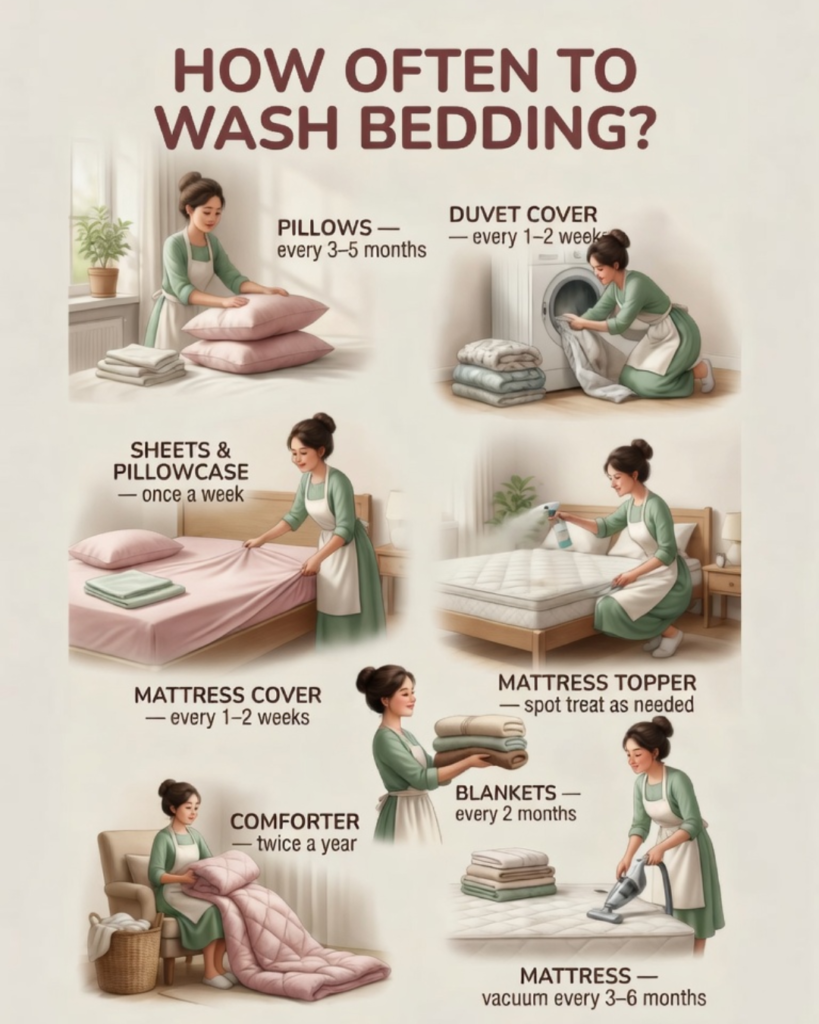
Most hygiene experts recommend washing bed sheets once every 1 to 2 weeks.
However, some situations may require more frequent washing.
You may want to wash sheets once a week if:
- You sweat heavily at night
- You sleep with pets
- You have allergies
- You eat or drink in bed
- The weather is hot or humid
Frequent washing helps remove accumulated sweat, oils, and allergens that can build up on fabric.
How Often Should Pillowcases Be Washed?
Pillowcases tend to collect more oils and skin particles because they remain in direct contact with the face and hair.
For this reason, many people choose to wash pillowcases every 3 to 4 days.
Regular washing can help remove oils, sweat, and hair products that transfer to the fabric during sleep.
How Often Should Blankets and Duvet Covers Be Cleaned?
Duvet Covers
Duvet covers should generally be washed every 1 to 2 weeks, similar to sheets.
Blankets
Blankets that sit on top of the bed can usually be washed every 2 to 4 weeks, depending on use.
If the blanket touches skin directly, more frequent washing may be helpful.
How Often Should Pillows and Mattress Protectors Be Washed?
Certain bedding items require less frequent cleaning but still benefit from occasional washing.
Pillows
Most pillows can be washed every 3 to 6 months, depending on the material.
Always check the care label before washing.
Mattress Protectors
Mattress protectors should typically be washed every 1 to 2 months or sooner if spills occur.
They help protect the mattress from moisture and dust.
Which Factors Affect Bedding Washing Frequency?
The ideal washing schedule may vary depending on personal lifestyle and environmental factors.
Climate
Hot or humid climates can increase sweating during sleep, which may require more frequent washing.
Pets
Pets that sleep in the bed can bring fur, dander, and dirt into bedding.
Allergies
People with dust allergies may benefit from washing bedding more frequently to reduce allergen buildup.
Nighttime Skincare Products
Lotions, oils, and hair products can transfer to pillowcases and sheets during sleep.
Tips for Keeping Bedding Cleaner Longer
Maintaining clean bedding can be easier with a few simple habits.
Shower Before Bed
Showering before sleep removes sweat, dirt, and oils that would otherwise transfer to sheets.
Avoid Eating in Bed
Food crumbs can attract insects and create stains on bedding.
Use Mattress and Pillow Protectors
Protective covers act as barriers that help keep bedding fresher.
Air Out Bedding
Allowing bedding to breathe during the day can reduce moisture buildup.
What Temperature Should Bedding Be Washed At?
Washing temperature depends on fabric type, but warm or hot water is often recommended for removing sweat and oils effectively.
General guidelines include:
- Warm water for most sheets and pillowcases
- Hot water when extra sanitation is needed
- Cold water for delicate fabrics
Always follow the care instructions on bedding labels.
Conclusion
Washing bedding regularly is an important part of maintaining a clean and comfortable sleep environment. Sheets and duvet covers typically benefit from washing every one to two weeks, while pillowcases may require more frequent cleaning due to contact with the face and hair.
Other items, such as blankets, pillows, and mattress protectors, can be cleaned less often but should still be washed periodically to remove accumulated dust and oils.
By establishing a simple washing routine and following proper care instructions, it becomes easier to maintain fresh bedding and support a healthier sleep environment.