
Hand numbness is a common sensation many people experience at some point. It may appear as tingling, “pins and needles,” reduced sensation, or temporary weakness in the fingers or hands. While numbness can occur from simple causes such as sleeping in an awkward position or pressure on a nerve, frequent or persistent numbness can sometimes be related to underlying factors.
One area that is often overlooked is nutrition and its role in nerve health. The nervous system depends on several essential vitamins and minerals to function properly. When the body lacks certain nutrients, nerve signaling can sometimes be affected, which may contribute to sensations like tingling or numbness.
Although diet is only one piece of the puzzle, understanding which nutrients support nerve function can help people maintain overall neurological health. This article explores foods that contain key nutrients associated with healthy nerves and circulation.
What Causes Hand Numbness?
Hand numbness can have many possible causes. Some are temporary and harmless, while others may require medical evaluation.
Common causes include:
- Pressure on nerves during sleep or prolonged posture
- Repetitive movements such as typing
- Circulation issues
- Vitamin deficiencies
- Nerve compression conditions
- Metabolic disorders
Because many factors can contribute to numbness, persistent symptoms should always be discussed with a healthcare professional.
Why Nutrition Matters for Nerve Function
Nerves rely on specific nutrients to maintain their structure and transmit electrical signals effectively.
Several vitamins and minerals help support:
- Nerve insulation (myelin sheath)
- Proper nerve signaling
- Healthy blood circulation
- Muscle and nerve coordination
A balanced diet provides the nutrients needed for these processes.
Vitamin B12-Rich Foods for Nerve Support
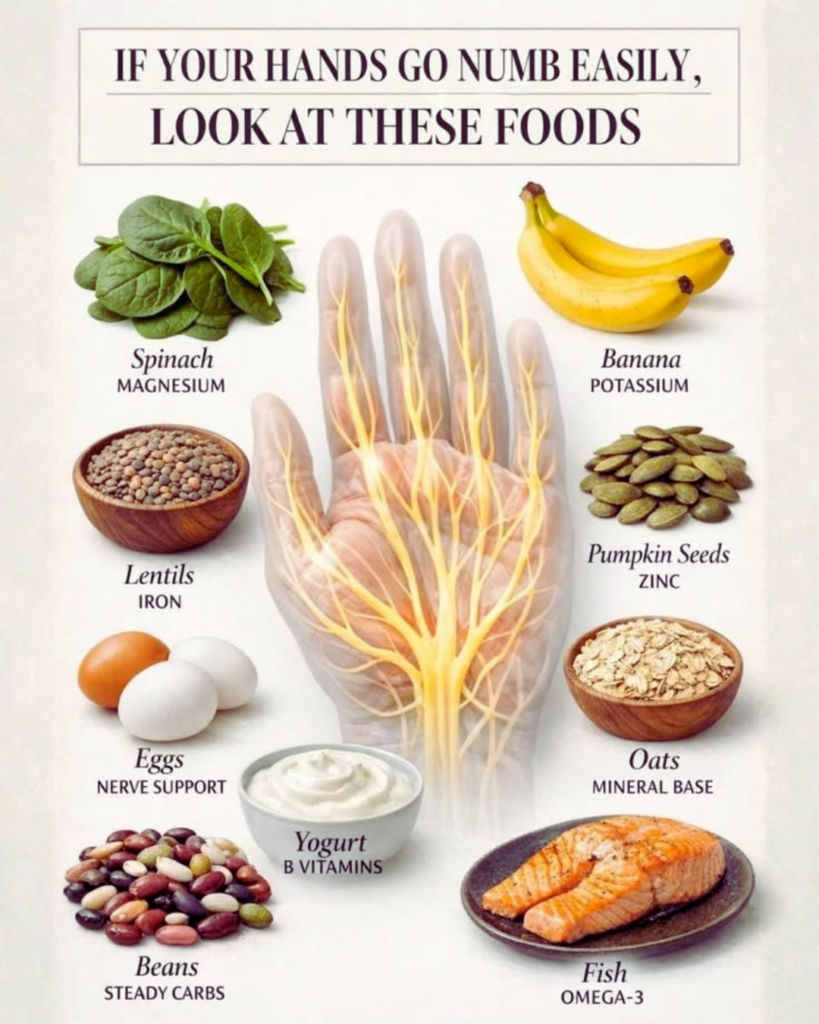
Vitamin B12 is one of the most important nutrients for nerve health. It helps maintain the protective covering around nerves and supports red blood cell formation.
Low levels of vitamin B12 may be associated with neurological symptoms such as tingling or numbness.
Foods that contain vitamin B12 include:
- Eggs
- Fish such as salmon and tuna
- Dairy products like milk and yogurt
- Meat and poultry
- Fortified cereals
People following plant-based diets may need fortified foods or supplements to meet B12 needs.
Magnesium-Rich Foods and Muscle–Nerve Function
Magnesium plays a role in nerve transmission and muscle relaxation. It helps regulate electrical signals in the nervous system.
Low magnesium levels can sometimes contribute to muscle cramps, tingling sensations, or nerve sensitivity.
Foods rich in magnesium include:
- Spinach and leafy greens
- Almonds and cashews
- Pumpkin seeds
- Whole grains
- Dark chocolate
These foods can support several metabolic processes related to nerve and muscle function.
Potassium and Circulation
Potassium helps regulate fluid balance, nerve signals, and muscle contractions.
Adequate potassium intake supports normal nerve communication between the brain and muscles.
Foods high in potassium include:
- Bananas
- Avocados
- Sweet potatoes
- Beans and lentils
- Yogurt
Balanced potassium intake is part of maintaining healthy nerve and muscle activity.
Omega-3 Fatty Acids and Nerve Health
Omega-3 fatty acids are healthy fats involved in supporting cell membranes throughout the body, including nerve cells.
They may contribute to maintaining the structural integrity of nerve tissue.
Foods rich in omega-3 fatty acids include:
- Fatty fish such as salmon and sardines
- Walnuts
- Chia seeds
- Flaxseeds
Regular consumption of these foods supports overall cardiovascular and neurological health.
Iron and Oxygen Delivery
Iron helps transport oxygen through the bloodstream. Adequate oxygen delivery is essential for tissues throughout the body, including nerves.
Low iron levels may sometimes lead to fatigue or weakness that affects normal body function.
Iron-rich foods include:
- Lean red meat
- Spinach
- Lentils
- Chickpeas
- Pumpkin seeds
Pairing iron-rich foods with vitamin C sources can improve absorption.
Other Lifestyle Factors That Affect Nerve Sensations
While nutrition plays a role, several lifestyle habits also influence nerve health.
Posture and Ergonomics
Poor posture or repetitive hand movements can compress nerves in the wrist or arm.
Hydration
Adequate hydration helps maintain normal circulation and metabolic function.
Physical Activity
Regular movement improves circulation and helps prevent prolonged nerve compression.
Sleep Position
Sleeping with pressure on the arms or wrists can temporarily reduce nerve signaling.
When Should Hand Numbness Be Evaluated?
Occasional numbness is common and often harmless. However, medical advice should be sought if numbness:
- Occurs frequently
- Lasts a long time
- Is accompanied by weakness or severe pain
- Appears suddenly without clear cause
A healthcare professional can evaluate symptoms and determine whether testing or treatment is needed.
Conclusion
Hand numbness can occur for many reasons, including temporary nerve pressure, circulation changes, or nutritional factors. Certain nutrients—such as vitamin B12, magnesium, potassium, omega-3 fatty acids, and iron—play important roles in supporting nerve health and proper signaling in the body.
Including a variety of nutrient-rich foods in the diet helps support the nervous system and overall health. However, persistent numbness should always be evaluated by a qualified healthcare professional to identify the underlying cause and ensure appropriate care.