
Many people experience periods where motivation feels low, routines fall apart, and simple tasks seem harder than usual. This phase is sometimes casually referred to as a “lazy era,” but in reality it often reflects fatigue, lack of structure, overwhelm, or burnout rather than true laziness.
Breaking out of this cycle usually doesn’t require extreme changes. Instead, it often comes down to small habits that rebuild momentum, restore energy, and create a sense of progress.
This article explores practical habits that can help people move from low-motivation phases toward more consistent and productive routines.
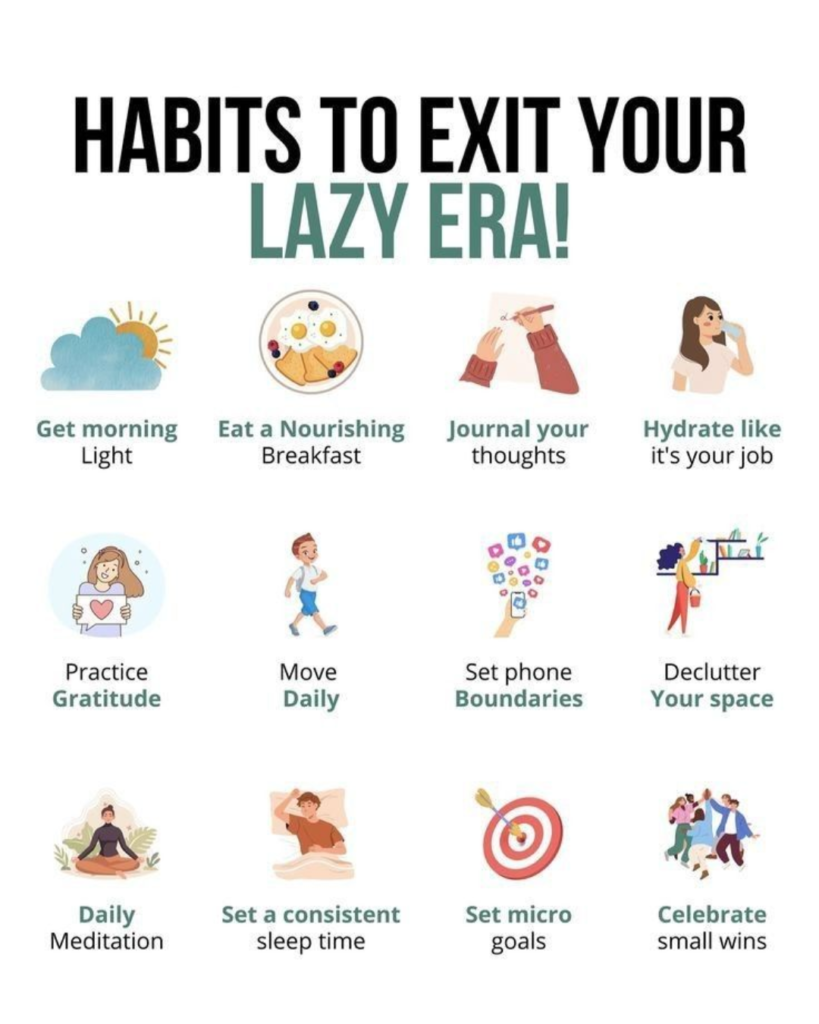
Start With Small Daily Wins
One of the most effective ways to rebuild motivation is to begin with very small tasks. When tasks feel too large, the brain tends to avoid them.
Examples of small wins include:
- Making the bed
- Drinking a glass of water after waking up
- Cleaning one small area
- Writing a short to-do list
Completing small actions creates a sense of accomplishment, which can make it easier to tackle larger tasks later.
Create a Simple Morning Routine
Morning routines help set the tone for the rest of the day. A structured start can reduce decision fatigue and improve focus.
A basic morning routine might include:
- Waking up at a consistent time
- Hydrating
- Light stretching or movement
- Planning the day’s priorities
The goal is not to build a complicated routine, but to establish predictable habits that support momentum.
Limit Distractions That Drain Time
Digital distractions often contribute to low productivity. Endless scrolling, notifications, and constant switching between apps can disrupt concentration.
Helpful strategies include:
- Turning off non-essential notifications
- Setting specific times for social media
- Keeping the phone out of reach during focused tasks
Reducing distractions allows the brain to stay engaged with important activities for longer periods.
Use the “Two-Minute Rule”
A simple productivity technique is the two-minute rule: if a task takes less than two minutes, do it immediately.
Examples include:
- Responding to a quick message
- Putting dishes away
- Filing a document
- Throwing away trash
These quick actions prevent small tasks from piling up into overwhelming lists.
Move Your Body Daily
Physical activity can influence energy levels, mood, and mental clarity.
Movement does not have to be intense or time-consuming. Even small activities can help, such as:
- Walking for 10–15 minutes
- Stretching
- Jump rope or light exercise
- Doing household chores
Regular movement may help improve energy and reduce feelings of sluggishness.
Set Clear, Achievable Goals
Vague goals can make it harder to take action. Clear goals provide direction and motivation.
Instead of saying:
“I want to be more productive.”
Try something specific, like:
- “I will complete three tasks before lunch.”
- “I will exercise for 15 minutes today.”
- “I will read for 20 minutes before bed.”
Breaking goals into smaller steps makes progress easier to measure.
Improve Your Sleep Routine
Low energy often comes from inconsistent or insufficient sleep.
Healthy sleep habits include:
- Going to bed at a consistent time
- Reducing screen exposure before sleep
- Keeping the bedroom dark and quiet
- Avoiding caffeine late in the day
Better sleep can significantly improve daily energy and focus.
Keep Your Environment Organized
Physical environments often influence mental clarity. Cluttered spaces can feel overwhelming and distracting.
Simple habits that help include:
- Cleaning your workspace daily
- Putting items back after using them
- Doing quick 5-minute tidying sessions
A tidy environment can make it easier to concentrate and stay motivated.
Track Progress, Not Perfection
Many people lose motivation because they expect perfect results. Instead, focusing on consistent progress tends to be more sustainable.
Tracking habits—such as exercise, reading, or daily tasks—can help visualize improvement over time.
Small improvements each day can lead to meaningful long-term changes.
Conclusion
Periods of low motivation happen to many people, and they often reflect fatigue or lack of structure rather than true laziness. Rebuilding momentum usually starts with simple, manageable habits that create a sense of progress.
By focusing on small daily wins, limiting distractions, moving the body, improving sleep, and setting clear goals, individuals can gradually transition out of low-energy phases and build more productive routines.
The key is consistency. Even small positive actions repeated daily can help restore motivation and create lasting habits.