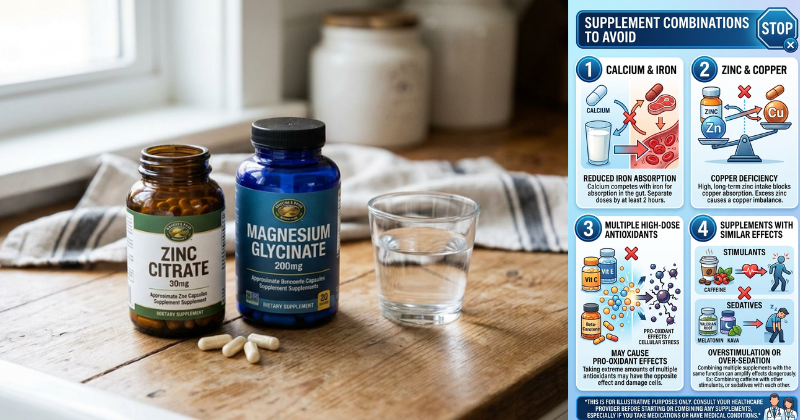
Dietary supplements can help support nutritional needs when used appropriately. Vitamins, minerals, and herbal products are commonly taken to support general health, energy levels, immune function, or specific nutrient deficiencies.
However, many people assume that because supplements are available over the counter, they can be taken together without concern. In reality, some supplements can interact with each other, potentially reducing effectiveness or affecting how the body absorbs certain nutrients.
Understanding which supplements should not be taken at the same time can help ensure better absorption and avoid unnecessary complications. This article explores several common supplement combinations that are usually recommended to be taken separately.
Calcium and Iron
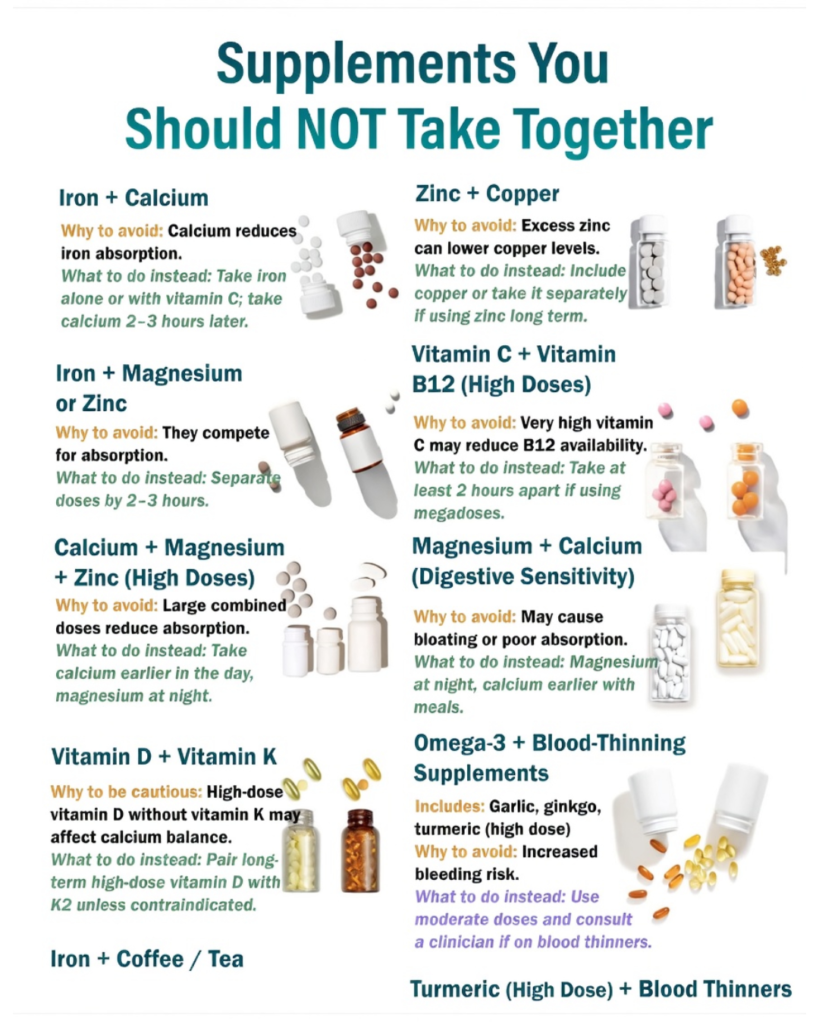
Calcium and iron are both essential minerals, but they compete for absorption in the digestive tract.
When taken together, calcium may reduce the body’s ability to absorb iron efficiently.
Why This Matters
Iron is important for producing hemoglobin, which helps transport oxygen in the blood. Reduced iron absorption over time may affect iron levels.
Better Approach
Many health professionals suggest:
- Taking iron supplements on an empty stomach, if tolerated
- Taking calcium supplements at a different time of day
Spacing them out by a few hours may help improve absorption.
Magnesium and Calcium (High Doses)
Magnesium and calcium both play important roles in muscle function, nerve signaling, and bone health. However, when taken in large supplemental doses together, they may compete for absorption.
Why This Happens
Both minerals rely on similar transport pathways in the intestine.
Better Approach
Some people prefer taking:
- Calcium earlier in the day
- Magnesium in the evening
Magnesium is sometimes taken at night because it may support relaxation.
Zinc and Copper
Zinc and copper are trace minerals that share similar absorption pathways.
Taking high doses of zinc for long periods may reduce copper absorption.
Why It Matters
Copper supports several processes including:
- Iron metabolism
- Nervous system function
- Formation of red blood cells
Better Approach
Some supplements already include a balanced ratio of zinc and copper to maintain proper levels.
Iron and Zinc
Iron and zinc may compete for absorption when taken together in larger doses.
Possible Effects
Taking both minerals at the same time may reduce how well the body absorbs them.
Better Approach
If both supplements are needed, spacing them several hours apart may improve absorption.
Vitamin C and Vitamin B12 (High Doses)
Vitamin C is widely used as an antioxidant supplement. However, some research suggests that very high doses of vitamin C taken simultaneously with vitamin B12 may affect B12 stability.
Better Approach
To avoid potential interaction:
- Take vitamin B12 and vitamin C at different times of the day
Normal dietary intake of vitamin C does not usually cause this issue.
Calcium and Magnesium With Certain Medications
Although calcium and magnesium supplements are common, they may interact with certain medications.
For example, these minerals may affect how some medications are absorbed in the digestive tract.
Important Note
People taking prescription medications should consult a healthcare professional before adding mineral supplements.
Fat-Soluble Vitamins in Excess
Vitamins A, D, E, and K are fat-soluble vitamins. Unlike water-soluble vitamins, they are stored in body tissues.
Taking large doses of multiple fat-soluble vitamins simultaneously may increase the risk of excessive intake.
Better Approach
Follow recommended dosages and avoid combining multiple high-dose supplements without professional guidance.
Why Timing Supplements Can Matter
Taking supplements at different times of the day can sometimes improve nutrient absorption and effectiveness.
Common strategies include:
- Taking iron in the morning
- Taking magnesium in the evening
- Taking fat-soluble vitamins with meals that contain fat
Spacing supplements appropriately helps the body absorb them more efficiently.
Tips for Safe Supplement Use
Avoid Unnecessary Combinations
Taking too many supplements at once can increase the risk of interactions.
Follow Recommended Dosages
More is not always better. Excessive intake of certain nutrients may cause imbalances.
Keep a Supplement List
Tracking supplements helps prevent accidental duplication of ingredients.
Consult a Healthcare Professional
Individuals with health conditions, nutrient deficiencies, or those taking medications should seek professional advice before combining supplements.
Conclusion
While supplements can support nutritional needs, some combinations may interfere with nutrient absorption or balance. Minerals such as calcium, iron, zinc, and copper often compete for absorption when taken together in high doses.
Spacing certain supplements throughout the day and following recommended dosages can help support proper nutrient utilization. Understanding these interactions allows individuals to make more informed decisions about their supplement routines.
As with any health-related choice, personalized guidance from healthcare professionals remains the best approach when building a supplement plan.