Introduction
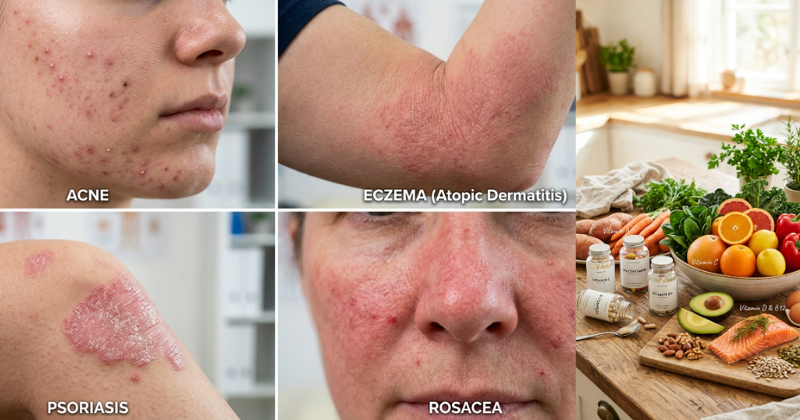
Breakouts, dullness, dryness, or sensitive skin… most people try to fix these issues with skincare products alone.
But here’s what many don’t realize:
Your skin reflects what’s happening inside your body.
From acne to dark circles, many common skin problems are linked to nutrient deficiencies or poor diet choices. While creams and serums help on the surface, real, long-term improvement often starts with what you eat.
In this article, you’ll learn:
- The most common skin problems and their internal causes
- Key vitamins your skin needs
- The best foods to support clear, healthy skin
- Simple ways to improve your skin from the inside out
Why Nutrition Matters for Your Skin
Your skin is your body’s largest organ, and it constantly renews itself.
To do that properly, it needs:
- Vitamins
- Minerals
- Healthy fats
- Antioxidants
When your body lacks these nutrients, your skin shows signs like:
- Dryness
- Acne
- Inflammation
- Uneven tone
Healthy skin isn’t just about what you apply—it’s about what you absorb.
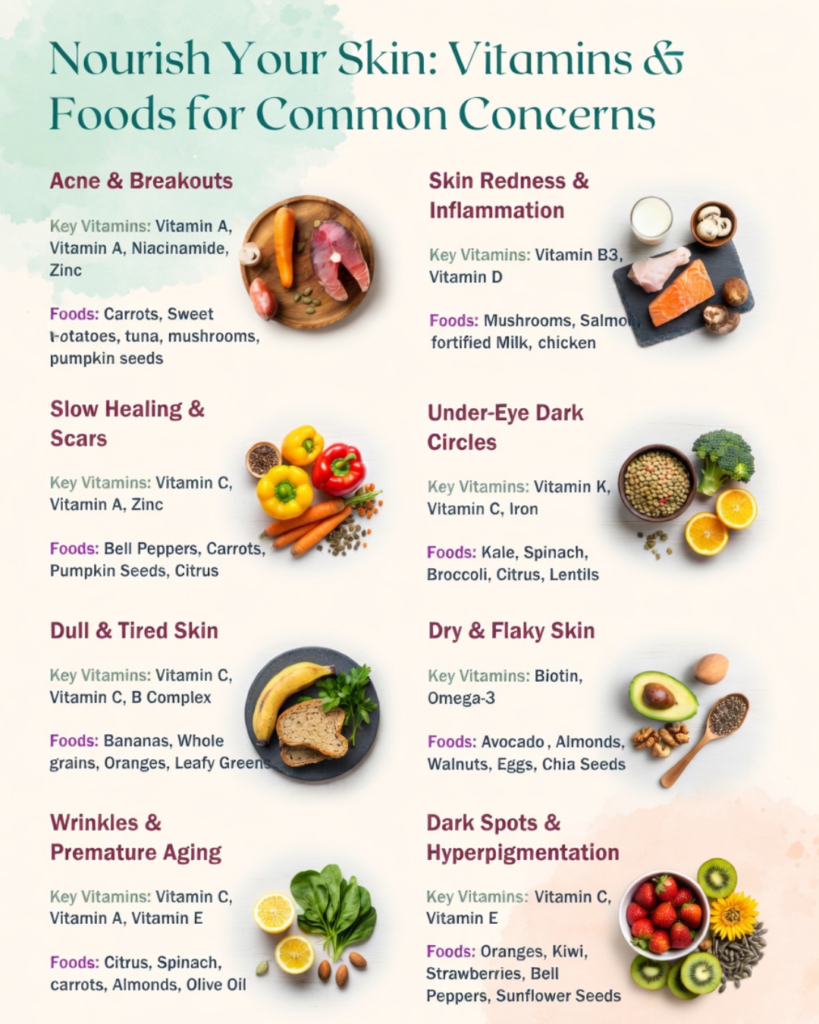
Acne & Breakouts → Zinc + Vitamin A
Why It Happens
Acne is often linked to:
- Excess oil production
- Inflammation
- Bacterial buildup
Key Nutrients
Zinc
- Helps reduce inflammation
- Supports healing
- Regulates oil production
Vitamin A
- Supports skin cell turnover
- Prevents clogged pores
Best Foods
- Pumpkin seeds
- Chickpeas
- Carrots
- Sweet potatoes
- Spinach
Dry & Dehydrated Skin → Vitamin E + Healthy Fats
Why It Happens
Dry skin can result from:
- Weak skin barrier
- Lack of hydration
- Low healthy fat intake
Key Nutrients
Vitamin E
- Protects skin from damage
- Helps retain moisture
Healthy Fats (Omega-3)
- Strengthen the skin barrier
- Reduce dryness and irritation
Best Foods
- Avocados
- Almonds
- Olive oil
- Fatty fish (sardines, salmon)
Dull Skin & Uneven Tone → Vitamin C
Why It Happens
Dull skin often comes from:
- Slow cell turnover
- Lack of antioxidants
- Environmental damage
Key Nutrient
Vitamin C
- Boosts collagen production
- Brightens skin
- Protects against oxidative stress
Best Foods
- Oranges
- Strawberries
- Bell peppers
- Kiwi
Dark Circles → Iron + Vitamin K
Why It Happens
Dark circles may be linked to:
- Poor circulation
- Fatigue
- Iron deficiency
Key Nutrients
Iron
- Helps oxygen flow in the blood
Vitamin K
- Supports circulation
- Reduces discoloration
Best Foods
- Spinach
- Lentils
- Red meat (in moderation)
- Broccoli
Sensitive & Irritated Skin → Vitamin B Complex
Why It Happens
Sensitive skin is often connected to:
- Inflammation
- Weak skin barrier
- Stress
Key Nutrients
Vitamin B2, B3, B5
- Support skin repair
- Strengthen the barrier
- Reduce redness
Best Foods
- Whole grains
- Eggs
- Bananas
- Yogurt
The Science Behind Skin Nutrition
Your skin cells constantly regenerate, and this process depends on nutrients.
Here’s how it works:
- Proteins → build skin structure
- Fats → maintain barrier function
- Vitamins → regulate repair and protection
Antioxidants also protect your skin from free radicals caused by:
- Pollution
- Sun exposure
- Stress
This is why a balanced diet is essential—not optional.
Simple Daily Eating Plan for Better Skin
You don’t need a complicated diet. Just aim for balance.
Morning
- Fruit (vitamin C) + yogurt or eggs
Lunch
- Protein + vegetables + healthy fats
Snack
- Nuts or seeds
Dinner
- Light protein + greens
Hydration
- Drink enough water throughout the day
Practical Tips for Healthier Skin
1. Eat Colorful Foods
Different colors = different nutrients.
2. Reduce Sugar Intake
Too much sugar can increase inflammation and breakouts.
3. Stay Consistent
Skin improvements take time (2–4 weeks).
4. Combine Diet + Skincare
Nutrition supports internal health, skincare protects externally.
Common Mistakes
1. Expecting Instant Results
Diet changes take time to show on your skin.
2. Ignoring Hydration
Water is essential for skin function.
3. Overusing Supplements
Whole foods are better absorbed.
4. Eating “Healthy” but Unbalanced Meals
You need variety—not just one type of food.
Conclusion
Your skin is a reflection of your internal health. While skincare products can help manage symptoms, real improvement often starts with nutrition.
By adding the right vitamins and foods to your daily routine, you can support your skin naturally—reducing breakouts, improving hydration, and achieving a healthier glow.
Healthy skin isn’t just applied—it’s built from within.