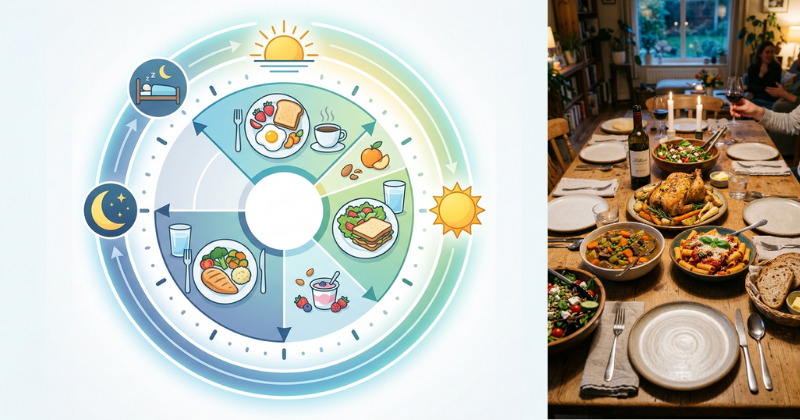
Introduction
You don’t need a perfect diet to feel better—you need a consistent one.
Many people focus only on what they eat, but when you eat also plays a big role in your energy, digestion, and even weight management.
Irregular eating patterns—like skipping meals, eating too late, or constantly snacking—can disrupt your body’s natural rhythm and lead to fatigue, cravings, and poor digestion.
The good news? You don’t need strict rules. Just smarter timing.
In this article, you’ll learn:
- Why meal timing matters
- The best times to eat during the day
- How timing affects metabolism and energy
- Simple habits to build a consistent routine
Why Meal Timing Matters
Your body follows an internal clock called the circadian rhythm.
This rhythm controls:
- Hunger signals
- Digestion efficiency
- Hormone release
- Energy levels
When you eat at consistent times, your body:
- Processes food more efficiently
- Regulates blood sugar better
- Reduces cravings
When you eat randomly:
- Energy crashes become more common
- Digestion may feel slower
- Hunger signals get confusing
Best Time to Eat Breakfast
Ideal Window:
Within 1–2 hours after waking up
Why It Matters:
- Replenishes energy after overnight fasting
- Helps stabilize blood sugar
- Improves focus and productivity
Simple Options:
- Eggs + whole grain bread
- Yogurt + fruit
- Oats + nuts
Skipping breakfast can lead to:
- Strong cravings later
- Overeating at lunch
Best Time to Eat Lunch
Ideal Window:
4–5 hours after breakfast
Why It Matters:
- Maintains steady energy
- Prevents afternoon fatigue
- Supports concentration
Balanced Plate:
- Protein (chicken, fish, legumes)
- Vegetables
- Whole grains
A well-timed lunch helps avoid the classic “afternoon crash.”
Best Time to Eat Dinner
Ideal Window:
2–3 hours before sleep
Why It Matters:
- Supports digestion
- Improves sleep quality
- Reduces fat storage risk
Eating too late can:
- Disrupt sleep
- Cause bloating
- Affect metabolism
What About Snacks?
Snacking isn’t bad—it depends on how and why you do it.
Smart Snacking:
- Between meals if you’re truly hungry
- Focus on protein + fiber
Examples:
- Fruit + nuts
- Yogurt
- Boiled eggs
Avoid:
- Constant grazing
- Eating out of boredom
The Science Behind Consistency
Your body releases hormones like:
- Insulin → regulates blood sugar
- Ghrelin → signals hunger
- Leptin → signals fullness
When you eat at regular times:
- Hormones stay balanced
- Hunger cues become more predictable
Irregular eating can confuse these signals, leading to:
- Overeating
- Cravings
- Energy dips
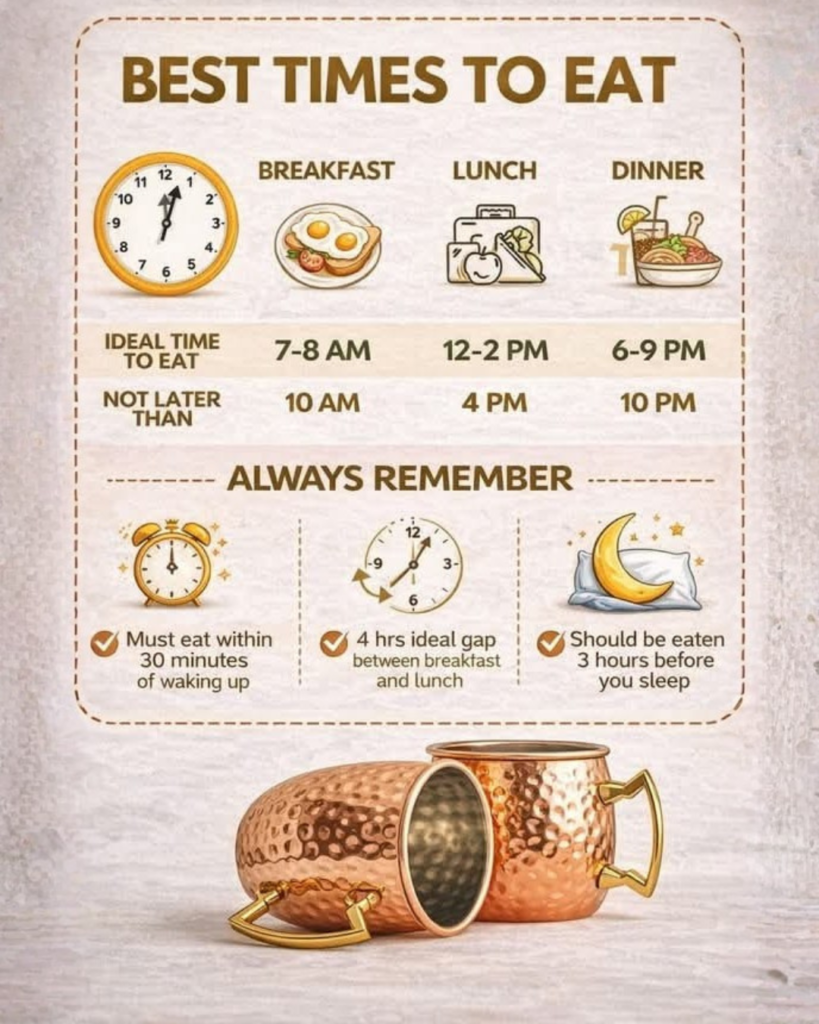
Simple Daily Eating Schedule
Here’s an easy structure you can follow:
- Breakfast: 7:00 – 9:00 AM
- Lunch: 12:00 – 2:00 PM
- Snack (optional): 4:00 – 5:00 PM
- Dinner: 7:00 – 9:00 PM
Adjust based on your routine—but keep it consistent.
Common Mistakes to Avoid
1. Skipping Meals
Leads to energy crashes and overeating later.
2. Eating Late at Night
Can disrupt digestion and sleep.
3. Irregular Timing
Confuses hunger and fullness signals.
4. Over-Snacking
Adds extra calories without real hunger.
Practical Tips for Better Timing
- Set regular meal times
- Don’t wait until you’re extremely hungry
- Eat slowly and mindfully
- Keep meals balanced (protein + fiber + healthy fats)
Consistency matters more than perfection.
Conclusion
You don’t need a perfect diet or strict schedule to feel better.
By simply eating at consistent times, you can:
- Improve your energy
- Support your digestion
- Reduce cravings
- Build healthier habits
Small changes in timing can make a big difference in how your body feels every day.
Start simple. Stay consistent.