Introduction
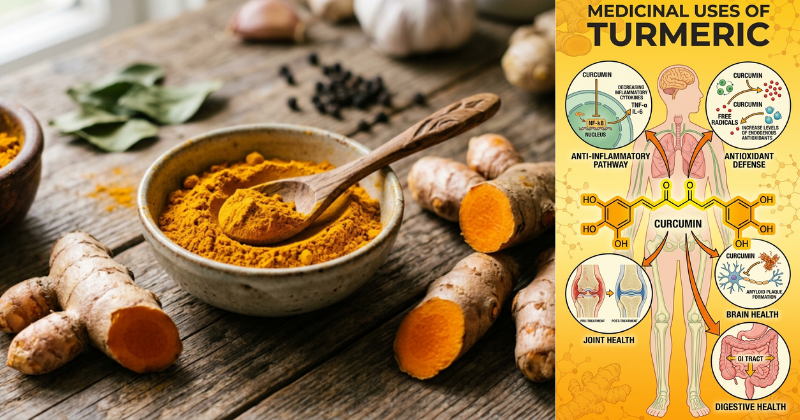
Turmeric, the bright yellow spice found in every kitchen, is much more than a flavoring agent. For centuries, it has been valued in Ayurveda and traditional medicine for its wide-ranging health benefits. Its main active compound, curcumin, has potent anti-inflammatory, antioxidant, and healing properties.
In this guide, you’ll learn:
- The science behind turmeric’s medicinal properties
- Common health benefits supported by research
- Practical ways to use turmeric in daily life
What Makes Turmeric Medicinal?
Turmeric contains curcumin, a natural compound with multiple bioactive effects:
- Anti-inflammatory: Reduces inflammation in the body
- Antioxidant: Protects cells from oxidative damage
- Antimicrobial: Helps fight bacteria and viruses
- Digestive aid: Supports gut health and liver function
Curcumin is most effective when paired with black pepper, which enhances absorption.
Top Medicinal Uses of Turmeric
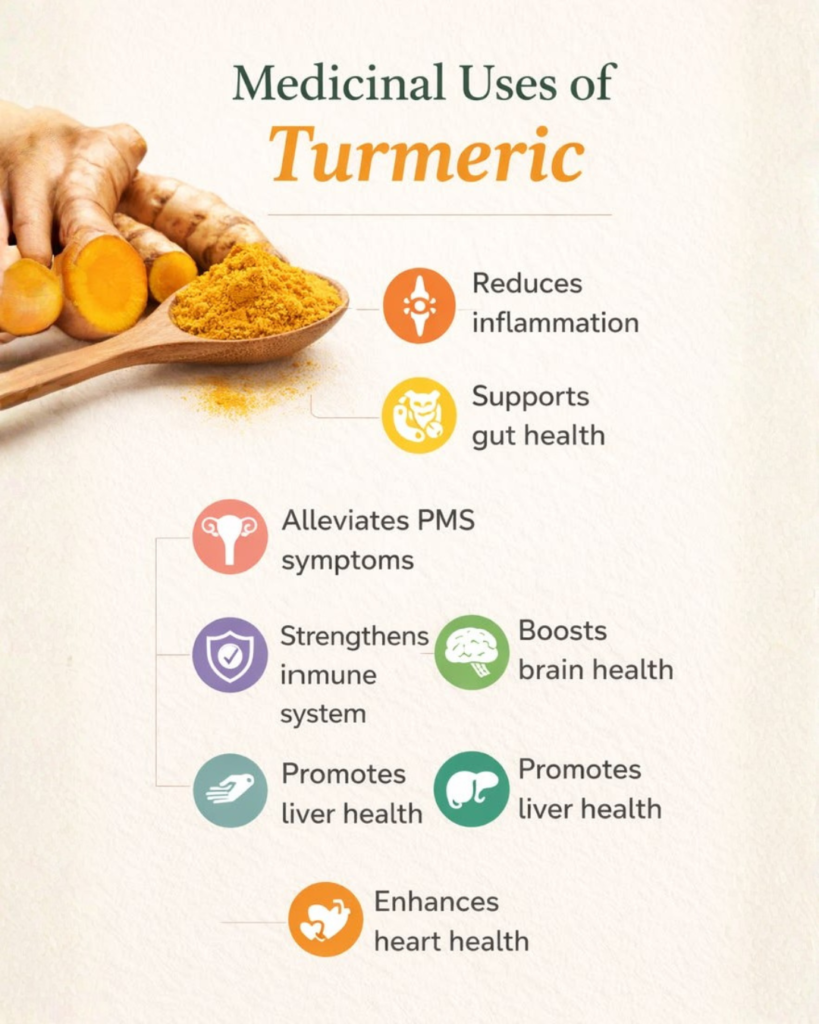
1. Reduces Inflammation
Chronic inflammation is linked to many diseases, including arthritis, heart disease, and digestive disorders.
How Turmeric Helps:
- Curcumin blocks inflammatory pathways in the body
- Can relieve joint pain and stiffness in conditions like osteoarthritis
Practical Tip:
- Turmeric milk (golden milk) or turmeric paste applied externally may help reduce localized inflammation
2. Supports Heart Health
Turmeric may improve cardiovascular health by:
- Reducing cholesterol levels
- Preventing plaque buildup in arteries
- Improving circulation
Tip:
- Add turmeric to curries, smoothies, or warm milk with a pinch of black pepper
3. Boosts Immune System
Turmeric has antimicrobial and antiviral properties that strengthen the body’s defenses.
Practical Use:
- Include in soups, teas, or warm drinks during cold and flu season
4. Enhances Digestive Health
Turmeric can help:
- Reduce bloating and gas
- Support liver function
- Improve overall digestion
Tip:
- Turmeric with warm water or ginger tea can soothe the digestive tract
5. Promotes Healthy Skin
Turmeric’s antibacterial and antioxidant properties help:
- Reduce acne
- Lighten scars and blemishes
- Improve skin radiance
DIY Face Mask Example:
- Mix turmeric, yogurt, and honey for a natural glow
6. Supports Brain Health
Research suggests curcumin may:
- Reduce the risk of cognitive decline
- Improve memory and attention
- Protect neurons from oxidative stress
Tip:
- Regular dietary turmeric combined with a balanced diet may contribute to long-term brain health
7. Helps Manage Blood Sugar
Turmeric may improve insulin sensitivity and help regulate blood sugar levels, making it useful for people with prediabetes or type 2 diabetes.
Tip:
- Include turmeric in meals regularly, but consult your doctor if taking diabetes medication
How to Use Turmeric Safely
- Golden Milk: Mix ½ teaspoon turmeric with warm milk and black pepper
- Cooking: Add to curries, soups, or scrambled eggs
- Supplements: Curcumin capsules can be taken under professional guidance
- Topical Use: Turmeric paste for minor skin issues or inflammation
Safety Note:
- Avoid excessive doses (over 1–2 grams/day) unless advised by a healthcare provider
- May interact with blood thinners or diabetes medication
Conclusion
Turmeric is a powerful natural remedy with a wide range of medicinal uses. Its anti-inflammatory, antioxidant, and antimicrobial properties make it a valuable addition to your diet and skincare routine. Regular use, combined with a balanced lifestyle, can support overall health, immunity, and vitality.