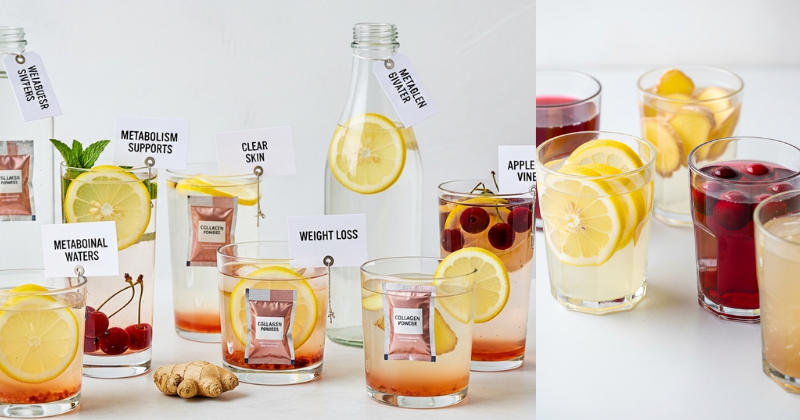
Plain water is a biological necessity — but the rapidly expanding category of functional waters challenges the assumption that hydration and therapeutic benefit are mutually exclusive. Functional waters are aqueous preparations enhanced through mineral addition, botanical infusion, fermentation, electrolysis, or structural modification to deliver physiological effects beyond simple fluid replacement. The global functional water market exceeded $18 billion in 2023 and continues expanding at approximately 8% annually — a growth trajectory reflecting genuine consumer demand for beverages that serve multiple biological purposes simultaneously. This guide examines 14 functional waters with the scientific scrutiny their health claims deserve, separating those with robust mechanistic and clinical evidence from those where marketing outpaces the research — so you can make genuinely informed choices about which belong in your daily hydration protocol.
What Makes a Functional Water Actually Functional?
Understanding the criteria that distinguish genuinely functional waters from flavored marketing exercises provides the evaluative framework for assessing each category honestly.
The Evidence Spectrum
A functional water earns its classification through demonstrable physiological effects — measurable changes in biomarkers, symptom scales, or objective health outcomes — attributable to its specific composition beyond plain water. The evidence quality for these effects exists on a spectrum: some functional waters have randomized controlled trial data supporting specific health claims; others have mechanistic plausibility and in vitro or animal study support without human clinical confirmation; a few rely primarily on theoretical frameworks or traditional use without modern experimental validation.
This distinction matters because the functional beverage market contains both genuinely evidence-supported preparations and products where label claims significantly outpace scientific support. Understanding which category each water occupies allows you to invest in those with the strongest evidence while maintaining appropriate skepticism about those where mechanisms are plausible but clinical confirmation remains pending. Throughout this guide, evidence quality is explicitly noted alongside each functional water’s claimed benefits.
Bioavailability and the Aqueous Advantage
Water-based delivery confers specific bioavailability advantages for certain bioactive compounds. Water-soluble compounds — electrolytes, certain polyphenols, organic acids, and many botanical constituents — distribute rapidly through the body when delivered in aqueous solution, with absorption dynamics that differ meaningfully from the same compounds consumed in solid food matrices. The aqueous vehicle accelerates gastric emptying of dissolved compounds, reduces the digestive processing required before absorption, and in some cases provides a delivery medium with pH characteristics that improve the stability of otherwise fragile bioactive molecules.
Functional Waters 1–5: Electrolyte and Mineral-Enhanced Preparations
1. Electrolyte Water
Electrolyte water represents the most clinically validated functional water category — its benefits are among the most rigorously documented in sports medicine and clinical rehydration science. Standard electrolyte water formulations contain sodium (the primary extracellular cation), potassium (the primary intracellular cation), magnesium (cofactor for ATP synthesis and muscle relaxation), and chloride (the primary extracellular anion) at concentrations approaching physiological plasma concentrations.
The mechanism of superior hydration compared to plain water involves osmolarity matching and active transport facilitation. The sodium-glucose cotransporter (SGLT1) in intestinal epithelial cells actively transports sodium ions across the mucosa, and water follows osmotically — at concentrations approximating 45-75mEq/L sodium, electrolyte solutions are absorbed 20-30% faster than plain water. For athletic performance, illness recovery, and hot climate activities, properly formulated electrolyte water with balanced sodium-potassium-magnesium ratios demonstrably outperforms plain water for hydration maintenance. Critical caveat: many commercial electrolyte waters contain inadequate sodium concentrations (below 200mg per 500ml) and excessive sugar to be functionally equivalent to clinically validated oral rehydration solutions.
2. Alkaline Water
Alkaline water (pH 8.0-9.5) represents one of the functional water market’s most commercially successful but scientifically contested categories. Proponents argue that higher pH neutralizes systemic acidity — a claim that mainstream physiology largely dismisses, since blood pH is tightly regulated between 7.35-7.45 by bicarbonate buffering and renal compensation regardless of ingested fluid pH. The body’s regulatory capacity for acid-base balance is substantial enough that drinking alkaline water doesn’t meaningfully shift systemic pH.
Where the evidence is more interesting involves the potential benefits of the higher mineral content (particularly calcium and magnesium bicarbonates) in naturally alkaline mineral waters. A randomized trial published in the British Journal of Nutrition documented that naturally alkaline mineral water reduced blood viscosity by 6.3% post-exercise compared to plain water — an effect potentially attributable to mineral content rather than pH per se. For the specific condition of acid reflux, a 2012 study demonstrated that water with pH 8.8 denatured pepsin — the primary proteolytic enzyme active in reflux-induced esophageal damage — suggesting a targeted application where alkaline pH may genuinely matter. Evidence rating: limited for general systemic claims; moderate for specific acid reflux application and post-exercise blood viscosity.
3. Hydrogen Water
Molecular hydrogen (H₂) dissolved in water at concentrations of 1-3 ppm represents one of the most scientifically intriguing functional water categories, with a growing body of peer-reviewed research that distinguishes it from many other claims in this space. Molecular hydrogen’s proposed mechanism involves selective neutralization of the hydroxyl radical (•OH) — the most reactive and damaging of the reactive oxygen species (ROS) produced during oxidative stress — while leaving beneficial ROS (like superoxide, which functions in immune signaling) intact. This selectivity distinguishes H₂ from blanket antioxidants like vitamin C that neutralize all radicals indiscriminately.
Research published in Nature Medicine by Ohsawa et al. (2007) documented that inhaled hydrogen gas protected against ischemia-reperfusion injury in rats — the foundational study that initiated the modern hydrogen biology field. Subsequent human clinical trials have documented measurable antioxidant and anti-inflammatory effects in specific populations including metabolic syndrome, type 2 diabetes, and radiation therapy patients. A meta-analysis of 21 human RCTs published in Frontiers in Physiology documented significant improvements in inflammatory biomarkers and oxidative stress markers with regular hydrogen water consumption. Evidence rating: emerging but genuinely promising, particularly for inflammatory and oxidative stress conditions.
4. Mineral Water With High Silica Content
Silica (silicon dioxide, typically as orthosilicic acid Si(OH)₄ in aqueous solution) at concentrations above 30mg/L has attracted research interest for its potential role in aluminum elimination and collagen synthesis support. High-silica waters include several European mineral waters (Volvic at 31mg/L, Fiji Water at 93mg/L, Spritzer at 35mg/L) whose silica content is naturally derived from geological formations.
The aluminum-clearance hypothesis gained traction through research by Christopher Exley at Keele University, who documented that drinking 1 liter of high-silica water daily for 12 weeks significantly reduced urinary aluminum-to-silicon ratios and produced cognitive improvements in Alzheimer’s patients in a small pilot trial. The proposed mechanism involves orthosilicic acid forming hydroxyaluminosilicate complexes that facilitate urinary aluminum excretion. For bone and connective tissue health, orthosilicic acid has documented activity in stimulating type 1 collagen synthesis in human osteoblasts in vitro. Evidence rating: mechanistically plausible with preliminary human data; larger RCTs needed for definitive conclusions.
5. Magnesium-Rich Water
Dedicated magnesium waters — containing 100-120mg of magnesium per liter in ionic form — offer superior bioavailability compared to most magnesium supplement forms due to the ionic mineral’s direct solubility. Magnesium’s role in over 300 enzymatic reactions, HPA axis regulation, NMDA receptor modulation, and ATP synthesis makes it one of the nutritionally highest-value minerals to deliver through a functional water format.
Research by Sabatier et al. published in the European Journal of Clinical Nutrition demonstrated significantly higher urinary magnesium excretion (reflecting superior absorption) from magnesium-rich mineral water compared to magnesium oxide tablets — the most common but least bioavailable supplement form. For populations with documented magnesium insufficiency (estimated at 50% of Western adults), consistently consuming magnesium-rich water throughout the day provides a steady, low-dose delivery that accumulates to meaningful daily intake without the gastrointestinal effects of high-dose supplement boluses. Evidence rating: strong for bioavailability advantage; solid for populations with magnesium insufficiency.
Functional Waters 6–10: Botanical and Fermentation-Based Preparations
6. Kombucha
Kombucha — fermented tea produced by a symbiotic culture of bacteria and yeast (SCOBY) — occupies the functional water category loosely, as it is technically a dilute fermented beverage rather than water itself. Its functional components include organic acids (acetic acid, gluconic acid, glucuronic acid), B vitamins, and a diverse array of bacterial and yeast metabolites with preliminary evidence for prebiotic effects on the gut microbiome.
The human clinical evidence for kombucha remains limited despite its centuries of traditional use — most supporting research involves in vitro studies or animal models rather than human RCTs. A notable 2023 randomized trial published in Cell Host & Microbe by researchers at Stanford documented that daily kombucha consumption over 4 weeks produced measurable reductions in blood glucose compared to a fiber-matched control beverage in adults at risk for type 2 diabetes — the first rigorous human trial supporting its glycemic benefit. Evidence rating: emerging human evidence for glycemic benefits; microbiome effects plausible but not yet confirmed in robust human trials.
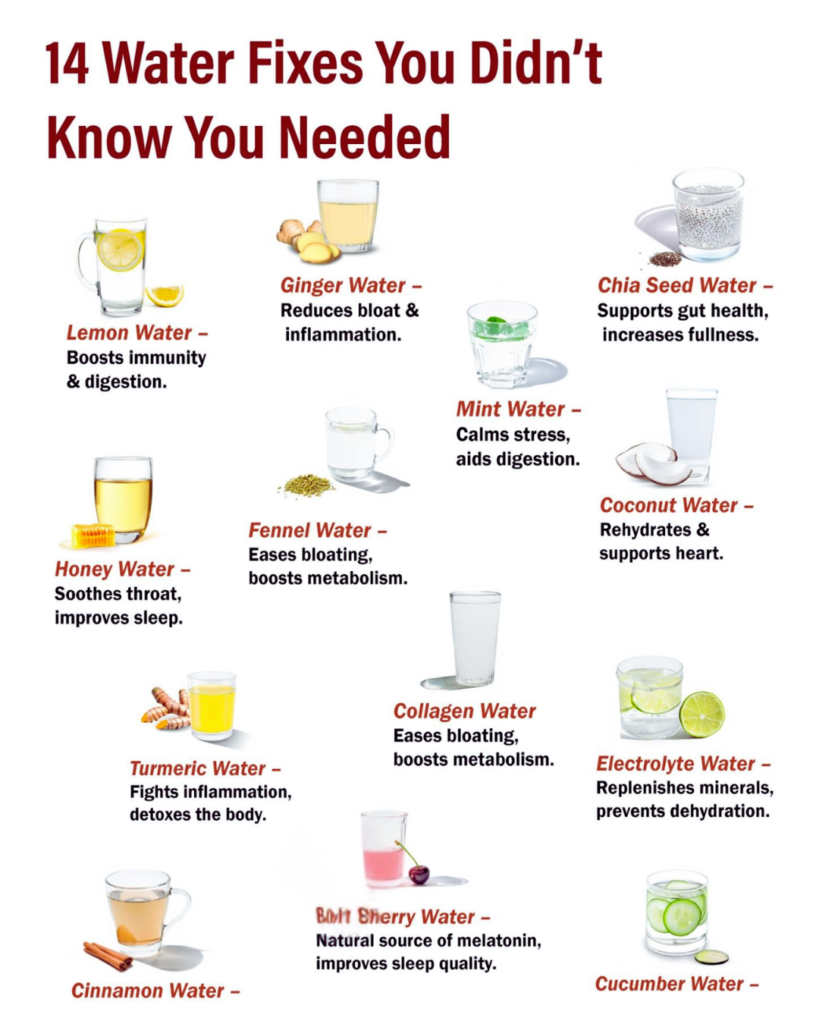
7. Ginger Water
Infusing water with fresh or dried ginger (Zingiber officinale) creates a functional beverage whose gingerols and shogaols deliver documented gastrointestinal, anti-inflammatory, and antiemetic effects in an accessible, inexpensive format. The bioactive gingerols (6-gingerol and 8-gingerol primarily) in a properly prepared ginger infusion stimulate gastric motility through 5-HT4 serotonin receptor agonism — the same receptor targeted by prokinetic pharmaceutical agents — accelerating gastric emptying and reducing postprandial bloating and nausea.
Multiple systematic reviews and meta-analyses confirm ginger’s antiemetic efficacy for pregnancy-related nausea, chemotherapy-induced nausea, and postoperative nausea — effects that persist with the concentrations achievable in strongly brewed ginger water (approximately 2g dried ginger per 500ml). Anti-inflammatory activity through COX-2 inhibition provides additional benefit for inflammatory conditions. The practical preparation advantage — a 10-minute simmer of fresh ginger root produces a highly concentrated infusion that can be diluted throughout the day — makes ginger water one of the most cost-effective functional waters available. Evidence rating: strong for nausea and gastrointestinal motility; good for anti-inflammatory effects.
8. Lemon Water
Lemon water — fresh citrus juice in water — achieves functional status through citric acid content that has documented effects on kidney stone prevention through urinary citrate elevation. Citrate binds calcium in the renal tubules, inhibiting calcium oxalate and calcium phosphate crystal formation and growth — the primary mechanism underlying both pharmaceutical potassium citrate (the standard treatment for hypocitraturic kidney stones) and dietary citric acid from lemon juice.
Research published in the Journal of Endourology documented that regular lemon water consumption increased urinary citrate concentrations by approximately 42% — within the range that produces clinically meaningful reductions in recurrent kidney stone formation. Beyond kidney stone prevention, lemon water provides vitamin C (enhancing non-heme iron absorption when consumed with meals), flavonoids including hesperidin (with documented anti-inflammatory activity), and alkalinizing metabolites despite citric acid’s initial acidic taste. Evidence rating: strong specifically for kidney stone prevention; moderate for other benefits.
9. Hibiscus Water
Hibiscus tea (agua de Jamaica in Latin American tradition) prepared from Hibiscus sabdariffa calyces has accumulated one of the most impressive evidence bases in the botanical beverage category, particularly for cardiovascular benefit. The anthocyanins — specifically delphinidin-3-sambubioside and cyanidin-3-sambubioside — in hibiscus calyces inhibit angiotensin-converting enzyme (ACE), reduce oxidative modification of LDL cholesterol, and demonstrate diuretic activity through renal tubular effects.
A systematic review and meta-analysis of five randomized controlled trials published in the Journal of Hypertension documented statistically significant reductions in systolic blood pressure (averaging 7.5 mmHg) and diastolic blood pressure (3.5 mmHg) with regular hibiscus beverage consumption — effect sizes approaching those of some antihypertensive medications in mildly hypertensive populations. These blood pressure effects, combined with documented improvements in LDL oxidation and lipid profiles, make hibiscus water one of the most evidence-supported botanical functional waters for cardiovascular risk reduction. Evidence rating: strong for blood pressure and cardiovascular biomarkers.
10. Green Tea Water
Highly diluted green tea — brewed at lower temperatures and higher water volumes than traditional green tea — occupies a functional water niche that delivers meaningful polyphenol concentrations (primarily EGCG, epicatechin, and epigallocatechin) at lower caffeine concentrations than standard brewing. EGCG’s catechol-O-methyltransferase (COMT) inhibition, AMPK activation, and anti-inflammatory NF-κB suppression are among the most extensively studied mechanisms in nutritional biochemistry, with hundreds of human studies confirming effects on metabolic health, cognitive function, and cancer risk biomarkers.
The functional water format offers a practical advantage: consuming 1-1.5 liters of cold-brewed light green tea throughout the day provides sustained, low-dose polyphenol delivery that avoids the tannin-induced mineral absorption inhibition and caffeine loading of drinking multiple strong cups. Cold brewing (refrigerating green tea leaves in cold water for 8-12 hours) produces approximately 70% of hot-brew polyphenol content with only 20-30% of the caffeine — an optimal ratio for sustained daily consumption. Evidence rating: very strong for polyphenol mechanisms; extensive human evidence for metabolic and cognitive benefits.
Functional Waters 11–14: Specialized and Emerging Categories
11. Coconut Water
Coconut water — the liquid endosperm of immature coconuts — is one of the few functional waters with natural electrolyte profiles making it genuinely competitive with commercial sports drinks for post-exercise rehydration in moderate exercise contexts. Its potassium content (600mg per cup — exceeding most commercial sports drinks) combined with natural sugars, sodium, magnesium, and cytokinin compounds creates a beverage whose natural composition matches the theoretical ideal for post-exercise fluid and electrolyte replacement.
A head-to-head randomized trial published in the Southeast Asian Journal of Tropical Medicine and Public Health found coconut water equivalent to commercial sports drinks and superior to plain water for post-exercise rehydration based on plasma osmolality, body weight recovery, and subjective performance ratings. The cytokinins (trans-zeatin and kinetin) in coconut water demonstrate anti-aging activity in cell culture studies through antioxidant and anti-apoptotic mechanisms — a preliminary finding requiring human clinical confirmation. Evidence rating: strong for post-exercise rehydration; preliminary for anti-aging and other claimed benefits.
12. Chlorophyll Water
Chlorophyll water — water containing sodium copper chlorophyllin (a water-soluble chlorophyll derivative) — has gained considerable social media attention with health claims centered on detoxification, body odor reduction, and cancer prevention. The evidence landscape here is more complex than promotional content suggests. For body odor and internal deodorization, a small clinical trial documented significant reductions in trimethylaminuria (fish odor syndrome) with chlorophyllin supplementation — a specific indication where the evidence is reasonably convincing. For wound healing, topical chlorophyllin has established clinical evidence. The broader detoxification and cancer prevention claims lack robust human clinical support, relying primarily on in vitro and animal data. Evidence rating: moderate for specific deodorization application; limited for broader detoxification and cancer prevention claims.
13. Collagen Water
Collagen-infused water delivers hydrolyzed collagen peptides (typically type I from bovine or marine sources) in aqueous solution, targeting skin elasticity, joint support, and connective tissue health. The bioavailability of collagen peptides in aqueous solution is genuinely favorable — hydrolyzed peptides (molecular weight 2,000-5,000 Daltons) are absorbed in the small intestine and demonstrated in pharmacokinetic studies to accumulate in cartilage and skin dermis within 1-2 hours of consumption.
A meta-analysis of 19 randomized controlled trials published in the International Journal of Dermatology documented statistically significant improvements in skin elasticity, hydration, and wrinkle depth with daily collagen peptide supplementation (typically 2.5-10g daily for 8-24 weeks). Functional collagen waters typically contain 5-10g per serving — within this evidence-supported range. The delivery vehicle (water versus powder in food) doesn’t significantly affect bioavailability for hydrolyzed peptides. Evidence rating: good to strong for skin outcomes; moderate for joint support.
14. Adaptogen Water
The newest and most rapidly growing functional water category incorporates adaptogenic herbs — ashwagandha, rhodiola, holy basil, lion’s mane mushroom — into bottled water formats. The functional efficacy of adaptogen waters depends critically on the concentration of bioactive compounds delivered per serving. For ashwagandha specifically, effective doses in clinical trials range from 300-600mg of KSM-66 or Sensoril extract daily — concentrations that legitimate adaptogen waters must achieve to deliver the cortisol-modulating, anxiolytic effects documented in RCTs.
Many commercial adaptogen waters contain far below the clinically effective dose, making label claims aspirational rather than evidence-based at the delivered concentration. When formulated at therapeutic concentrations with standardized extracts verified by third-party testing, adaptogen waters represent a genuinely innovative delivery format for compounds with strong evidence. The key consumer question is always: what is the concentration per serving, and does it match the doses used in the clinical trials supporting the claimed benefit? Evidence rating: strong for the underlying adaptogen compounds at therapeutic doses; variable for commercial products depending on actual concentration.
Building a Personalized Functional Water Protocol
Functional waters achieve their greatest value when selected based on individual health priorities rather than general wellness trends. Mapping your specific goals — cardiovascular health (hibiscus water), post-exercise recovery (electrolyte or coconut water), gastrointestinal comfort (ginger water), kidney stone prevention (lemon water), cognitive support (green tea water), skin health (collagen water), or stress management (ashwagandha-containing adaptogen water at therapeutic concentration) — to the evidence base for each category produces a personalized functional hydration protocol grounded in mechanism and evidence rather than marketing.
Rotating between functional waters throughout the day provides complementary benefits from different mechanisms simultaneously: morning lemon water (kidney stone prevention + iron absorption enhancement), mid-morning green tea water (polyphenol delivery + cognitive support), post-workout electrolyte water or coconut water (rehydration + electrolyte replacement), and evening hibiscus water or ginger water (cardiovascular support + digestive comfort). This systematic approach transforms hydration from a passive biological maintenance function into an active health optimization strategy.
Conclusion
Fourteen functional waters spanning electrolyte preparations, botanical infusions, fermented beverages, and emerging molecular formulations offer genuinely diverse physiological benefits — but their value depends entirely on the evidence quality behind specific claims and the concentration of bioactive compounds delivered per serving. The most evidence-supported entries — electrolyte water, hydrogen water, hibiscus water, ginger water, lemon water, and green tea water — have mechanisms that are characterized at the molecular level and human clinical evidence confirming meaningful physiological effects. Others, like adaptogen waters and chlorophyll water, deliver genuine benefits only when formulated at therapeutic concentrations matching clinical trial parameters. Approach each functional water with the same evaluative rigor you’d apply to any health intervention: examine the mechanism, assess the human evidence quality, verify the dose, and match the benefit to your specific physiological goals.
Important Disclaimer: This article is for informational purposes only and should not replace professional advice. For health-related topics, consult healthcare providers. Individual results may vary, and personal circumstances should always be considered when implementing any suggestions.