
Abdominal bloating — the subjective sensation of increased intra-abdominal pressure accompanied by visible distension — affects an estimated 16-31% of the general population regularly and represents one of the most common gastrointestinal complaints in primary care settings. The encouraging physiological reality is that the majority of bloating cases are functional rather than pathological, driven by reversible factors including excess intestinal gas production, fluid retention, impaired gastrointestinal motility, and visceral hypersensitivity — all of which respond to targeted three-day interventions that require no caloric restriction or traditional dieting approaches. This protocol addresses bloating through four simultaneous mechanisms: reducing fermentable substrate availability that generates intestinal gas, optimizing sodium-potassium balance to eliminate excess fluid retention, enhancing gastrointestinal transit to prevent gas accumulation, and reducing foods that trigger visceral sensitivity. The result is measurable reduction in abdominal circumference and subjective bloating within 72 hours through physiology-based interventions rather than unsustainable dietary restriction.
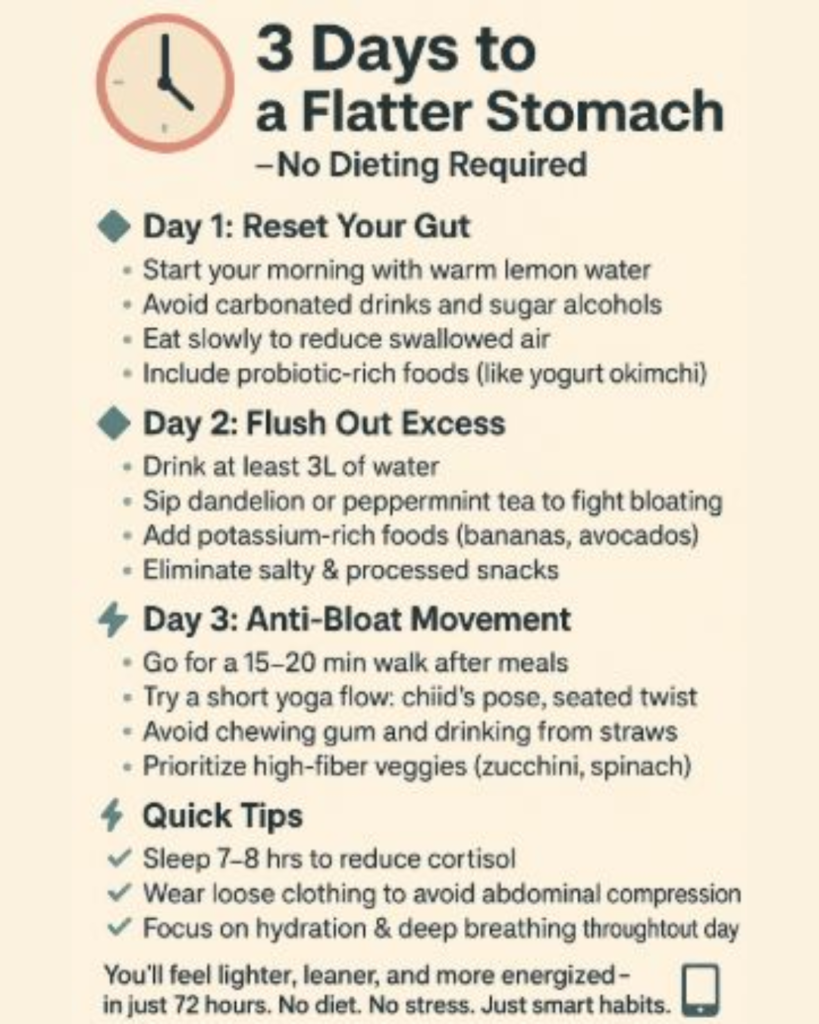
Understanding the Four Mechanisms Driving Abdominal Bloating
Effective debloating requires distinguishing between the distinct physiological processes producing the sensation and appearance of bloating — because each responds to different interventions within the three-day protocol.
Mechanism 1: Fermentative Gas Production in the Colon
The colon contains approximately 10^14 bacterial cells representing 500-1000 distinct species that ferment undigested carbohydrates reaching the large intestine. This fermentation is a normal, beneficial process that produces short-chain fatty acids (acetate, propionate, butyrate) supporting colonocyte health and systemic metabolism. However, the same fermentation simultaneously produces gas — primarily hydrogen, methane, and carbon dioxide — at volumes ranging from 500ml to over 2000ml daily depending on dietary substrate availability and individual microbiome composition.
Certain carbohydrates are particularly fermentable, producing disproportionate gas relative to their caloric or nutritional contribution. The FODMAP framework (Fermentable Oligosaccharides, Disaccharides, Monosaccharides, And Polyols) identifies these high-fermentation substrates: fructans in wheat, garlic, and onions; galacto-oligosaccharides in legumes; lactose in dairy for individuals with reduced lactase; fructose in excess of glucose in apples, pears, and high-fructose corn syrup; and sugar alcohols (sorbitol, mannitol, xylitol) in sugar-free products and certain fruits.
The three-day protocol temporarily reduces these fermentation substrates, lowering gas production by an estimated 30-50% based on breath hydrogen testing studies in controlled FODMAP restriction trials.
Mechanism 2: Sodium-Mediated Fluid Retention
Excess dietary sodium increases extracellular osmolarity, triggering compensatory fluid retention through antidiuretic hormone (ADH) release and renal sodium reabsorption. This fluid accumulates in the interstitial spaces of abdominal tissues, contributing to the sensation of fullness and visible abdominal distension. The average Western diet delivers 3400mg of sodium daily — more than double the adequate intake of 1500mg and substantially above the tolerable upper limit of 2300mg.
Simultaneously, insufficient dietary potassium (average intake approximately 2600mg versus the adequate intake of 3400-4700mg) impairs the sodium-potassium ATPase pump that regulates cellular fluid balance. The resulting high sodium-to-potassium ratio promotes fluid retention through multiple renal and hormonal mechanisms.
The three-day protocol addresses this imbalance by reducing sodium below 1500mg daily while increasing potassium above 3500mg, initiating rapid fluid mobilization and renal clearance that produces measurable reductions in body water within 24-48 hours.
Mechanism 3: Impaired Gastrointestinal Motility
Slow intestinal transit allows fermentable substrates extended contact time with colonic bacteria, amplifying gas production. It also permits the physical accumulation of intestinal contents and gas, creating the mechanical distension that produces visible bloating. Normal colonic transit time ranges from 24-72 hours; delayed transit exceeding 72 hours characterizes functional constipation and associates strongly with bloating symptoms.
Transit delays result from inadequate dietary fiber (particularly insoluble fiber providing bulk), insufficient fluid intake, physical inactivity reducing the mechanical stimulation of peristalsis, and stress-induced parasympathetic withdrawal that reduces gut motility. The three-day protocol accelerates transit through strategic fiber increases, enhanced hydration, and movement practices that stimulate intestinal motility.
Mechanism 4: Visceral Hypersensitivity and Central Sensitization
A subset of individuals experience bloating disproportionate to objectively measured gas volumes, reflecting visceral hypersensitivity — an enhanced perception of normal intraluminal pressures. This phenomenon, documented extensively in irritable bowel syndrome research, involves sensitization of intestinal mechanoreceptors and altered central processing of visceral sensory signals. Certain foods and beverages trigger this hypersensitivity independent of their fermentation potential: carbonated beverages distend the stomach through dissolved carbon dioxide; spicy foods activate TRPV1 nociceptors; caffeine stimulates gastric acid and may increase visceral sensitivity.
The three-day protocol minimizes these triggers, reducing the sensory component of bloating even when gas volumes are unchanged.
The Complete 3-Day Debloating Protocol
This protocol is structured as a day-by-day progression that systematically addresses each bloating mechanism through cumulative interventions.
Day 1: Sodium Reduction and Hydration Optimization
Primary objective: Initiate osmoreceptor-mediated ADH suppression and renal fluid clearance through dramatic sodium restriction.
Dietary guidelines for Day 1:
- Eliminate all processed foods, restaurant meals, condiments, canned goods, cured meats, cheese, bread, and sauces — these constitute approximately 70% of dietary sodium
- Target sodium intake below 1200mg (less than half the typical daily intake)
- Simultaneously increase potassium-rich foods: bananas (422mg per medium fruit), white potatoes with skin (926mg per medium potato), avocado (700mg per half), spinach (840mg per cooked cup), white beans (1000mg per cup)
- Hydration target: 2.5-3 liters of plain water distributed across the day, starting with 500ml upon waking
Sample Day 1 meals:
- Morning: Oatmeal made with water + sliced banana + 2 tablespoons almond butter + cinnamon (no salt)
- Midday: Large salad with mixed greens, grilled unsalted chicken breast, avocado, tomatoes, cucumbers + olive oil and lemon juice dressing (no commercial dressing)
- Evening: Baked salmon (no salt) + roasted sweet potato + steamed broccoli with garlic and olive oil
Expected outcome: Within 24 hours, the combination of reduced sodium intake and increased potassium consumption initiates diuretic-like effects through natural renal mechanisms. Most individuals experience the first measurable reduction in abdominal girth (0.5-1 inch) by the morning of Day 2.
Day 2: FODMAP Reduction and Gas Minimization
Primary objective: Reduce fermentable substrate availability to intestinal bacteria, lowering gas production by 30-50%.
Dietary modifications for Day 2 (maintaining Day 1’s sodium restriction):
- Eliminate high-FODMAP foods: wheat products, garlic, onions, legumes, dairy (if lactose-intolerant), apples, pears, stone fruits, sugar-free products containing polyols
- Replace with low-FODMAP alternatives: rice, quinoa, oats; small amounts of garlic-infused oil (instead of raw garlic); green beans and carrots (instead of onions); lactose-free dairy or almond milk; berries, oranges, grapes (instead of high-fructose fruits)
- Continue aggressive hydration (2.5-3L water)
- Add digestive enzyme supplement containing alpha-galactosidase (Beano) with meals to reduce oligosaccharide fermentation
Sample Day 2 meals:
- Morning: Scrambled eggs with spinach and tomatoes + gluten-free toast + strawberries
- Midday: Quinoa bowl with grilled chicken, mixed greens, cucumber, bell peppers, carrots + olive oil and lemon dressing
- Evening: Stir-fried tofu or shrimp with bok choy, zucchini, carrots + small portion of white rice + ginger
Expected outcome: Gas production decreases substantially as fermentable substrate becomes limited. The bloating sensation typically improves markedly by Day 2 evening, with visible reduction in distension most apparent after overnight fasting by Day 3 morning.
Day 3: Motility Enhancement and Consolidation
Primary objective: Accelerate gastrointestinal transit to clear accumulated gas and prevent stagnation.
Day 3 additions (maintaining Days 1-2 interventions):
- Increase soluble fiber through psyllium husk supplement (1 tablespoon in 12 oz water, morning and evening) — provides viscous fiber that stimulates peristalsis without gas production
- Strategic movement: 30-minute walk after largest meal to stimulate colonic motility through mechanical and autonomic mechanisms
- Targeted yoga poses for gas release: supine spinal twist, happy baby, knees-to-chest, and downward-facing dog (5 minutes morning and evening)
- Herbal support: Ginger tea (2-3 cups) — gingerols stimulate gastric motility through 5-HT4 receptor agonism; peppermint tea (1-2 cups) — menthol relaxes intestinal smooth muscle, facilitating gas passage
Sample Day 3 meals:
- Morning: Smoothie with spinach, frozen banana, blueberries, protein powder, almond milk, ground flaxseed + 1 tablespoon psyllium
- Midday: Grilled fish with roasted vegetables (carrots, zucchini, bell peppers) + small portion of quinoa + side salad
- Evening: Chicken or tofu with steamed green beans and asparagus + baked potato (no butter, use olive oil) + fresh melon
Expected outcome: By Day 3 evening, the cumulative effects of fluid loss, reduced gas production, and enhanced transit produce maximal visible reduction in abdominal circumference — typically 1-2 inches for most individuals, occasionally more for those with significant baseline fluid retention or gas accumulation.
Advanced Strategies for Enhanced Results
The Morning Lemon Water Ritual
Beginning each day with 500ml of warm water containing the juice of half a lemon provides multiple synergistic benefits. The morning hydration kickstarts renal function after the overnight fasting period, initiating the day’s fluid clearance. Lemon’s citric acid stimulates gastric acid production and bile release, enhancing digestive efficiency. The ritual also establishes a mindful start to the day that supports adherence to the protocol’s other components.
Probiotics for Microbiome Modulation
Adding a multi-strain probiotic supplement (containing Lactobacillus and Bifidobacterium species) throughout the three days provides bacterial strains that produce less gas during fermentation than some indigenous colonic bacteria. Research documents that specific probiotic strains reduce bloating and abdominal distension in functional gastrointestinal disorders, though effects manifest more substantially with weeks of use rather than three days. Including probiotics during the protocol establishes a foundation for continued benefit if supplementation continues beyond the initial three days.
The Activated Charcoal Option for Acute Gas
Activated charcoal (500-1000mg taken with meals) adsorbs intestinal gas through its extensive porous surface area, reducing gas volume available for distension. While evidence quality is mixed, some individuals report substantial subjective benefit. Important caveat: activated charcoal also adsorbs nutrients and medications — take it separately from any medications (2+ hours apart) and recognize that it may reduce absorption of beneficial compounds from food.
Troubleshooting When Results Are Minimal
Persistent Bloating Despite Protocol Adherence
If bloating persists substantially unchanged after rigorous three-day protocol adherence, several factors warrant investigation. The bloating may be hormonal — progesterone in the luteal phase of the menstrual cycle has mineralocorticoid-like effects promoting fluid retention that dietary sodium restriction only partially overcomes. The bloating may reflect small intestinal bacterial overgrowth (SIBO) where bacterial fermentation occurs in the small intestine rather than the colon, producing symptoms within minutes of eating and requiring different management than colonic fermentation. Underlying conditions including celiac disease, inflammatory bowel disease, or gastroparesis produce bloating through mechanisms unaddressed by this protocol and require medical evaluation.
Distinguishing Bloating From Abdominal Fat
It’s critical to distinguish between bloating (which varies throughout the day, improves with fasting, and responds to this protocol) and abdominal adiposity (which remains constant, doesn’t fluctuate based on meals or time of day, and requires caloric deficit for reduction). Measuring waist circumference at a standardized time (first thing in morning after urinating, before eating or drinking) provides the most reliable assessment of actual changes versus measurement variability.
Maintaining Results Beyond Three Days
The Long-Term Bloat-Prevention Framework
The three-day protocol is intentionally intensive, creating rapid visible results through mechanisms that aren’t indefinitely sustainable at the same intensity. Transitioning to long-term maintenance involves moderating rather than eliminating the interventions. Maintain sodium awareness without extreme restriction (target 2000-2300mg daily rather than 1200mg). Identify personal FODMAP triggers through systematic reintroduction rather than permanently avoiding all high-FODMAP foods. Establish consistent daily movement that supports ongoing motility. These moderations maintain a substantial portion of the protocol’s benefits while restoring dietary variety and flexibility.
Building the Anti-Bloating Lifestyle
Certain practices, when established as habits, provide ongoing protection against bloating recurrence. Eating slowly and chewing thoroughly reduces aerophagia (air swallowing) that contributes 25-50ml of intestinal gas per meal. Avoiding carbonated beverages eliminates the dissolved carbon dioxide that distends the stomach and intestines. Managing stress through evidence-based practices (controlled breathing, regular exercise, adequate sleep) maintains healthy vagal tone that supports gastrointestinal motility. These lifestyle integrations extend the protocol’s benefits indefinitely without the intensive restrictions of the initial three days.
Conclusion
Achieving a visibly flatter stomach within three days without caloric restriction or traditional dieting is genuinely achievable through targeted physiological interventions that address the specific mechanisms producing bloating and distension. Sodium reduction initiates rapid fluid loss, FODMAP restriction dramatically reduces gas production, enhanced motility prevents accumulation, and trigger elimination reduces visceral hypersensitivity. Follow the day-by-day protocol precisely, commit to the temporary dietary modifications, and measure your results objectively through morning waist circumference measurements. The transformation in how your abdomen looks and feels within 72 hours isn’t an illusion or temporary trick — it’s the predictable result of addressing the actual physiological processes creating bloating through evidence-grounded interventions.
Important Disclaimer: This article is for informational purposes only and should not replace professional advice. For persistent or severe bloating, consult healthcare providers to rule out underlying medical conditions. Individual results may vary, and personal circumstances should always be considered when implementing any suggestions.