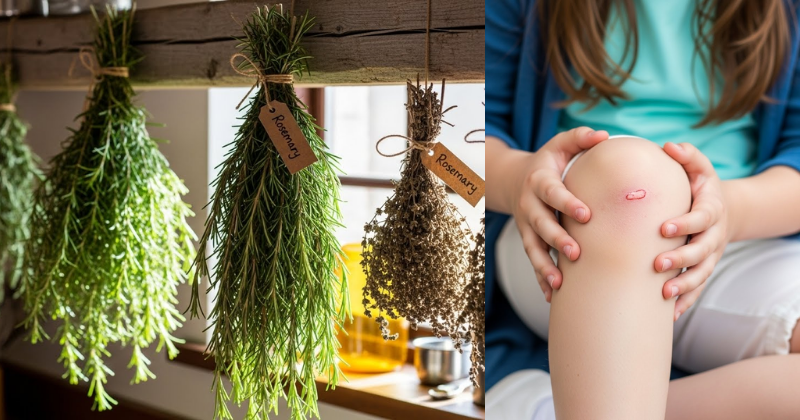
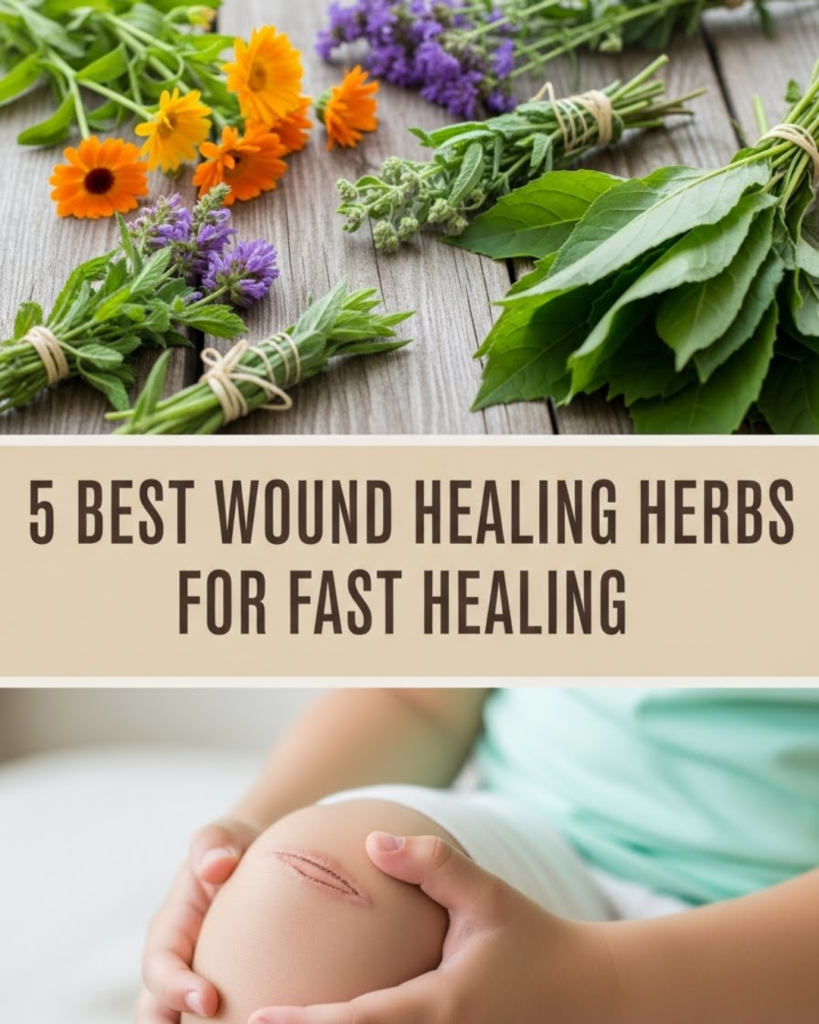
Discover the powerful 5 BEST WOUND HEALING HERBS FOR FAST HEALING that can support your body’s natural repair process. These ancient botanical remedies offer anti-inflammatory and regenerative properties. We provide scientific backing and achievable, step-by-step guidance on using nature’s remedies to transform your approach to cuts, scrapes, and minor burns. Get ready to unlock the potential of your natural medicine cabinet and achieve quicker, more complete skin recovery.
🛑 Important Disclaimer
Important Disclaimer: This article is for informational purposes only and should not replace professional advice. For health-related topics, consult healthcare providers. For financial or legal matters, seek qualified professional guidance. For safety procedures, verify current best practices and local regulations. Individual results may vary, and personal circumstances should always be considered when implementing any suggestions. Always consult a healthcare provider for deep, infected, or non-healing wounds.
🌱 Section 1: Foundation First: The Science of Herbal Wound Care
Before diving into the 5 BEST WOUND HEALING HERBS FOR FAST HEALING, it is important to build confidence with basic concepts about how herbs interact with the four complex phases of wound repair: hemostasis, inflammation, proliferation, and remodeling.
H3: Building Confidence with Basic Concepts: How Herbs Aid Healing
Unlike simple bandages, the right herbs don’t just cover a wound; they actively facilitate the cellular environment needed for repair.
| Wound Healing Phase | Herb’s Primary Action | Key Herbal Compounds |
| Inflammation | Reducing swelling, pain, and redness. | Volatile oils and flavonoids (anti-inflammatory) |
| Proliferation | Stimulating cell growth (fibroblasts) and collagen synthesis. | Triterpenoids and saponins (cellular regeneration) |
| Remodeling | Improving circulation and minimizing scar tissue formation. | Alkaloids and tannins (astringent and circulatory aids) |
- Encouraging Reassurance for Beginners: By using these herbs, you are simply supporting and accelerating the process your body is already designed to do. This is a gentle, yet powerful, form of self-care rooted in scientific backing.
H3: Addressing Common Concerns: Cleanliness and Application Safety
When using natural remedies on broken skin, safety considerations and sterilization are paramount.
- Cleanliness First: Always ensure the wound is thoroughly cleaned with mild soap and water before applying any herbal preparation. This is a crucial preventive measure against infection.
- Sterilization: When making teas, poultices, or infusions, use only clean, sterilized containers and distilled water. Use commercially prepared, high-quality extracts for the greatest safety and efficacy. Never apply herbs internally for wounds without professional guidance.
🌿 Section 2: Step-by-Step Process: The 5 BEST WOUND HEALING HERBS
These are the most potent and proven botanicals known for supporting fast healing of minor skin injuries.
Herb 1: Calendula (Calendula officinalis) – The Skin Soother
Calendula is arguably the most famous skin restorative herb. Its vibrant petals are rich in flavonoids and triterpenes.
- Scientific Backing: Research indicates that Calendula promotes granular tissue formation and enhances the synthesis of collagen, which is critical for fast healing. Its mild antiseptic properties help keep the wound clean.
- Step-by-Step Application: Apply a high-quality, oil-based Calendula salve or cream directly to clean, minor cuts, scrapes, or abrasions $2 \text{-} 3$ times per day until healed.
Herb 2: Comfrey (Symphytum officinale) – The Bone Healer
Known historically as “knitbone,” Comfrey is incredibly powerful for encouraging cellular regeneration.
- Key Component: Comfrey contains allantoin, a compound known to boost cell proliferation (the rapid growth of new skin cells). This makes it highly effective for promoting new tissue formation and speeding up the remodeling phase.
- Safety Tip (Actionable Language): Comfrey should only be used externally for minor wounds. Internal use is strictly discouraged due to Pyrrolizidine Alkaloids (PAs), which can be toxic to the liver. Apply as a poultice (crushed fresh or dried leaves) or a strong infused oil for closed wounds, bruises, and sprains.
Herb 3: Plantain (Plantago major) – The First Aid Hero
Often dismissed as a common weed, Plantain is a powerful, accessible first-aid herb that draws out impurities and soothes pain.
- Practical Example: If you get a bug bite or a splinter while gardening, simply chew a clean leaf to create a quick poultice (or crush it with a rock) and apply it directly to the affected area.
- Core Methods: Its mucilage content soothes inflammation, while its astringency helps stop minor bleeding. It’s excellent for bee stings, blisters, and small cuts.
Herb 4: Lavender (Lavandula angustifolia) – Antiseptic & Pain Relief
Lavender is more than just a calming scent; its essential oil is a powerful, yet gentle, tool for wound care.
- Application Method: Due to its potency, Lavender essential oil should almost always be diluted. Apply $1 \text{-} 2$ drops of high-quality Lavender essential oil to $1 \text{ teaspoon}$ of a carrier oil (like coconut or olive oil) and apply around the periphery of the wound.
- Wellness Topics: Lavender offers the added benefit of pain relief and calming the surrounding inflamed tissue, supporting a more comfortable gradual progress toward healing.
Herb 5: Yarrow (Achillea millefolium) – The Styptic
Yarrow is famous for its immediate action in stopping minor bleeding, a crucial step in the initial hemostasis phase.
- Actionable Language: If you nick yourself badly, immediately press a clean, crushed Yarrow leaf (fresh or dried) directly onto the wound. Its astringent tannins and alkaloids cause blood vessels to constrict, promoting clotting.
- Internal Linking Opportunity: For deeper knowledge on identification, check out our guide on “Wildcrafting Edible and Medicinal Herbs.”
🌿 Section 3: Advanced Strategies: Making Healing Preparations
Moving beyond simple application, these expert-level insights provide achievable Home Tips & DIY methods for creating potent herbal preparations that ensure you have the 5 BEST WOUND HEALING HERBS FOR FAST HEALING ready when you need them.
H3: Creative Solutions: Crafting a Multi-Herb Healing Salve
A healing salve combines the power of several herbs into an easy-to-apply topical remedy.
- Infusion: Combine dried Calendula, Comfrey, and Plantain leaves in a slow cooker or double boiler. Cover the herbs completely with a carrier oil (like olive or sweet almond oil). Gently heat on low for $4 \text{-} 6 \text{ hours}$ to extract the beneficial compounds.
- Straining: Strain the oil through cheesecloth to remove all plant material.
- Thickening: Measure the infused oil. For every $1 \text{ cup}$ of oil, add $1/4 \text{ cup}$ beeswax pastilles. Reheat gently until the beeswax is fully melted.
- Finishing: Pour into clean, small tins or jars. Allow the salve to cool and solidify before covering.
H3: Encouraging Experimentation: Using Hydrosols and Compresses
Hydrosols and compresses offer gentle, water-based delivery systems for herbal benefits.
- Hydrosols (Herbal Waters): Purchase or make a Lavender or Calendula hydrosol. These are excellent, gentle, sterile alternatives to water for cleaning and soothing minor burns or irritation. Store them in the refrigerator for an extra cooling effect.
- Herb Teas/Compresses: Create a strong tea using a tablespoon of dried Comfrey or Plantain in a cup of boiling water. Let it steep until cool. Soak a clean cloth in the cooled tea and apply it as a compress to closed bruises, sprains, or minor swelling. This allows the anti-inflammatory compounds to be absorbed effectively.
⚠️ Section 4: Troubleshooting and Common Challenges
When utilizing the 5 BEST WOUND HEALING HERBS FOR FAST HEALING, it’s important to know how to recognize when a wound needs professional attention and when natural remedies suffice.
Featured Snippet Potential: “When should I stop using natural remedies and see a doctor for a cut?”
You should immediately stop using natural remedies and seek medical attention if a wound shows signs of infection, such as increasing redness and swelling extending far beyond the wound edges, escalating pain, warmth around the site, or the presence of thick, foul-smelling pus. Additionally, seek professional care for deep cuts that won’t stop bleeding, cuts that expose muscle or fat, puncture wounds, or any wound that hasn’t shown noticeable improvement within 48 hours.
Practical Troubleshooting Tips (Infection and Healing Rate)
- Problem: A minor scrape seems to be healing slowly or is redder than expected.
- Obstacle: Low-grade infection or inadequate nourishment for the skin.
- Solution: Preventive Measures: Ensure the wound is cleaned frequently with a gentle saline solution. Apply a pure Aloe Vera gel (another great healer) to the area to keep it moist (moist wounds heal faster than dry wounds). Internally, ensure you are taking Vitamin C and Zinc, which are vital for collagen synthesis.
- Problem: The area around the wound is itchy after applying a salve.
- Obstacle: Potential mild allergic reaction to the specific herb or beeswax/carrier oil.
- Solution: Offer Alternative Approaches: Immediately discontinue use of the salve. If the itchiness is tolerable, switch to a simple, single-ingredient preparation, like a diluted Lavender oil, or pure Shea butter. If the itchiness worsens, consult a doctor.
- Problem: Scar tissue seems raised and hard (Hypertrophic Scarring).
- Obstacle: Overproduction of collagen during the remodeling phase.
- Solution: Apply a product specifically formulated with Rosehip Seed Oil or an oil infused with Helichrysum ($1 \text{ part}$ essential oil to $20 \text{ parts}$ carrier oil). These are known to help modulate collagen production and soften existing scar tissue over time, allowing for gradual progress.
🌟 Section 5: Maximizing Results: Internal Support and Lifestyle
To truly maximize the power of the 5 BEST WOUND HEALING HERBS FOR FAST HEALING, you must support the healing process from the inside out.
- Show How to Build Upon Basic Success: Support Systemic Circulation. Adequate blood flow is crucial for delivering nutrients and immune cells to the wound site. Internally, herbs like Gotu Kola (Centella asiatica) are excellent for strengthening blood vessels and supporting circulation, which dramatically aids the remodeling and proliferation phases. (Internal Linking Opportunity: Explore “Herbal Teas for Immune System Support.”)
- Maintenance and Long-Term Considerations: The Nutritional Foundation. Wound healing requires significantly more protein, Vitamin C, and Zinc. Without these building blocks, even the strongest external herbs will struggle. Focus on a diet rich in whole foods, quality protein, and brightly colored vegetables for optimal nutrient delivery. This commitment to sustainable lifestyle changes supports long-term skin health.
- Suggest Complementary Strategies: Stress Reduction. Stress hormones (cortisol) can suppress the immune response and slow down healing. Incorporate Wellness Topics like meditation or deep breathing into your recovery routine. Pairing external herbal care with internal peace can accelerate healing significantly.
✅ Conclusion: Your Capability to Nurture Healing
You have now mastered the knowledge of the 5 BEST WOUND HEALING HERBS FOR FAST HEALING and the scientific backing that makes them so effective. By integrating Calendula, Comfrey, Plantain, Lavender, and Yarrow into your self-care toolkit, you are empowered to take a natural, proactive approach to skin repair. This knowledge is transformative, allowing you to gently nurture your body’s inherent ability to heal and achieve quicker, better results.
Ready to prepare your natural first-aid kit? Which of the $5 \text{ BEST WOUND HEALING HERBS FOR FAST HEALING}$ will you grow in your garden or source first for your healing salve?