
Discover 6 powerful facts and benefits of figs, including nutrition, digestive support, heart health, and easy ways to use them daily.
Have you ever bitten into a fresh fig and noticed its natural sweetness and soft, jam-like texture? Figs may look delicate, but they are packed with impressive nutrition and health benefits. These ancient fruits have been enjoyed for thousands of years—and for good reason.
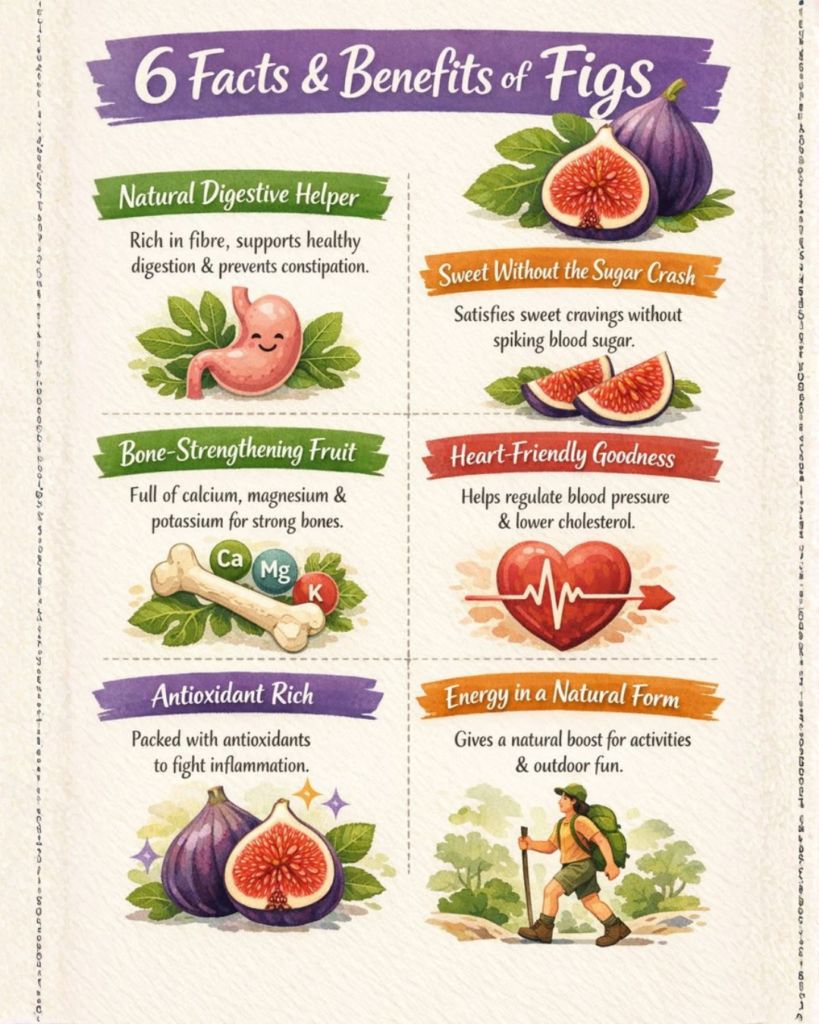
In this guide to the 6 facts & benefits of figs, you’ll discover how figs support digestion, heart health, blood sugar balance, and even skin wellness. You’ll also learn simple, practical ways to add them to your daily meals. Whether you prefer fresh figs or dried figs, you’re about to unlock the real power of this underrated superfruit.
Let’s dive in.
Understanding Figs: Nutrition Basics & What Makes Them Special
Before exploring the 6 facts & benefits of figs, it helps to understand what makes them so unique.
Figs grow on the Ficus carica tree and are technically inverted flowers rather than traditional fruits. They are naturally sweet, rich in fiber, and loaded with beneficial plant compounds.
Nutritional Profile of Figs
Here’s what you get from figs (fresh or dried):
- Dietary fiber
- Natural sugars (glucose and fructose)
- Potassium
- Calcium
- Magnesium
- Iron
- Antioxidants (polyphenols)
Dried figs are more concentrated in nutrients and calories, while fresh figs contain more water and fewer calories per serving.
If you’ve searched for “are figs healthy?” the short answer is yes—when eaten in moderation.
Fresh vs. Dried Figs: What’s the Difference?
Both forms offer health benefits, but they serve different purposes:
- Fresh figs: Lower in calories, hydrating, and refreshing
- Dried figs: Higher in fiber, minerals, and natural sugars
If your goal is digestive support, dried figs may be especially helpful due to their higher fiber content.
6 Facts & Benefits of Figs You Should Know
Now let’s explore the real reason you’re here—the science-backed benefits of figs.
1. Figs Support Healthy Digestion
Figs are famous for digestive support.
How Figs Help with Constipation
Figs are rich in soluble and insoluble fiber. Fiber:
- Adds bulk to stool
- Feeds beneficial gut bacteria
- Promotes regular bowel movements
Many people soak dried figs overnight and eat them in the morning to gently stimulate digestion. If you’re exploring natural remedies for constipation, figs are one of the simplest options.
2. Figs Promote Heart Health
One of the most important facts & benefits of figs is their positive impact on heart health.
Figs contain potassium, which helps regulate blood pressure. A potassium-rich diet may reduce strain on blood vessels and improve cardiovascular balance.
In addition, the fiber in figs may help lower LDL (bad) cholesterol levels by binding excess cholesterol in the digestive tract.
3. Figs May Help Balance Blood Sugar (When Used Wisely)
Although figs are naturally sweet, their fiber slows sugar absorption.
Fresh figs, especially when paired with protein or healthy fats (like yogurt or nuts), may help prevent blood sugar spikes.
However, dried figs are more concentrated in sugar. If you’re monitoring blood glucose, portion control is key.
4. Figs Strengthen Bone Health
Surprisingly, figs contain calcium and magnesium—two minerals essential for strong bones.
If you are dairy-free or looking for plant-based calcium sources, figs can help support your daily intake.
Bone health is especially important as you age. Small dietary habits, like adding figs to oatmeal or salads, can contribute to long-term strength.
5. Figs Are Rich in Antioxidants
Antioxidants protect your cells from oxidative stress.
Figs contain polyphenols and other plant compounds that may reduce inflammation and support immune health.
Darker figs typically contain higher antioxidant levels, similar to berries and grapes.
If you’re interested in related topics, you may also explore:
- Anti-inflammatory foods for daily health
- Natural ways to boost immunity
- High-fiber fruits for gut health
- Plant-based calcium sources
Each connects directly to the benefits of figs.
6. Figs May Support Skin and Overall Vitality
Traditional medicine has long used figs for skin wellness.
Their antioxidants and vitamins may help protect skin cells from environmental stress. While figs aren’t a miracle cure, a nutrient-rich diet that includes fruits like figs supports overall vitality—from the inside out.
How to Use Figs: Simple Step-by-Step Ideas
Knowing the 6 facts & benefits of figs is powerful. But how do you actually use them?
Here are practical ways to add figs to your routine.
Step 1: Start Your Morning with Soaked Figs
- Soak 2–3 dried figs in water overnight
- Eat them on an empty stomach
- Drink the soaking water if desired
This is commonly used for digestive support.
Step 2: Add Fresh Figs to Meals
Fresh figs pair well with:
- Greek yogurt and honey
- Oatmeal or chia pudding
- Salads with goat cheese and walnuts
- Whole-grain toast with nut butter
They add natural sweetness without processed sugar.
Step 3: Use Figs in Healthy Snacks
Try:
- Energy balls with chopped dried figs
- Homemade fig bars
- Trail mix with nuts and seeds
These options are especially helpful if you need quick energy.
Advanced Tips: Getting the Most from Figs
Once you’re comfortable using figs, you can optimize their benefits.
Pair Figs with Protein
To balance blood sugar, combine figs with:
- Nuts
- Yogurt
- Cheese
- Seeds
This slows sugar absorption and increases satiety.
Watch Portion Sizes
Because dried figs are calorie-dense:
- Limit to 2–4 pieces per serving
- Avoid eating large amounts in one sitting
Moderation maximizes benefits.
Choose Quality Sources
When buying dried figs:
- Look for unsweetened varieties
- Avoid added sugars or preservatives
- Store in airtight containers
Fresh figs should feel soft but not mushy.
Common Questions About Figs
Are figs good for weight loss?
Figs can support weight management due to their fiber content, which promotes fullness. However, dried figs are calorie-dense, so portion control matters.
How many figs should you eat per day?
For most people:
- 2–3 fresh figs
- OR 2–4 dried figs
This provides benefits without excessive sugar intake.
When is the best time to eat figs?
You can eat figs:
- In the morning for digestion
- As a pre-workout snack
- As part of a balanced meal
Consistency matters more than timing.
Troubleshooting: Common Mistakes to Avoid
Even healthy foods can cause issues if misused.
Overeating Dried Figs
Too many may cause digestive discomfort due to high fiber.
Ignoring Blood Sugar Concerns
If you have diabetes or insulin resistance, monitor portions carefully and consult a healthcare provider.
Choosing Sugary Processed Fig Products
Fig cookies and pastries often contain refined sugar and white flour. Stick to whole, natural figs.
Maximizing the Health Benefits of Figs Long-Term
To truly benefit from the 6 facts & benefits of figs:
- Rotate figs with other fiber-rich fruits
- Combine with balanced meals
- Stay hydrated
- Maintain an overall nutrient-dense diet
Figs work best as part of a healthy lifestyle—not as a standalone solution.
Building sustainable habits is far more powerful than chasing trends.
Conclusion: Unlock the Natural Power of Figs
Figs are more than a sweet treat. They support digestion, heart health, bone strength, immunity, and overall vitality. By understanding these 6 facts & benefits of figs, you can confidently add them to your routine in simple, delicious ways.
Start small. Add a few fresh figs to breakfast. Soak dried figs overnight. Pair them with protein. Stay consistent.
You don’t need complicated superfoods to improve your health. Sometimes, the most powerful transformation begins with something as simple as a fig.
Important Disclaimer: This article is for informational purposes only and should not replace professional advice. For health-related topics, consult healthcare providers. For financial or legal matters, seek qualified professional guidance. For safety procedures, verify current best practices and local regulations. Individual results may vary, and personal circumstances should always be considered when implementing any suggestions.